Daily exercise bike rides are highly effective for overall fat loss, including abdominal fat, when combined with proper technique, varied workouts, and a balanced, nutritious diet. While no exercise can “spot-reduce” fat from specific areas like the belly, consistent cardiovascular exercise on an exercise bike burns calories and creates a calorie deficit, leading to a reduction in total body fat, which inherently includes belly fat. This approach is crucial for addressing excess abdominal fat, particularly visceral fat, which is linked to serious health risks such as heart disease and type 2 diabetes.
The Science Behind Exercise Bikes and Belly Fat Reduction
It’s a common misconception that you can target fat loss from a specific body part, often referred to as “spot reduction.” Unfortunately, no exercise machine or workout can magically melt fat from only your belly, thighs, or arms. When your body burns fat, it draws from fat stores across your entire body. So, while an exercise bike doesn’t directly “spot-reduce” belly fat, it is an excellent tool for achieving total body fat loss, which in turn leads to a reduction in abdominal fat.
Exercise bikes promote fat loss primarily by burning calories and creating a calorie deficit—meaning you burn more calories than you consume. When you pedal, your heart rate elevates, boosting your metabolism and encouraging your body to use stored fat as fuel. Consistent cardiovascular exercise, such as cycling, significantly increases calorie expenditure and enhances fat oxidation. This process is particularly effective for reducing visceral fat, the dangerous fat stored deep around your organs. High-intensity workouts on an exercise bike can also lead to an “afterburn effect,” known as Excess Post-exercise Oxygen Consumption (EPOC), where your body continues to burn calories at an elevated rate even after your workout is finished.
Amazing Benefits of Daily Exercise Bike Workouts
Incorporating an exercise bike into your daily routine offers a wealth of benefits beyond just trimming your waistline. It’s a holistic approach to improving your physical and mental well-being, all from the comfort of your home.
One of the most significant advantages is the boost to cardiovascular health. Regular cycling strengthens your heart muscle, improves blood circulation, and helps lower blood pressure, reducing your risk of heart disease and stroke. Daily rides keep your cardiovascular system robust, ensuring efficient oxygen delivery throughout your body.
For weight management, daily exercise bike use is a powerful ally. Consistent rides contribute to a significant calorie burn, which is fundamental for creating the calorie deficit needed for fat loss. Even moderate-intensity sessions can burn hundreds of calories, supporting sustained weight loss and maintenance. The increased metabolic rate from regular exercise further aids in burning fat more efficiently.
 Woman riding an upright exercise bike at home, focused on her workout with sweat and determination
Beyond fat burning, cycling effectively strengthens various muscle groups. Every pedal stroke engages your quads, hamstrings, glutes, and calves, building strength and endurance in your lower body. Maintaining proper posture during your ride also activates your core muscles, contributing to better stability and abdominal toning.
The low-impact nature of exercise bike workouts is another key benefit. Unlike running or other high-impact activities, cycling is gentle on your joints, making it an excellent option for individuals with knee, hip, or back concerns, or those recovering from injuries. This reduces the risk of impact-related discomfort, allowing for consistent, pain-free exercise.
Daily cycling also profoundly impacts mental well-being. Physical activity is a proven stress reliever, and consistent bike rides can reduce levels of stress hormones while boosting endorphins—your body’s natural mood elevators. This can alleviate symptoms of anxiety and depression, enhance mental clarity, and even improve sleep quality by regulating your body’s natural sleep rhythm.
Lastly, the convenience of a home exercise bike makes it easier to build a consistent fitness habit. Rain or shine, day or night, your bike is always ready, removing common excuses and fostering a sustainable routine that leads to lasting results.
Types of Exercise Bikes for Targeting Fat Loss
Choosing the right exercise bike can significantly impact your motivation and the effectiveness of your fat-loss journey. Different types offer distinct benefits tailored to various preferences and fitness levels.
Upright Bikes mimic the riding position of a traditional outdoor bicycle. They typically have a smaller footprint and engage your core more actively due to the upright posture.
- Pros: Natural cycling feel, good for standing sprints, engages core and upper body more than recumbent bikes.
- Cons: Can be less comfortable for longer sessions, may put more pressure on wrists and lower back for some users.
- Best for: Those who prefer a classic cycling experience, enjoy varied intensity workouts, and want to engage their core.
Recumbent Bikes feature a reclined seating position with a larger seat and back support, distributing weight more evenly.
- Pros: Exceptional comfort, excellent back support, low impact, suitable for beginners, seniors, or individuals with back/joint issues.
- Cons: Less core engagement, not ideal for standing sprints or high-intensity interval training (HIIT) that requires a dynamic body position.
- Best for: Individuals prioritizing comfort, those with back problems, or beginners seeking a gentle introduction to cardio.
Spin Bikes (Indoor Cycles) are designed to replicate the feel of road cycling classes, often featuring a heavy flywheel and direct-contact resistance.
- Pros: Ideal for HIIT and high-intensity workouts, excellent for calorie burn, allows for standing and dynamic movements, highly adjustable.
- Cons: Can be less comfortable for long steady-state rides, often more expensive, typically lacks built-in screens with pre-programmed workouts (often relying on apps).
- Best for: Fitness enthusiasts, those seeking intense, challenging workouts, and individuals who enjoy simulated group cycling classes.
Air Bikes (Fan Bikes) use a large fan for resistance, where the harder you pedal and push/pull the handlebars, the greater the resistance.
- Pros: Provides a full-body workout by engaging both upper and lower body, excellent for high-intensity interval training, unlimited resistance.
- Cons: Can be very noisy, requires more overall exertion, may not be suitable for casual, leisurely rides.
- Best for: Athletes, those looking for a challenging full-body workout, and individuals focused on maximizing calorie burn in short, intense bursts.
While all types of exercise bikes can contribute to fat loss, spin bikes and air bikes are often cited as the most efficient for intense, fat-burning workouts due to their design facilitating high-intensity interval training and engaging more muscle groups.
Essential Features for an Effective Fat-Burning Exercise Bike
When investing in an exercise bike to achieve your belly fat loss goals, certain features can significantly enhance your experience, workout effectiveness, and overall results.
The resistance system is paramount. Most bikes use either magnetic resistance (smooth, quiet, consistent) or friction resistance (felt pad on flywheel, often louder, requires more maintenance). Magnetic resistance is generally preferred for its quiet operation and smooth transitions, allowing for seamless shifts between high and low intensity, crucial for HIIT workouts. Look for a wide range of resistance levels to ensure progressive overload as your fitness improves.
A clear and comprehensive display and tracking system is vital for motivation and monitoring progress. This should show key metrics such as calories burned, distance, time, speed, and heart rate. Some advanced models offer RPM (revolutions per minute) tracking, which helps maintain specific cadences for different workout zones.
Adjustability is key for comfort and proper form, which in turn maximizes workout efficiency and prevents injury. Ensure the seat can be adjusted both vertically (height) and horizontally (fore/aft). Adjustable handlebars allow you to find a comfortable and ergonomic riding position, especially during varied workouts.
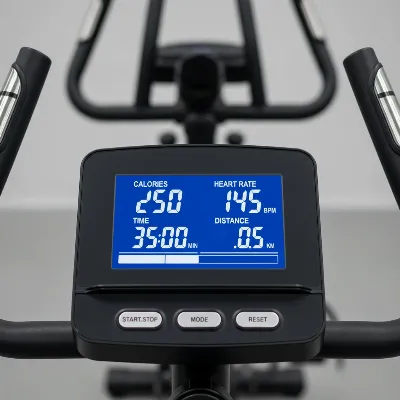 Close-up of a digital display on an exercise bike showing workout metrics like calories, heart rate, and time
Sturdiness and weight capacity are often overlooked but critical, especially if you plan on intense rides or standing work. A heavier flywheel often correlates with a smoother, more stable ride. Check the bike’s maximum user weight to ensure it safely accommodates your body.
Modern bikes increasingly offer connectivity and app integration. Features like Bluetooth connectivity to fitness apps (e.g., Peloton, Zwift, iFIT) can provide guided workouts, virtual routes, and performance tracking, making your sessions more engaging and structured.
Finally, consider the noise level, especially if you plan to exercise in a shared living space or early in the morning/late at night. Magnetic resistance bikes are typically quieter than air bikes or friction-based spin bikes.
Effective Exercise Bike Workouts to Maximize Belly Fat Loss
To truly leverage your exercise bike for fat loss, simply hopping on and pedaling casually won’t suffice. You need structured workouts that challenge your body and keep your metabolism guessing.
Every workout should begin with a 5-10 minute warm-up at a low to moderate resistance. This prepares your muscles and cardiovascular system for the upcoming effort, reducing the risk of injury. Conclude each session with a 3-5 minute cool-down at an easy pace, followed by gentle stretching, to aid recovery and flexibility.
Moderate-Intensity Steady-State Training
|
Our Picks for the Best Exercise Bike in 2026
As an Amazon Associate I earn from qualifying purchases.
|
||
| Num | Product | Action |
|---|---|---|
| 1 | Exercise Bike for Home – 350LB Magnetic Resistance Indoor Cycling Bike, Silent Stationary Spin Bike with App Sync, Adjustable Seat, LCD Monitor, Smooth & Quiet for Cardio Workout |

|
| 2 | Exercise Bike, Adjustable Magnetic Resistance Stationary Bikes for Home Cardio with Exclusive App, Indoor Bike with 330lbs Weight Capacity Comfortable Seat, Tablet Mount and Fitness Courses |
|
| 3 | Exercise Bikes for Home,Indoor Cycling Bike with Adjustable Magnetic,Brake Pad Resistance Silent Belt Drive,330lbs Weight Capacity &Upgraded Version Seat for Home Cardio&Weight Loss |
|
| 4 | Exercise Bike, Wenoker Magnetic Stationary Bike for Home App Sync Indoor Bike with Adjustable Seat and Handlebar, Transport Wheels and Fitness Courses for Weight Loss |
|
| 5 | Exercise Bike, Magnetic Resistance Stationary Bikes for Home with App Compatible, Silent Indoor Cycling Bike with 350lbs Weight Capacity Comfortable Seat, Digital Monitor & Phone Mount |
|
| 6 | Exercise Bike, Wenoker Stationary Bike for Home, App Supported Indoor Bike with Silent Belt Drive, Heavy Flywheel, Multi-grips Handlebar and Upgraded Digital Display |
|
| 7 | RELIFE REBUILD YOUR LIFE Exercise Bike Stationary for Home Indoor,Cycling Bike with Silent Belt Drive for Home Cardio,Brake Pad Resistance with djustable & Comfort Seat/PAD Holder/LCD Monitor. |
|
| 8 | Exercise Bikes for Home,Indoor Cycling Bike with Adjustable Friction,Brake Pad Resistance Silent Belt Drive,330lbs Weight Capacity &Upgraded Version Seat for Home Cardio&Weight Loss |
|
| 9 | Indoor Exercise Bike for Seniors, 5 IN 1 Foldable Stationary Bike with 16-Level Magnetic Resistance and Tri-Position Ride, 330LBS Capacity, 6.6 LBS Flywheel, for Home Workout 818 Gray |
|
| 10 | MERACH Exercise Bike, Brake Pad Stationary Bike with Exclusive App, Low Noise Indoor Cycling Bike with 300lbs Weight Capacity, Tablet Mount and Fitness Courses for Weight Loss |
|
This approach is excellent for beginners and for building a strong aerobic base. It involves maintaining a consistent, moderate effort level for an extended period.
- Description: Pedal at a pace where you can hold a conversation but are slightly out of breath. Your heart rate should be between 60-70% of your maximum heart rate (roughly 220 minus your age).
- Duration: Aim for 30-60 minutes, 3-5 times per week.
- Example Workout:
- Warm-up: 5 minutes easy pedaling.
- Main Set: 30-45 minutes at a steady, moderate intensity.
- Cool-down: 5 minutes easy pedaling.
High-Intensity Interval Training (HIIT)
HIIT is a highly effective strategy for burning calories and stimulating fat loss, including visceral fat. It involves alternating short bursts of maximal effort with brief recovery periods. HIIT boosts your metabolism significantly, leading to the EPOC effect.
- Description: Push yourself to near-maximal effort during “on” periods, then recover at a very low intensity.
- Benefits: Higher calorie burn in less time, increased fat oxidation, improved cardiovascular fitness.
- Cautions: HIIT is demanding; ensure you have a good fitness base and consult a doctor if you have health concerns.
- Example HIIT Workout (General):
- Warm-up: 5-10 minutes easy pedaling.
- Main Set: Repeat 8-10 times:
- 1-2 minutes of high-intensity pedaling (sprint, high resistance).
- 1-2 minutes of low-intensity recovery pedaling.
- Cool-down: 3-5 minutes easy pedaling.
- Example HIIT Workout (Tabata):
- Warm-up: 5 minutes easy pedaling.
- Main Set: Perform 8 rounds of:
- 20 seconds all-out sprint.
- 10 seconds complete rest.
- Cool-down: 5 minutes easy pedaling.
To ensure continuous progress, incorporate progressive overload. This means gradually increasing the intensity, duration, or frequency of your workouts over time. For instance, increase your ride time by 5 minutes each week, add another interval, or bump up the resistance.
> “The secret to significant fat loss, especially around the belly, lies in consistent effort and smart training. HIIT workouts on an exercise bike are particularly effective because they ignite your metabolism, burning more calories not just during, but long after your ride.” – Dr. Emily R. Hayes, Exercise Physiology Specialist
A brief mention of fasted cardio: Some individuals experiment with fasted cycling (exercising on an empty stomach) to potentially increase fat oxidation. While it can lead to more fat burned during the session, it’s not universally recommended daily due to potential energy depletion and muscle loss if not managed carefully. It’s best reserved for experienced individuals and always with caution.
Buying Guide: Choosing Your Exercise Bike for Belly Fat Goals
Selecting the right exercise bike is a personal journey, one that should align with your fitness aspirations and lifestyle. Making an informed decision ensures your investment supports your belly fat reduction goals effectively.
First, define your needs and fitness level. Are you a complete beginner needing a comfortable, low-impact start, or an experienced rider seeking intense, challenging workouts? Your preference for high-intensity training versus steady-state cardio will influence the type of bike you should consider.
Next, set a realistic budget. Exercise bikes range widely in price, from a few hundred dollars for basic models to several thousands for high-tech smart bikes. Determine how much you’re willing to invest, keeping in mind that higher price points often correlate with better build quality, advanced features, and greater durability.
Consider your available space at home. Upright and spin bikes generally have a smaller footprint, while recumbent bikes are longer. If space is a premium, look for compact or folding models that can be easily stored when not in use.
Research brands and read reviews from other users. Look for bikes known for their reliability, smooth operation, and positive customer feedback regarding features important for fat loss, such as resistance range and tracking accuracy. Websites like ReviewsByKen.com often offer comprehensive insights from experienced individuals.
If possible, trial the bike in person before purchasing. Sit on it, adjust the seat and handlebars, and pedal for a few minutes. Assess the comfort, stability, and smoothness of the ride. A comfortable bike is one you’ll be more likely to use consistently.
Finally, don’t overlook warranty and after-sales service. A good warranty provides peace of mind, and reliable customer support can be invaluable if you encounter any issues with your equipment down the line.
Tips for Optimal Results and Maintenance
Owning an exercise bike is just the first step; maximizing its potential for belly fat loss and ensuring its longevity requires smart usage and consistent care.
Proper posture and bike setup are critical. Adjust the seat height so your knee has a slight bend (about 25-35 degrees) at the bottom of the pedal stroke. Ensure the handlebars allow you to maintain a comfortable, neutral spine without excessive leaning or hunching. Proper ergonomics prevent discomfort, reduce injury risk, and enable more efficient power transfer, making your workouts more effective.
Exercise is only one part of the equation; combine your cycling with a balanced, calorie-controlled diet. Focus on whole foods, lean proteins, fruits, vegetables, and healthy fats. Creating a consistent calorie deficit through both diet and exercise is the most proven way to reduce overall body fat, including belly fat. Adequate protein intake is especially important for preserving muscle mass while losing fat.
Integrate strength training into your weekly routine. Building muscle increases your resting metabolic rate, meaning you burn more calories even when not exercising. Stronger leg and core muscles will also enhance your cycling performance.
Stay adequately hydrated throughout the day, especially before, during, and after your workouts. Water is vital for numerous bodily functions, including metabolism and muscle performance.
Finally, listen to your body and prioritize rest and recovery. While daily riding can be beneficial, pushing yourself too hard without adequate rest can lead to overtraining, injury, and burnout. Incorporate rest days or active recovery (light pedaling) to allow your muscles to repair and grow.
For your bike’s longevity, regular cleaning and maintenance are essential. Wipe down your bike after each use to remove sweat, which can corrode components. Periodically check and tighten bolts, lubricate moving parts (if applicable), and ensure the resistance mechanism is functioning smoothly. A well-maintained bike provides a safer, more enjoyable, and longer-lasting fitness experience.
Conclusion
The journey to reduce belly fat can be challenging, but an exercise bike is undoubtedly a powerful, low-impact tool to aid your efforts. While it won’t magically spot-reduce fat from your midsection, consistent daily exercise bike rides, when coupled with varied workouts like steady-state cardio and high-intensity interval training, contribute significantly to overall calorie burn and metabolic boosts. This comprehensive fat loss inherently includes a reduction in stubborn abdominal fat. Achieving a leaner physique is a holistic endeavor that thrives on proper nutrition, consistent effort, and smart training, alongside embracing the amazing health benefits of regular cycling. Are you ready to pedal your way to a leaner, healthier you?
Frequently Asked Questions
Frequently Asked Questions
How long should I ride an exercise bike daily to lose belly fat?
To effectively lose belly fat, aim for at least 30-60 minutes of moderate-intensity cycling, 5-6 times per week, or 20-30 minutes of high-intensity interval training (HIIT) 3-4 times per week. Consistency is more crucial than daily, exhaustive sessions, allowing for proper recovery and preventing burnout.
Can I lose belly fat just by riding an exercise bike?
While an exercise bike is highly effective for burning calories and reducing overall body fat (including belly fat), it's most impactful when combined with a balanced, calorie-controlled diet. Exercise contributes to calorie deficit, but nutrition plays a significant role in fat loss, accounting for roughly 70% of results.
Which type of exercise bike is best for belly fat loss?
Spin bikes and air bikes are often considered most effective for fat loss due to their design supporting high-intensity interval training (HIIT), which maximizes calorie burn and metabolic boost. However, any type of exercise bike can contribute to fat loss if used consistently with appropriate intensity and duration.
What intensity should I aim for when cycling for fat loss?
For fat loss, aim for a mix of moderate-intensity steady-state cycling (where you can talk but not sing, 60-70% max heart rate) and high-intensity interval training (brief bursts of near-maximal effort followed by recovery periods). This variety optimizes calorie burn and metabolic adaptation, leading to better results.
Is fasted cycling effective for belly fat?
Fasted cycling, or exercising on an empty stomach, can potentially increase fat oxidation during the workout. However, its overall superiority for long-term fat loss compared to fed training is debatable, and it may lead to energy depletion or muscle loss for some individuals. It is best to consult a professional before trying this method.
How quickly can I expect to see results from exercise biking?
Results vary widely based on individual factors like diet, starting fitness level, consistency, and workout intensity. With a consistent routine of 3-5 times per week and a balanced diet, you could start noticing changes in body composition, including reduced abdominal fat, within 4-12 weeks.

I was skeptical about the ‘no spot reduction’ idea at first, but after consistently following the advice here and combining it with a better diet, I’ve noticed a significant reduction in my overall body fat. It’s motivating to know that even though I can’t target my belly directly, the consistent effort on my exercise bike is making a real impact on my health, especially with reducing visceral fat.
This guide really helped me understand the science behind fat loss and why my previous attempts to ‘spot reduce’ weren’t working. I appreciate the emphasis on consistent cardiovascular exercise. My bike is a basic model, but even with that, I’ve been able to incorporate the suggested routines and feel much healthier. It’s a great way to burn calories at home.
The workouts are solid, and I agree that an exercise bike is great for burning calories. My only minor complaint is that it didn’t really touch on specific bike brands or features that might make these workouts easier or more effective. I have an older model, and sometimes the resistance changes aren’t as smooth as I’d like, which can interrupt the flow of a high-intensity interval.
I’ve been using my exercise bike for a few months now, focusing on the varied workouts mentioned, and I’m really seeing a difference. It’s true what they say about not being able to spot-reduce, but my overall fitness has improved so much, and my clothes are definitely fitting better around the waist. Consistency is key, and having a routine makes it easier to stick with it.