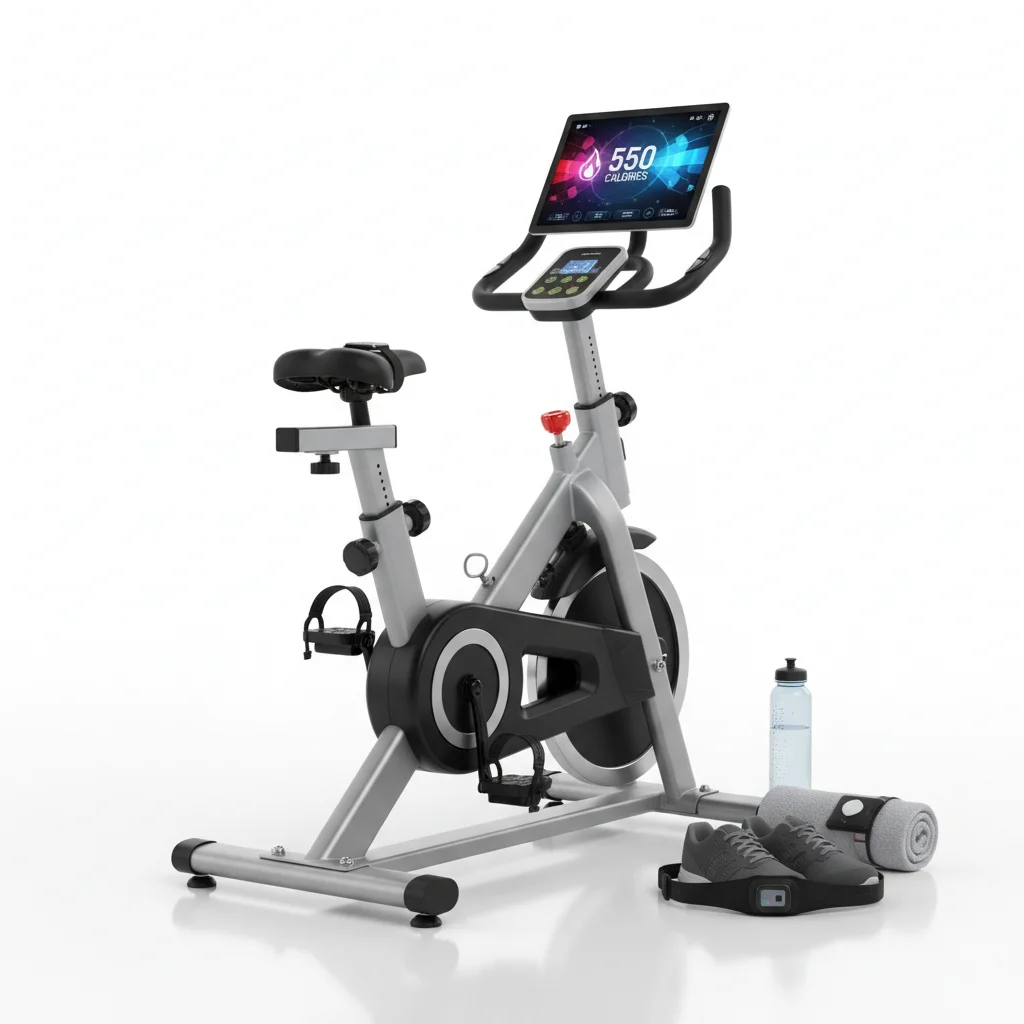
An exercise bike can be a highly effective tool for burning calories, with a typical 30-minute session burning between 200 and 500 calories, depending on intensity, rider weight, and bike type. This range makes stationary cycling a versatile option for fitness enthusiasts of all levels looking to manage weight or improve cardiovascular health.
Factors Influencing Calorie Burn
Several key factors determine the exact number of calories you’ll burn during an exercise bike workout. Your body weight plays a significant role; a heavier individual will generally expend more energy to perform the same amount of work compared to a lighter person. Intensity is another critical factor. A high-intensity interval training (HIIT) session will burn significantly more calories in a shorter period than a steady-state, low-intensity ride. The type of exercise bike also matters, as some bikes, like air bikes, engage more upper body muscles, leading to a higher overall calorie expenditure.
Resistance level and duration of your workout are also crucial. Increasing the resistance on your bike forces your muscles to work harder, thus burning more calories. Similarly, extending your workout duration will naturally increase the total calories burned, assuming a consistent intensity. Monitoring your heart rate can provide a good indication of your workout intensity and help you stay within your target calorie-burning zones.
Maximizing Your Calorie Burn
To get the most out of your exercise bike for calorie burning, consider incorporating varied workouts. Interval training, where you alternate between periods of high intensity and low intensity, is particularly effective for boosting metabolism and burning more calories both during and after your workout. Incorporating hills or resistance changes into your routine can also challenge your muscles differently and increase energy expenditure.
- Vary your workout intensity with HIIT sessions.
- Increase resistance levels gradually to challenge yourself.
- Extend workout duration as your fitness improves.
- Incorporate standing intervals to engage more muscle groups.
- Maintain proper form to maximize muscle engagement.
Comparing Exercise Bike Types
|
Our Picks for the Best Exercise Bike in 2026
As an Amazon Associate I earn from qualifying purchases.
|
||
| Num | Product | Action |
|---|---|---|
| 1 | Exercise Bike, Adjustable Magnetic Resistance Stationary Bikes for Home Cardio with Exclusive App, Indoor Bike with 330lbs Weight Capacity Comfortable Seat, Tablet Mount and Fitness Courses |

|
| 2 | RELIFE REBUILD YOUR LIFE Exercise Bike Stationary for Home Indoor,Cycling Bike with Silent Belt Drive for Home Cardio,Brake Pad Resistance with djustable & Comfort Seat/PAD Holder/LCD Monitor. |
|
| 3 | Exercise Bike, Wenoker Stationary Bike for Home, App Supported Indoor Bike with Silent Belt Drive, Heavy Flywheel, Multi-grips Handlebar and Upgraded Digital Display |
|
| 4 | Exercise Bike for Home – 350LB Magnetic Resistance Indoor Cycling Bike, Silent Stationary Spin Bike with App Sync, Adjustable Seat, LCD Monitor, Smooth & Quiet for Cardio Workout |
|
| 5 | Exercise Bike, Magnetic Resistance Stationary Bikes for Home with App Compatible, Silent Indoor Cycling Bike with 350lbs Weight Capacity Comfortable Seat, Digital Monitor & Phone Mount |
|
| 6 | Indoor Exercise Bike for Seniors, 5 IN 1 Foldable Stationary Bike with 16-Level Magnetic Resistance and Tri-Position Ride, 330LBS Capacity, 6.6 LBS Flywheel, for Home Workout 818 Gray |
|
| 7 | Exercise Bike, Wenoker Magnetic Stationary Bike for Home App Sync Indoor Bike with Adjustable Seat and Handlebar, Transport Wheels and Fitness Courses for Weight Loss |
|
| 8 | MERACH Exercise Bike, Brake Pad Stationary Bike with Exclusive App, Low Noise Indoor Cycling Bike with 300lbs Weight Capacity, Tablet Mount and Fitness Courses for Weight Loss |
|
| 9 | Exercise Bikes for Home,Indoor Cycling Bike with Adjustable Magnetic,Brake Pad Resistance Silent Belt Drive,330lbs Weight Capacity &Upgraded Version Seat for Home Cardio&Weight Loss |
|
| 10 | Exercise Bikes for Home,Indoor Cycling Bike with Adjustable Friction,Brake Pad Resistance Silent Belt Drive,330lbs Weight Capacity &Upgraded Version Seat for Home Cardio&Weight Loss |
|
Different types of exercise bikes offer varying calorie-burning potentials. Upright bikes often mimic outdoor cycling and allow for both seated and standing positions, engaging a wider range of muscles. Recumbent bikes, while comfortable and excellent for joint support, may offer a slightly lower calorie burn due to less core and upper body engagement. Air bikes, which use a fan for resistance, are known for their full-body workout, often leading to the highest calorie expenditure among stationary bikes.
Spin bikes, designed to replicate road cycling, are also excellent for high-intensity workouts and significant calorie burn, especially when used in structured classes or with varied resistance. The choice of bike should align with your fitness goals, comfort preferences, and any physical limitations you might have.
Sample Workout for Calorie Burning
A structured workout can help you consistently burn calories. Start with a 5-minute warm-up at a moderate pace. Follow this with 20-30 minutes of interval training: 1 minute at high intensity (high resistance, fast pace) followed by 2 minutes at moderate intensity (lower resistance, steady pace). Repeat this cycle 7-10 times. Finish with a 5-minute cool-down at a low intensity. This type of workout not only burns calories effectively but also improves cardiovascular endurance.
Remember to stay hydrated throughout your workout and listen to your body. Adjust the intensity and duration as needed to prevent injury and ensure a sustainable fitness routine. Consistency is key to achieving your calorie-burning goals and overall fitness improvements.

I’ve been using my stationary bike for a few months now, and I can definitely see the calorie burn benefits. I usually aim for a 45-minute session, and it’s great to know I’m hitting that 300-500 calorie range mentioned. It’s become a staple in my routine for managing my weight, especially on days I can’t get outside.
This really helped me understand why my calorie burn varies so much. I used to just hop on and ride, but now I’m more mindful of my intensity. Focusing on those high-intensity intervals has made my workouts much more effective for cardiovascular health, and I feel much better after each session.
I appreciate the breakdown of how body weight affects calorie burn. I’m on the lighter side, so I have to really push myself to get into the higher calorie ranges, which can be a bit frustrating. My main complaint is that my bike’s display isn’t always accurate with its calorie count, so I have to rely on external trackers.
Good info here. I’ve got an air bike and it really does make a difference in how many calories I torch compared to the old magnetic resistance one I used to have. The intensity factor is huge; I try to mix in some HIIT sessions a few times a week and I feel the burn way more.