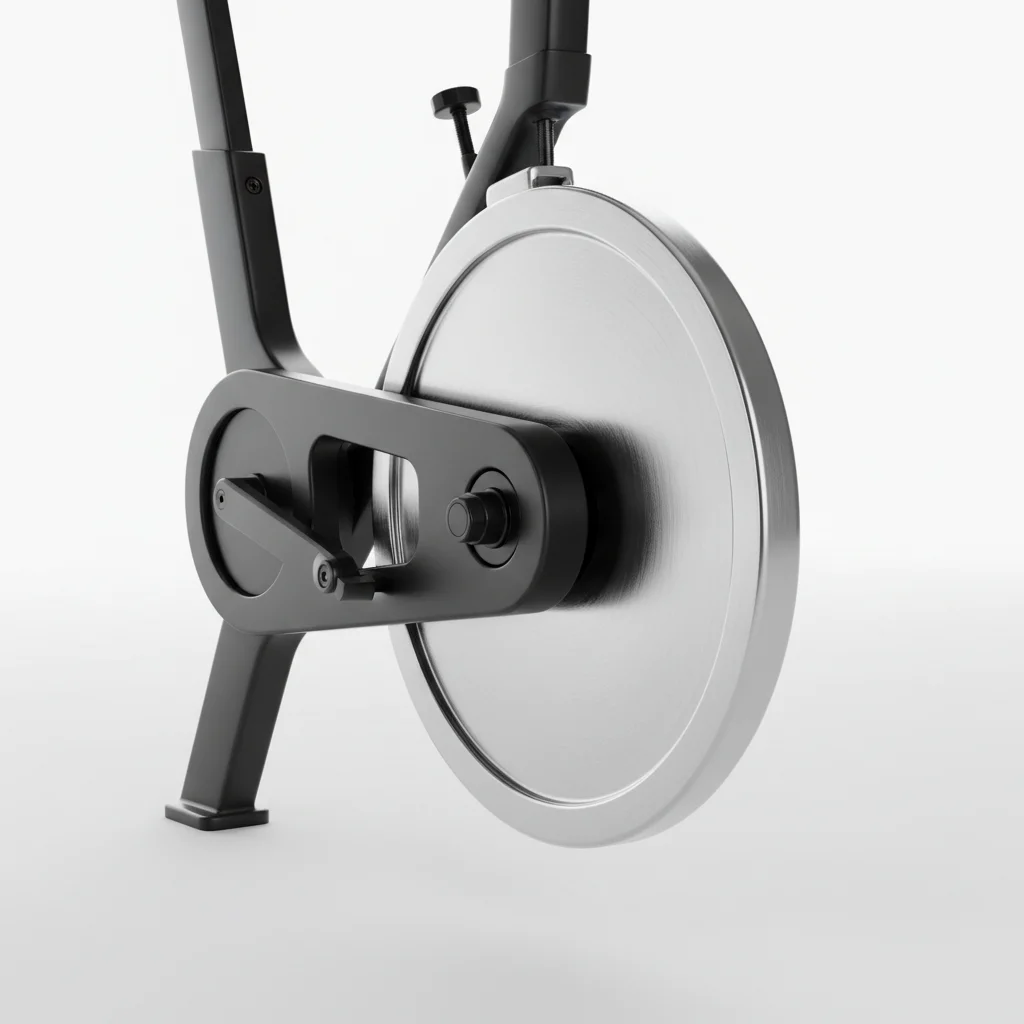
The flywheel weight on an exercise bike significantly impacts the smoothness and stability of your ride. A heavier flywheel, typically 20 pounds or more, provides a more fluid and consistent pedaling motion, closely mimicking the feel of an outdoor bike. This is particularly beneficial for high-intensity interval training (HIIT) and long endurance rides, as it reduces jerky movements and offers a more realistic cycling experience.
Understanding Flywheel Mechanics
The flywheel is a weighted disc located at the front or rear of an exercise bike. Its primary function is to store rotational energy, which helps maintain momentum and smooth out the pedaling stroke. When you pedal, the flywheel spins, and its inertia keeps the pedals moving even during the brief moments when your feet are transitioning between the up and down strokes. This continuous motion is what creates a fluid and comfortable ride.
Lighter flywheels, often found on more budget-friendly models, may result in a choppier ride, especially at higher resistance levels or during rapid changes in cadence. This can lead to discomfort and a less engaging workout. Conversely, a heavier flywheel provides a more stable platform, reducing strain on your joints and allowing for a more effective and enjoyable workout session.
Impact on Ride Smoothness and Stability
A heavier flywheel contributes directly to a smoother and more stable ride. The increased mass creates greater inertia, which helps to iron out any inconsistencies in your pedaling. This is especially noticeable during standing climbs or when transitioning between different resistance levels. With a heavier flywheel, you’ll experience less wobbling and a more consistent feel throughout your workout.
For serious cyclists or those who prioritize a realistic road feel, a flywheel weighing 30 pounds or more is often recommended. These bikes offer superior stability and a more immersive cycling experience, making them ideal for intense training sessions or virtual rides. Consider models like thefor an exceptional heavy flywheel experience.
Resistance and Workout Intensity
|
Our Picks for the Best Exercise Bike in 2026
As an Amazon Associate I earn from qualifying purchases.
|
||
| Num | Product | Action |
|---|---|---|
| 1 | Exercise Bike, Wenoker Stationary Bike for Home, App Supported Indoor Bike with Silent Belt Drive, Heavy Flywheel, Multi-grips Handlebar and Upgraded Digital Display |

|
| 2 | Exercise Bike, Wenoker Magnetic Stationary Bike for Home App Sync Indoor Bike with Adjustable Seat and Handlebar, Transport Wheels and Fitness Courses for Weight Loss |
|
| 3 | Exercise Bike, Adjustable Magnetic Resistance Stationary Bikes for Home Cardio with Exclusive App, Indoor Bike with 330lbs Weight Capacity Comfortable Seat, Tablet Mount and Fitness Courses |
|
| 4 | RELIFE REBUILD YOUR LIFE Exercise Bike Stationary for Home Indoor,Cycling Bike with Silent Belt Drive for Home Cardio,Brake Pad Resistance with djustable & Comfort Seat/PAD Holder/LCD Monitor. |
|
| 5 | MERACH Exercise Bike, Brake Pad Stationary Bike with Exclusive App, Low Noise Indoor Cycling Bike with 300lbs Weight Capacity, Tablet Mount and Fitness Courses for Weight Loss |
|
| 6 | Exercise Bike, Magnetic Resistance Stationary Bikes for Home with App Compatible, Silent Indoor Cycling Bike with 350lbs Weight Capacity Comfortable Seat, Digital Monitor & Phone Mount |
|
| 7 | Exercise Bike for Home – 350LB Magnetic Resistance Indoor Cycling Bike, Silent Stationary Spin Bike with App Sync, Adjustable Seat, LCD Monitor, Smooth & Quiet for Cardio Workout |
|
| 8 | Indoor Exercise Bike for Seniors, 5 IN 1 Foldable Stationary Bike with 16-Level Magnetic Resistance and Tri-Position Ride, 330LBS Capacity, 6.6 LBS Flywheel, for Home Workout 818 Gray |
|
| 9 | Exercise Bikes for Home,Indoor Cycling Bike with Adjustable Magnetic,Brake Pad Resistance Silent Belt Drive,330lbs Weight Capacity &Upgraded Version Seat for Home Cardio&Weight Loss |
|
| 10 | Exercise Bikes for Home,Indoor Cycling Bike with Adjustable Friction,Brake Pad Resistance Silent Belt Drive,330lbs Weight Capacity &Upgraded Version Seat for Home Cardio&Weight Loss |
|
While flywheel weight doesn’t directly determine resistance, it significantly influences how resistance feels. A heavier flywheel allows for a wider range of resistance adjustments to feel more natural and gradual. This means you can fine-tune your workout intensity with greater precision, whether you’re aiming for a light warm-up or a challenging hill climb.
Conversely, on bikes with lighter flywheels, the resistance changes can feel more abrupt and less nuanced. This can make it harder to maintain a consistent effort and may detract from the overall quality of your workout. For optimal resistance control and a versatile training experience, prioritize bikes with a substantial flywheel.
Noise Levels and Durability
Generally, exercise bikes with heavier flywheels tend to operate more quietly. The increased mass helps to dampen vibrations and reduce mechanical noise, leading to a more peaceful workout environment. This is a significant advantage for those who exercise early in the morning or late at night, or for anyone who prefers a quieter home gym.
Furthermore, a well-engineered bike with a heavy flywheel often indicates a higher overall build quality and durability. These bikes are typically constructed with more robust components, designed to withstand the demands of frequent and intense use. Investing in such a bike can lead to a longer lifespan and fewer maintenance issues in the long run. Theis a great example of a durable bike with a heavy flywheel.
Choosing the Right Flywheel Weight for You
The ideal flywheel weight depends on your individual fitness goals, budget, and preferences. Here’s a quick guide:
- Under 15 lbs: Suitable for casual users or those with very limited space. May offer a less smooth ride.
- 15-25 lbs: Good for general fitness and moderate workouts. A common range for many home exercise bikes.
- 25-40 lbs: Excellent for serious cyclists, HIIT, and endurance training. Provides a very smooth and stable ride.
- Over 40 lbs: Premium option for the most demanding users seeking the ultimate road-like feel and stability.
Ultimately, a heavier flywheel generally translates to a better overall riding experience, offering enhanced smoothness, stability, and a more realistic feel. While bikes with heavier flywheels might come with a higher price tag, the investment often pays off in terms of comfort, performance, and long-term satisfaction.

This information about the flywheel storing rotational energy was super helpful. I always wondered why some bikes felt so much better than others. My current bike has a lighter flywheel, and I can definitely feel the difference in momentum. I’m already saving up for an upgrade to a model with a heavier one, specifically for those high-intensity sessions. It sounds like it will make a huge impact on my training.
I was really hoping a heavier flywheel would completely eliminate that jerky feeling I sometimes get, especially when I’m really pushing it. While my new bike with a 20-pound flywheel is definitely an improvement over my old one, it’s not quite as ‘outdoor bike’ realistic as I’d hoped. It’s good, but not perfect for simulating road cycling. Maybe I needed an even heavier one.
I used to think all exercise bikes were the same, but after reading about flywheel weight, I totally get it now. My old bike felt so choppy, especially during sprints. I upgraded to one with a 25-pound flywheel, and the difference is night and day. It’s so much smoother, making my HIIT workouts way more effective and enjoyable. Definitely worth paying attention to this detail!
I’ve been using my new bike for a few weeks now, and the heavier flywheel really does make a difference for those longer endurance rides. The pedaling motion feels much more consistent, which helps me stay in a rhythm without feeling like I’m fighting the machine. My only minor complaint is that it took a bit longer to assemble than I expected, but once it was set up, it’s been great.