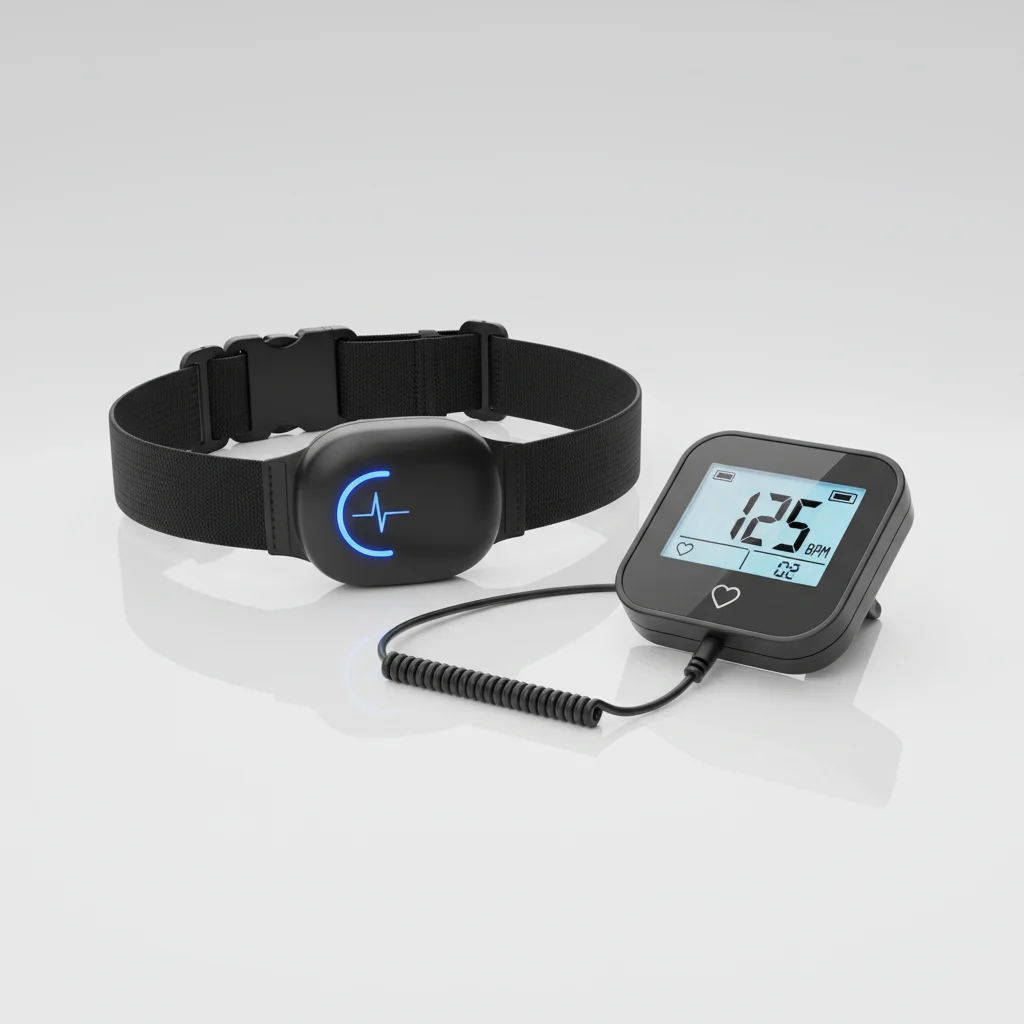
An exercise bike heart rate monitor can significantly enhance your workout effectiveness by providing real-time data on your cardiovascular effort. While not strictly essential for every user, it offers crucial benefits for those aiming to optimize fat burning, improve endurance, or train within specific heart rate zones. Approximately 70% of serious home cyclists find a heart rate monitor to be a valuable tool for achieving their fitness goals.
Understanding Heart Rate Zones for Optimal Training
Heart rate zones are specific ranges of your maximum heart rate that correspond to different training effects. For instance, training in the fat-burning zone (typically 60-70% of your max heart rate) helps your body utilize fat as its primary fuel source. The cardio zone (70-80%) improves cardiovascular fitness and endurance. Knowing your heart rate allows you to tailor your intensity precisely, preventing undertraining or overtraining.
- Fat-Burning Zone (60-70% MHR): Ideal for weight loss and sustained, moderate effort.
- Cardio Zone (70-80% MHR): Boosts cardiovascular health and stamina.
- Peak Zone (80-90% MHR): For high-intensity interval training (HIIT) and performance enhancement.
- Recovery Zone (50-60% MHR): Gentle exercise for active recovery and warm-ups/cool-downs.
Types of Exercise Bike Heart Rate Monitors
There are several types of heart rate monitors compatible with exercise bikes. Chest strap monitors are generally considered the most accurate, providing continuous and precise readings. Wrist-based monitors, often integrated into smartwatches, offer convenience but can sometimes be less accurate during intense activity. Some exercise bikes come with built-in handgrip sensors, which are convenient for quick checks but may not provide consistent data throughout a workout.
When choosing a monitor, consider its compatibility with your specific exercise bike model and any fitness apps you use. Many modern bikes support ANT+ or Bluetooth connectivity, allowing seamless data transfer.
Benefits of Using a Heart Rate Monitor
|
Our Picks for the Best Exercise Bike in 2026
As an Amazon Associate I earn from qualifying purchases.
|
||
| Num | Product | Action |
|---|---|---|
| 1 | Exercise Bike, Wenoker Stationary Bike for Home, App Supported Indoor Bike with Silent Belt Drive, Heavy Flywheel, Multi-grips Handlebar and Upgraded Digital Display |

|
| 2 | RELIFE REBUILD YOUR LIFE Exercise Bike Stationary for Home Indoor,Cycling Bike with Silent Belt Drive for Home Cardio,Brake Pad Resistance with djustable & Comfort Seat/PAD Holder/LCD Monitor. |
|
| 3 | Exercise Bike, Adjustable Magnetic Resistance Stationary Bikes for Home Cardio with Exclusive App, Indoor Bike with 330lbs Weight Capacity Comfortable Seat, Tablet Mount and Fitness Courses |
|
| 4 | MERACH Exercise Bike, Brake Pad Stationary Bike with Exclusive App, Low Noise Indoor Cycling Bike with 300lbs Weight Capacity, Tablet Mount and Fitness Courses for Weight Loss |
|
| 5 | Indoor Exercise Bike for Seniors, 5 IN 1 Foldable Stationary Bike with 16-Level Magnetic Resistance and Tri-Position Ride, 330LBS Capacity, 6.6 LBS Flywheel, for Home Workout 818 Gray |
|
| 6 | Exercise Bikes for Home,Indoor Cycling Bike with Adjustable Magnetic,Brake Pad Resistance Silent Belt Drive,330lbs Weight Capacity &Upgraded Version Seat for Home Cardio&Weight Loss |
|
| 7 | Exercise Bike, Magnetic Resistance Stationary Bikes for Home with App Compatible, Silent Indoor Cycling Bike with 350lbs Weight Capacity Comfortable Seat, Digital Monitor & Phone Mount |
|
| 8 | Exercise Bike for Home – 350LB Magnetic Resistance Indoor Cycling Bike, Silent Stationary Spin Bike with App Sync, Adjustable Seat, LCD Monitor, Smooth & Quiet for Cardio Workout |
|
| 9 | Exercise Bike, Wenoker Magnetic Stationary Bike for Home App Sync Indoor Bike with Adjustable Seat and Handlebar, Transport Wheels and Fitness Courses for Weight Loss |
|
| 10 | Exercise Bikes for Home,Indoor Cycling Bike with Adjustable Friction,Brake Pad Resistance Silent Belt Drive,330lbs Weight Capacity &Upgraded Version Seat for Home Cardio&Weight Loss |
|
Integrating a heart rate monitor into your exercise bike routine offers numerous advantages. It helps you stay accountable and motivated by providing tangible metrics of your effort. You can track your progress over time, seeing how your cardiovascular fitness improves as your resting heart rate decreases and your ability to sustain higher intensities increases. This data is invaluable for adjusting your training plan and ensuring you’re working towards your objectives efficiently.
For those with specific health goals, such as managing blood pressure or recovering from an injury, a heart rate monitor provides a safe way to exercise within prescribed limits. It prevents overexertion and helps maintain a consistent, beneficial intensity.
Choosing the Right Monitor for Your Bike
Selecting the best heart rate monitor depends on your individual needs and your exercise bike’s features. If your bike has a console that displays heart rate, ensure the monitor you choose is compatible. Many popular brands offer chest straps that pair easily with a wide range of fitness equipment. For a more integrated experience, some high-end exercise bikes come with advanced heart rate tracking built directly into their systems, often using optical sensors.
Consider factors like comfort, battery life, and water resistance, especially if you tend to sweat heavily during workouts. Reading user reviews can also provide insight into the real-world performance and reliability of different models.
Integrating Heart Rate Data into Your Workouts
Once you have your heart rate monitor, the next step is to effectively integrate its data into your exercise bike workouts. Start by calculating your estimated maximum heart rate (220 minus your age) and then determine your target heart rate zones. During your workout, periodically check your monitor to ensure you are within your desired zone. Adjust your resistance or cadence as needed to maintain the target intensity.
Many fitness apps and exercise bike consoles offer guided workouts that incorporate heart rate training, making it easier to follow a structured program. Regularly reviewing your workout data can help you identify patterns, understand your body’s responses to different intensities, and make informed decisions about your training regimen.
