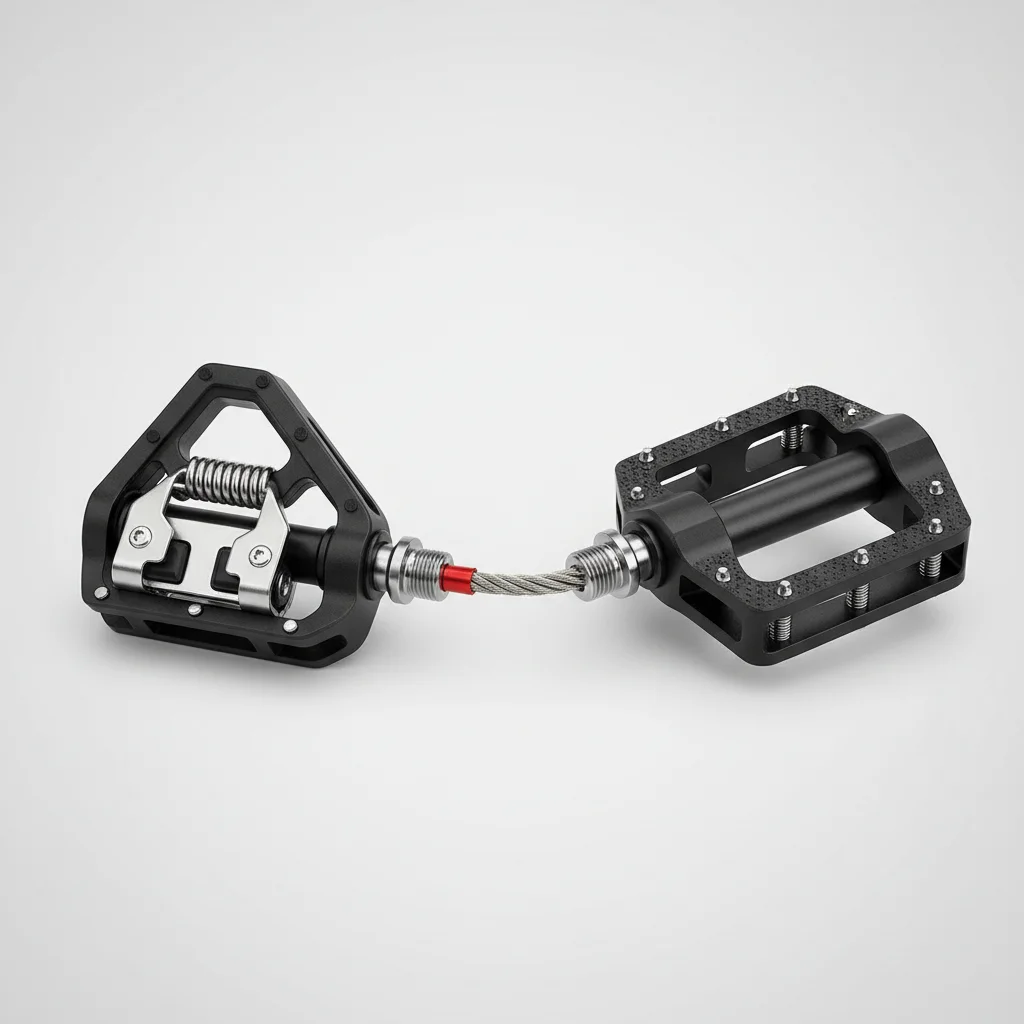
Choosing the right exercise bike pedals can significantly impact your workout efficiency and comfort. For most home users, flat pedals offer a versatile and convenient option, allowing you to wear any athletic shoe. However, clipless pedals, which require specific cycling shoes, provide superior power transfer and stability, making them ideal for serious cyclists and those seeking to maximize their performance.
Understanding Flat Pedals: Convenience and Versatility
Flat pedals are the most common type found on entry-level and many mid-range exercise bikes. They feature a broad, flat surface, often with a textured grip or small pins to prevent your feet from slipping. The primary advantage of flat pedals is their versatility; you can use them with any type of athletic shoe, making them perfect for casual riders, beginners, or households with multiple users who don’t want to invest in specialized cycling footwear. While they offer less power transfer compared to clipless systems, modern flat pedals with good grip can still provide a secure and comfortable ride for most general fitness routines.
Exploring Clipless Pedals: Enhanced Performance and Efficiency
Clipless pedals, despite their name, actually involve ‘clipping in’ your cycling shoes to the pedal mechanism. This creates a direct connection between your foot and the pedal, allowing for a more efficient transfer of power throughout the entire pedal stroke, including the upstroke. This engagement can lead to a more effective workout, improved muscle activation, and reduced risk of your feet slipping off the pedals during intense sessions. Clipless systems come in various designs, with SPD (Shimano Pedaling Dynamics) being a popular choice for indoor cycling due to its two-bolt cleat system that allows for easier walking off the bike.
Key Differences in Power Transfer and Muscle Engagement
|
Our Picks for the Best Exercise Bike in 2026
As an Amazon Associate I earn from qualifying purchases.
|
||
| Num | Product | Action |
|---|---|---|
| 1 | Exercise Bike, Magnetic Resistance Stationary Bikes for Home with App Compatible, Silent Indoor Cycling Bike with 350lbs Weight Capacity Comfortable Seat, Digital Monitor & Phone Mount |

|
| 2 | RELIFE REBUILD YOUR LIFE Exercise Bike Stationary for Home Indoor,Cycling Bike with Silent Belt Drive for Home Cardio,Brake Pad Resistance with djustable & Comfort Seat/PAD Holder/LCD Monitor. |
|
| 3 | Exercise Bike, Wenoker Magnetic Stationary Bike for Home App Sync Indoor Bike with Adjustable Seat and Handlebar, Transport Wheels and Fitness Courses for Weight Loss |
|
| 4 | Exercise Bikes for Home,Indoor Cycling Bike with Adjustable Friction,Brake Pad Resistance Silent Belt Drive,330lbs Weight Capacity &Upgraded Version Seat for Home Cardio&Weight Loss |
|
| 5 | Exercise Bike for Home – 350LB Magnetic Resistance Indoor Cycling Bike, Silent Stationary Spin Bike with App Sync, Adjustable Seat, LCD Monitor, Smooth & Quiet for Cardio Workout |
|
| 6 | Exercise Bikes for Home,Indoor Cycling Bike with Adjustable Magnetic,Brake Pad Resistance Silent Belt Drive,330lbs Weight Capacity &Upgraded Version Seat for Home Cardio&Weight Loss |
|
| 7 | Exercise Bike, Wenoker Stationary Bike for Home, App Supported Indoor Bike with Silent Belt Drive, Heavy Flywheel, Multi-grips Handlebar and Upgraded Digital Display |
|
| 8 | Indoor Exercise Bike for Seniors, 5 IN 1 Foldable Stationary Bike with 16-Level Magnetic Resistance and Tri-Position Ride, 330LBS Capacity, 6.6 LBS Flywheel, for Home Workout 818 Gray |
|
| 9 | MERACH Exercise Bike, Brake Pad Stationary Bike with Exclusive App, Low Noise Indoor Cycling Bike with 300lbs Weight Capacity, Tablet Mount and Fitness Courses for Weight Loss |
|
| 10 | Exercise Bike, Adjustable Magnetic Resistance Stationary Bikes for Home Cardio with Exclusive App, Indoor Bike with 330lbs Weight Capacity Comfortable Seat, Tablet Mount and Fitness Courses |
|
The fundamental difference between clipless and flat pedals lies in how they facilitate power transfer and engage different muscle groups. With flat pedals, you primarily push down on the pedal, engaging your quadriceps and glutes. While effective, there’s a slight loss of energy as your foot might lift slightly during the upstroke. Clipless pedals, by contrast, allow you to pull up as well as push down, engaging your hamstrings and hip flexors more effectively. This 360-degree pedal stroke creates a smoother, more powerful, and more efficient cycling experience, which can be particularly beneficial for longer rides or high-intensity interval training.
Comfort and Safety Considerations for Each Pedal Type
When it comes to comfort, flat pedals generally offer immediate ease of use as they don’t require special shoes or a learning curve for clipping in and out. However, for extended rides, the lack of a secure connection can sometimes lead to foot fatigue or hot spots if your shoes aren’t rigid enough. Clipless pedals, once you’re accustomed to them, can enhance comfort by distributing pressure more evenly across your foot and preventing slippage. Safety is also a factor; while flat pedals allow for quick dismounts, clipless pedals, when properly adjusted, reduce the risk of accidental foot slippage, which can be a concern during vigorous workouts. It’s crucial to practice clipping in and out with clipless pedals before engaging in intense exercise.
Making Your Choice: Factors to Consider
Deciding between flat and clipless pedals depends largely on your fitness goals, experience level, and budget. If you’re a casual rider, prefer variety in your footwear, or are just starting your fitness journey, flat pedals are a practical and cost-effective choice. If you’re serious about indoor cycling, aiming for performance gains, or looking to replicate an outdoor cycling experience, investing in clipless pedals and compatible shoes will likely be more rewarding. Many exercise bikes come with dual-sided pedals, offering both flat and SPD clipless options, providing the best of both worlds.
- Consider your primary use: casual fitness vs. serious training.
- Evaluate your budget for pedals and specialized cycling shoes.
- Assess your comfort level with clipping in and out.
- Think about who else will be using the exercise bike.
- Prioritize power transfer and efficiency for performance goals.
Ultimately, the best exercise bike pedals are the ones that align with your personal preferences and fitness aspirations. Experimenting with different types, if possible, can help you make an informed decision that enhances your home workout experience.For those looking to upgrade their current setup, consider the long-term benefits of improved performance and comfort.
