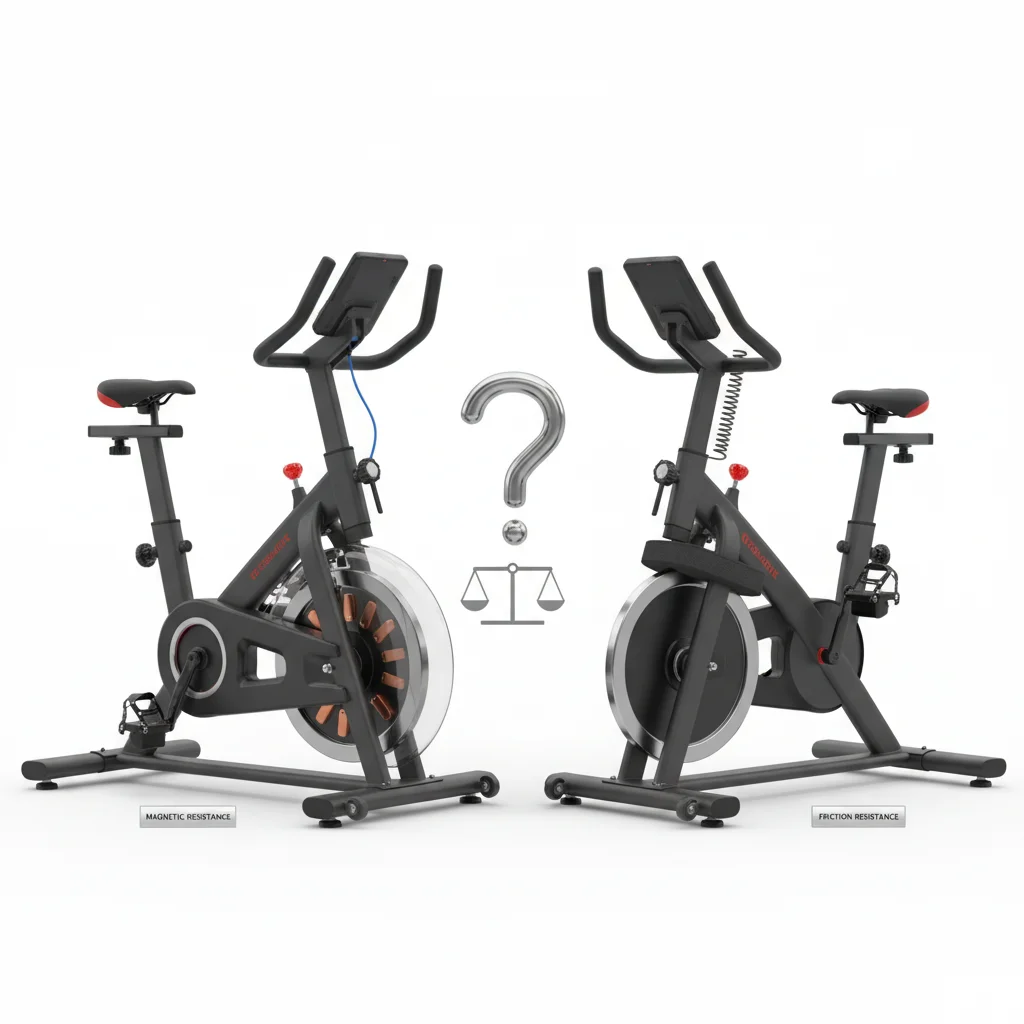
When choosing an exercise bike, understanding the different resistance types is crucial for finding the right fit for your fitness goals. The two primary types are magnetic and friction resistance, each offering distinct advantages and disadvantages. Magnetic resistance bikes generally provide a smoother, quieter, and more consistent ride with less maintenance, while friction resistance bikes, often found in spin bikes, offer a more direct, road-like feel and can be more budget-friendly.
Magnetic Resistance: Smooth and Silent Operation
Magnetic resistance bikes utilize magnets to create tension against the flywheel without direct contact. This non-contact system results in an incredibly smooth and quiet ride, making them ideal for home use where noise can be a concern. The resistance levels are typically adjusted electronically, offering precise control and often a wider range of settings. Because there’s no physical contact, wear and tear on components are minimal, leading to lower maintenance requirements and a longer lifespan for the bike.
However, magnetic resistance bikes can sometimes feel less ‘connected’ to the rider compared to friction bikes, and the maximum resistance might not be as intense for very advanced users seeking extreme challenges. They also tend to be more expensive upfront due to the technology involved.
Friction Resistance: Traditional and Intense Feel
Friction resistance bikes, commonly known as spin bikes, use a brake pad that applies direct pressure to the flywheel to create resistance. This direct contact provides a very tangible, road-like cycling experience, which many riders prefer for its authenticity and immediate feedback. The resistance is usually adjusted manually via a knob, allowing for quick and often very high levels of tension.
The main drawbacks of friction resistance include noise from the brake pad rubbing against the flywheel, and the need for more frequent maintenance as the brake pads wear down over time. They can also generate heat during intense workouts. Despite these points, their robust feel and often lower price point make them a popular choice for those prioritizing a traditional cycling experience.
Key Differences and Considerations
|
Our Picks for the Best Exercise Bike in 2026
As an Amazon Associate I earn from qualifying purchases.
|
||
| Num | Product | Action |
|---|---|---|
| 1 | MERACH Exercise Bike, Brake Pad Stationary Bike with Exclusive App, Low Noise Indoor Cycling Bike with 300lbs Weight Capacity, Tablet Mount and Fitness Courses for Weight Loss |

|
| 2 | Exercise Bikes for Home,Indoor Cycling Bike with Adjustable Magnetic,Brake Pad Resistance Silent Belt Drive,330lbs Weight Capacity &Upgraded Version Seat for Home Cardio&Weight Loss |
|
| 3 | Exercise Bikes for Home,Indoor Cycling Bike with Adjustable Friction,Brake Pad Resistance Silent Belt Drive,330lbs Weight Capacity &Upgraded Version Seat for Home Cardio&Weight Loss |
|
| 4 | Indoor Exercise Bike for Seniors, 5 IN 1 Foldable Stationary Bike with 16-Level Magnetic Resistance and Tri-Position Ride, 330LBS Capacity, 6.6 LBS Flywheel, for Home Workout 818 Gray |
|
| 5 | Exercise Bike for Home – 350LB Magnetic Resistance Indoor Cycling Bike, Silent Stationary Spin Bike with App Sync, Adjustable Seat, LCD Monitor, Smooth & Quiet for Cardio Workout |
|
| 6 | Exercise Bike, Wenoker Stationary Bike for Home, App Supported Indoor Bike with Silent Belt Drive, Heavy Flywheel, Multi-grips Handlebar and Upgraded Digital Display |
|
| 7 | Exercise Bike, Wenoker Magnetic Stationary Bike for Home App Sync Indoor Bike with Adjustable Seat and Handlebar, Transport Wheels and Fitness Courses for Weight Loss |
|
| 8 | Exercise Bike, Adjustable Magnetic Resistance Stationary Bikes for Home Cardio with Exclusive App, Indoor Bike with 330lbs Weight Capacity Comfortable Seat, Tablet Mount and Fitness Courses |
|
| 9 | Exercise Bike, Magnetic Resistance Stationary Bikes for Home with App Compatible, Silent Indoor Cycling Bike with 350lbs Weight Capacity Comfortable Seat, Digital Monitor & Phone Mount |
|
| 10 | RELIFE REBUILD YOUR LIFE Exercise Bike Stationary for Home Indoor,Cycling Bike with Silent Belt Drive for Home Cardio,Brake Pad Resistance with djustable & Comfort Seat/PAD Holder/LCD Monitor. |
|
The choice between magnetic and friction resistance largely depends on your priorities. If a quiet, low-maintenance, and smooth ride is paramount, magnetic resistance is likely your best bet. If you prefer a more intense, direct feel reminiscent of outdoor cycling and are on a tighter budget, friction resistance might be more suitable. Consider the following factors:
- Noise Level: Magnetic bikes are significantly quieter.
- Maintenance: Magnetic bikes require less maintenance.
- Ride Feel: Friction bikes offer a more ‘road-like’ feel.
- Price: Friction bikes are generally more affordable.
- Durability: Both can be durable, but friction pads wear out.
For those seeking a high-tech experience with pre-programmed workouts and integrated metrics, magnetic resistance bikes often come with more advanced consoles and connectivity options. Many modern magnetic bikes also offer a very wide range of resistance, making them suitable for all fitness levels.
Which Is Better for Your Goals?
If your primary goal is a quiet workout that won’t disturb others, or if you value precise electronic control over resistance and minimal upkeep, a magnetic resistance bike is the superior choice. These bikes are excellent for steady-state cardio, interval training, and general fitness.
Conversely, if you’re an avid cyclist looking to replicate an outdoor ride indoors, or if you prioritize a more intense, direct resistance feel for high-intensity interval training (HIIT) or spin classes, a friction resistance bike might be more satisfying. They often allow for very quick and dramatic changes in resistance, which can be beneficial for certain training styles.
Making Your Decision
Ultimately, the ‘better’ resistance type is subjective and depends on individual preferences and fitness objectives. Test riding both types if possible can provide valuable insight into which feel you prefer. Consider your budget, the importance of noise level, and how much maintenance you’re willing to perform. Both types of bikes can provide an effective workout, but understanding their core differences will help you make an informed decision that aligns with your home fitness needs.
