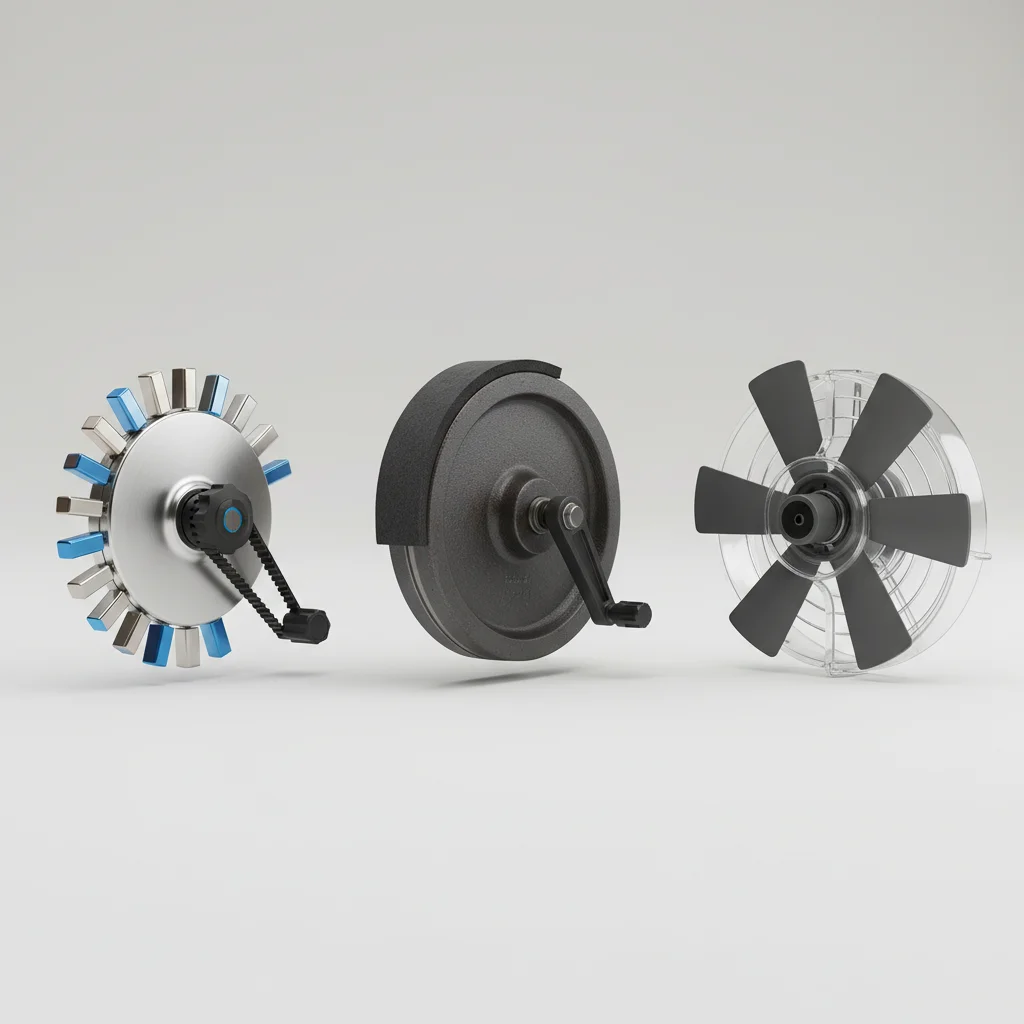
Choosing the right exercise bike resistance type is crucial for an effective and enjoyable workout. There are primarily four main types of resistance mechanisms found in home exercise bikes: direct contact, magnetic, air, and electromagnetic. Each type offers distinct advantages and disadvantages in terms of smoothness, noise level, maintenance, and overall feel, directly impacting your exercise experience and the longevity of the bike.
Understanding Direct Contact Resistance
Direct contact resistance, often found in older or more budget-friendly spin bikes, uses brake pads that physically press against the flywheel to create friction. This method provides a very direct and often intense resistance, mimicking the feel of road cycling. However, it can be noisy due to the friction and typically requires more maintenance as the brake pads wear down over time. Users often appreciate the raw, immediate feedback this type offers.
Exploring Magnetic Resistance Systems
Magnetic resistance is perhaps the most common and popular type in modern home exercise bikes. It utilizes magnets positioned near the flywheel, and by adjusting the distance between the magnets and the flywheel, the resistance level changes without any physical contact. This results in an exceptionally smooth, quiet, and virtually maintenance-free operation. Magnetic resistance bikes are ideal for those who want a quiet workout environment and a consistent, fluid pedaling motion.
The Dynamics of Air Resistance
|
Our Picks for the Best Exercise Bike in 2026
As an Amazon Associate I earn from qualifying purchases.
|
||
| Num | Product | Action |
|---|---|---|
| 1 | Exercise Bikes for Home,Indoor Cycling Bike with Adjustable Friction,Brake Pad Resistance Silent Belt Drive,330lbs Weight Capacity &Upgraded Version Seat for Home Cardio&Weight Loss |

|
| 2 | Indoor Exercise Bike for Seniors, 5 IN 1 Foldable Stationary Bike with 16-Level Magnetic Resistance and Tri-Position Ride, 330LBS Capacity, 6.6 LBS Flywheel, for Home Workout 818 Gray |
|
| 3 | Exercise Bike, Magnetic Resistance Stationary Bikes for Home with App Compatible, Silent Indoor Cycling Bike with 350lbs Weight Capacity Comfortable Seat, Digital Monitor & Phone Mount |
|
| 4 | Exercise Bike, Wenoker Stationary Bike for Home, App Supported Indoor Bike with Silent Belt Drive, Heavy Flywheel, Multi-grips Handlebar and Upgraded Digital Display |
|
| 5 | Exercise Bike, Adjustable Magnetic Resistance Stationary Bikes for Home Cardio with Exclusive App, Indoor Bike with 330lbs Weight Capacity Comfortable Seat, Tablet Mount and Fitness Courses |
|
| 6 | Exercise Bike, Wenoker Magnetic Stationary Bike for Home App Sync Indoor Bike with Adjustable Seat and Handlebar, Transport Wheels and Fitness Courses for Weight Loss |
|
| 7 | MERACH Exercise Bike, Brake Pad Stationary Bike with Exclusive App, Low Noise Indoor Cycling Bike with 300lbs Weight Capacity, Tablet Mount and Fitness Courses for Weight Loss |
|
| 8 | Exercise Bikes for Home,Indoor Cycling Bike with Adjustable Magnetic,Brake Pad Resistance Silent Belt Drive,330lbs Weight Capacity &Upgraded Version Seat for Home Cardio&Weight Loss |
|
| 9 | RELIFE REBUILD YOUR LIFE Exercise Bike Stationary for Home Indoor,Cycling Bike with Silent Belt Drive for Home Cardio,Brake Pad Resistance with djustable & Comfort Seat/PAD Holder/LCD Monitor. |
|
| 10 | Exercise Bike for Home – 350LB Magnetic Resistance Indoor Cycling Bike, Silent Stationary Spin Bike with App Sync, Adjustable Seat, LCD Monitor, Smooth & Quiet for Cardio Workout |
|
Air resistance bikes, often called fan bikes or air bikes, generate resistance using a large fan that spins as you pedal. The faster you pedal, the greater the air resistance, providing an unlimited range of intensity. This type of resistance offers a full-body workout as many models incorporate moving handlebars. While air bikes are excellent for high-intensity interval training (HIIT) and building power, they can be quite noisy due to the fan’s operation. They are also known for their durability and straightforward mechanics.
Benefits of Electromagnetic Resistance (ECB)
Electromagnetic resistance, or Eddy Current Brake (ECB) systems, are a more advanced form of magnetic resistance. Instead of manually adjusting magnets, an electric current creates an electromagnetic field that controls the resistance. This allows for extremely precise and consistent resistance changes, often controlled digitally through the bike’s console. ECB systems are incredibly smooth, quiet, and highly durable, making them a premium choice for serious trainers and those seeking advanced workout programs. They are often found in higher-end models and commercial-grade bikes.
Which Resistance Type Suits Your Needs?
Choosing the right resistance type depends on your fitness goals, budget, and preferences. Consider the following:
- For Quiet Workouts: Magnetic or Electromagnetic resistance bikes are your best bet.
- For Intense, Full-Body Workouts: Air resistance bikes excel in this area.
- For a Budget-Friendly Option: Direct contact resistance bikes are often more affordable.
- For Precision and Advanced Programs: Electromagnetic systems offer superior control.
- For Low Maintenance: Magnetic and Electromagnetic systems require minimal upkeep.
Ultimately, testing different types if possible can help you determine which feel and functionality align best with your personal exercise routine and environment.
