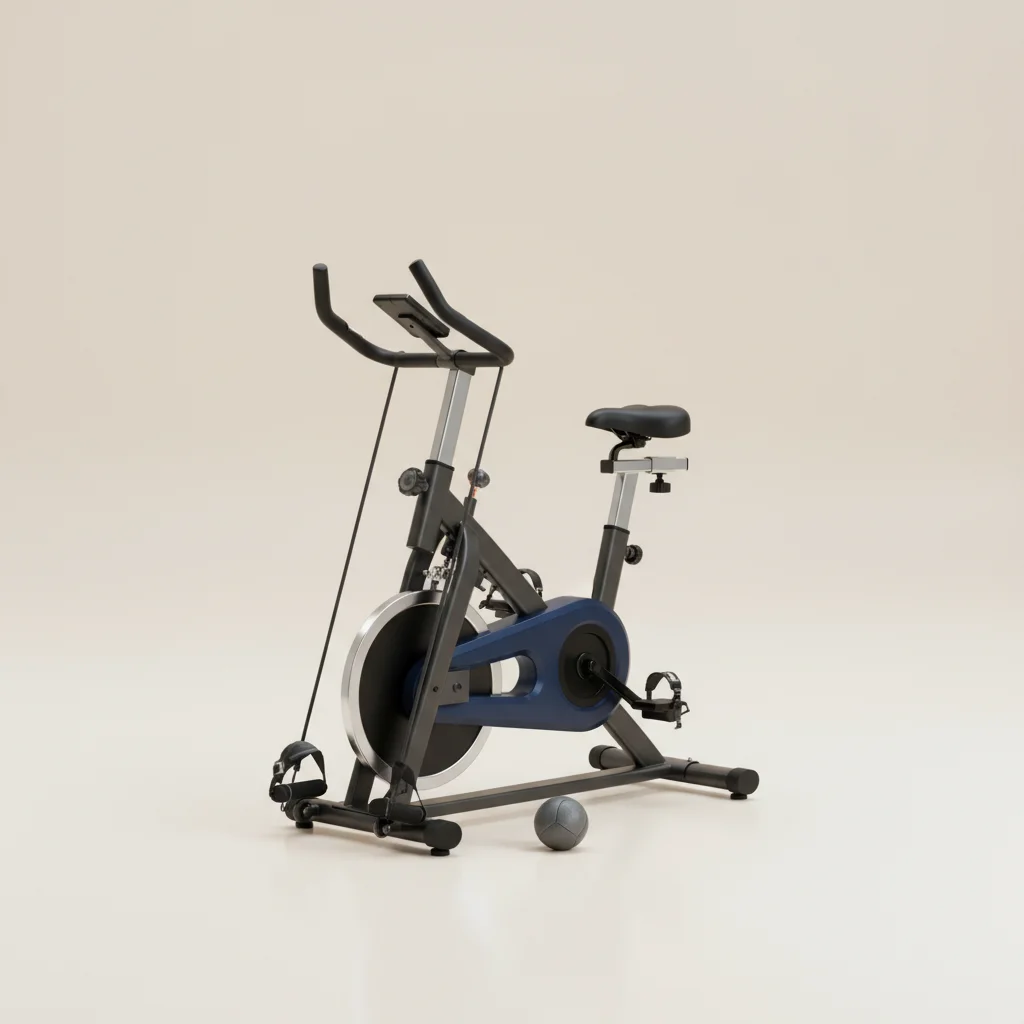
Yes, exercise bike workouts can effectively tone your legs and build muscle, particularly in your quadriceps, hamstrings, and glutes. Consistent cycling, especially with varied resistance and intensity, stimulates muscle fibers, leading to increased strength and definition. For optimal results, aim for at least three 30-minute sessions per week, incorporating both steady-state cardio and high-intensity interval training (HIIT).
Understanding Muscle Engagement During Cycling
Cycling is a compound exercise that engages several major muscle groups in your lower body. The quadriceps, located at the front of your thighs, are heavily worked during the downstroke of the pedal. Your hamstrings, at the back of your thighs, and glutes, in your buttocks, are engaged during the upstroke and provide power throughout the entire pedal revolution. Calf muscles also play a supporting role, especially during higher resistance efforts.
To maximize muscle toning, it’s crucial to vary your workout routine. Incorporating different resistance levels mimics climbing hills, which places greater demand on your leg muscles. Standing out of the saddle periodically also increases glute and core engagement, contributing to a more comprehensive lower-body workout.
Designing Your Leg-Toning Exercise Bike Routine
A well-rounded routine for toning legs on an exercise bike should include a mix of steady-state rides and interval training. Steady-state rides, where you maintain a consistent moderate intensity for an extended period, build endurance and contribute to overall muscle conditioning. Interval training, on the other hand, involves alternating between short bursts of high-intensity effort and periods of lower intensity recovery. This method is highly effective for muscle growth and fat burning.
Consider adding specific drills like ‘sprints’ (short, maximum effort bursts) or ‘climbs’ (high resistance, slower cadence) to target different muscle fibers. Remember to always warm up for 5-10 minutes before your main workout and cool down afterwards to prevent injury and aid recovery.
- Warm-up: 5-10 minutes of light pedaling at low resistance.
- Interval Training: Alternate 1-2 minutes of high resistance/high intensity with 2-3 minutes of moderate resistance/recovery. Repeat 4-6 times.
- Steady-State Ride: 20-30 minutes at a consistent moderate resistance.
- Cool-down: 5 minutes of light pedaling, gradually decreasing resistance.
- Stretch: Focus on quadriceps, hamstrings, and glutes after your ride.
The Role of Resistance and Cadence
|
Our Picks for the Best Exercise Bike in 2026
As an Amazon Associate I earn from qualifying purchases.
|
||
| Num | Product | Action |
|---|---|---|
| 1 | Exercise Bikes for Home,Indoor Cycling Bike with Adjustable Friction,Brake Pad Resistance Silent Belt Drive,330lbs Weight Capacity &Upgraded Version Seat for Home Cardio&Weight Loss |

|
| 2 | Exercise Bike, Wenoker Stationary Bike for Home, App Supported Indoor Bike with Silent Belt Drive, Heavy Flywheel, Multi-grips Handlebar and Upgraded Digital Display |
|
| 3 | Exercise Bike, Adjustable Magnetic Resistance Stationary Bikes for Home Cardio with Exclusive App, Indoor Bike with 330lbs Weight Capacity Comfortable Seat, Tablet Mount and Fitness Courses |
|
| 4 | MERACH Exercise Bike, Brake Pad Stationary Bike with Exclusive App, Low Noise Indoor Cycling Bike with 300lbs Weight Capacity, Tablet Mount and Fitness Courses for Weight Loss |
|
| 5 | Exercise Bike for Home – 350LB Magnetic Resistance Indoor Cycling Bike, Silent Stationary Spin Bike with App Sync, Adjustable Seat, LCD Monitor, Smooth & Quiet for Cardio Workout |
|
| 6 | Indoor Exercise Bike for Seniors, 5 IN 1 Foldable Stationary Bike with 16-Level Magnetic Resistance and Tri-Position Ride, 330LBS Capacity, 6.6 LBS Flywheel, for Home Workout 818 Gray |
|
| 7 | RELIFE REBUILD YOUR LIFE Exercise Bike Stationary for Home Indoor,Cycling Bike with Silent Belt Drive for Home Cardio,Brake Pad Resistance with djustable & Comfort Seat/PAD Holder/LCD Monitor. |
|
| 8 | Exercise Bike, Wenoker Magnetic Stationary Bike for Home App Sync Indoor Bike with Adjustable Seat and Handlebar, Transport Wheels and Fitness Courses for Weight Loss |
|
| 9 | Exercise Bikes for Home,Indoor Cycling Bike with Adjustable Magnetic,Brake Pad Resistance Silent Belt Drive,330lbs Weight Capacity &Upgraded Version Seat for Home Cardio&Weight Loss |
|
| 10 | Exercise Bike, Magnetic Resistance Stationary Bikes for Home with App Compatible, Silent Indoor Cycling Bike with 350lbs Weight Capacity Comfortable Seat, Digital Monitor & Phone Mount |
|
Resistance is a key factor in muscle toning. Higher resistance forces your muscles to work harder, leading to greater strength gains and muscle definition. However, it’s important to find a balance; too much resistance can lead to poor form and potential injury. Aim for a resistance level where you feel challenged but can still maintain a smooth, controlled pedal stroke.
Cadence, or your pedaling speed, also plays a role. A lower cadence with higher resistance will emphasize strength, while a higher cadence with moderate resistance will focus more on endurance and cardiovascular fitness. For optimal leg toning, incorporate both, ensuring you’re engaging your muscles effectively throughout the entire pedal stroke.
Nutrition and Recovery for Muscle Growth
Toning your legs isn’t just about the workout; nutrition and recovery are equally important. To build and repair muscle tissue, your body needs adequate protein. Ensure your diet includes lean proteins, complex carbohydrates, and healthy fats. Hydration is also crucial for muscle function and overall health.
Allowing your muscles time to recover between intense workouts is vital. Overtraining can hinder progress and increase the risk of injury. Incorporate rest days or engage in active recovery activities like light walking or stretching on non-cycling days. Listen to your body and adjust your training schedule as needed.
Common Mistakes to Avoid
When using an exercise bike for leg toning, several common mistakes can limit your results. One is neglecting proper bike setup; an incorrectly adjusted seat height or handlebar position can lead to inefficient pedaling and potential discomfort or injury. Another mistake is relying solely on low resistance, which won’t provide enough challenge for muscle growth. Conversely, using excessively high resistance with poor form can strain joints.
Finally, consistency is paramount. Sporadic workouts will yield minimal results. Commit to a regular schedule and gradually increase the intensity and duration of your rides as your fitness improves. Remember, muscle toning is a gradual process that requires dedication and patience.

I’ve been cycling for years, and while I agree it’s great for toning, I find it hard to get the same muscle growth as with weights. I do appreciate the focus on quadriceps and hamstrings during the downstroke and upstroke, but I wish there was more emphasis on how to really push for hypertrophy on a bike. It’s good for maintenance though.
This is exactly what I needed to hear! I’ve been consistent with my bike workouts, aiming for three times a week, and I’ve noticed a significant improvement in my leg strength. Knowing that my glutes are getting a good workout during the upstroke is really motivating. My legs feel so much more defined now.
I’ve been using my stationary bike for a few months now, focusing on those 30-minute sessions with varied resistance. I can definitely feel the difference in my quads and hamstrings. It’s amazing how much definition I’m starting to see, and my legs feel so much stronger. This really works for toning!
I was skeptical about building muscle with just an exercise bike, but after incorporating HIIT into my routine as suggested, I’m a believer. My glutes are definitely more engaged, and I feel a good burn after each session. The only minor thing is sometimes my seat gets a little uncomfortable on longer rides, but that’s an easy fix.