To safely clean and lubricate your exercise bike, you should unplug it, wipe down all sweat-exposed surfaces after every ride, and perform a thorough cleaning weekly or monthly with mild soap and water. Lubricate sliding adjustment posts monthly with silicone spray, and apply bike-specific chain lubricant to chain-driven bikes every 2-3 months. This routine extends the bike’s lifespan by preventing corrosion, reducing friction, and ensuring smooth operation for years.
Why Regular Maintenance is Crucial for Your Exercise Bike
Consistent cleaning and lubrication are not just about keeping your exercise bike looking new; they are fundamental to its long-term health and your workout quality. Regular maintenance directly translates to a smoother, quieter ride, allowing you to focus on your fitness goals without distractions.
Why is diligent maintenance so important for your fitness equipment? Over time, sweat, dust, and grime can accumulate on various components, leading to corrosion, increased friction, and premature wear. This wear and tear can degrade performance, making your workouts less effective and potentially unsafe. By performing routine care, you safeguard your investment, prevent expensive repairs, and ensure your bike remains hygienic and ready for every session.
Understanding Your Exercise Bike’s Key Components for Maintenance
To effectively maintain your exercise bike, it helps to know its basic components and how they function. Different parts require specific cleaning and lubrication methods, depending on their material and role in the bike’s operation.
Exercise bikes typically consist of a frame, a flywheel, a resistance system, a drive system, adjustable seat and handlebars, pedals, and a console. The frame provides structural support. The flywheel creates momentum, while the resistance system (either magnetic or friction-based) controls workout intensity. The drive system (chain or belt) connects the pedals to the flywheel. Adjustable posts for the seat and handlebars ensure a comfortable fit, and the pedals transmit your power. Finally, the console tracks your workout data. Understanding these elements helps you target your cleaning and lubrication efforts correctly.
Essential Tools and Supplies for DIY Maintenance
Gathering the right tools and supplies before you start will make the maintenance process much smoother and more effective. Using appropriate products is key to preventing damage and achieving the best results.
For effective DIY exercise bike maintenance, you’ll need a few key items. For cleaning, stock up on soft microfiber cloths, a mild solution of soap and water, or a non-abrasive all-purpose cleaner. A chemical-free screen cleaner is essential for the console, and soft brushes can reach into crevices. When it comes to lubrication, a silicone spray lubricant is versatile for adjustment posts and friction pads. Bike-specific chain lubricant is crucial for chain-driven bikes, and bike grease is best for pedal threads and bearings. Having Allen wrenches, screwdrivers, and a pedal wrench on hand will help with tightening and minor adjustments.
Step-by-Step Guide to Safely Cleaning Your Exercise Bike
A clean exercise bike is not only more pleasant to use but also performs better. Regular cleaning removes corrosive sweat and abrasive dust, preserving the bike’s finish and mechanical integrity.
1. Safety First: Unplug and Prepare
|
Our Picks for the Best Exercise Bike in 2026
As an Amazon Associate I earn from qualifying purchases.
|
||
| Num | Product | Action |
|---|---|---|
| 1 | Exercise Bike, Magnetic Resistance Stationary Bikes for Home with App Compatible, Silent Indoor Cycling Bike with 350lbs Weight Capacity Comfortable Seat, Digital Monitor & Phone Mount |

|
| 2 | Exercise Bikes for Home,Indoor Cycling Bike with Adjustable Friction,Brake Pad Resistance Silent Belt Drive,330lbs Weight Capacity &Upgraded Version Seat for Home Cardio&Weight Loss |
|
| 3 | Exercise Bike, Adjustable Magnetic Resistance Stationary Bikes for Home Cardio with Exclusive App, Indoor Bike with 330lbs Weight Capacity Comfortable Seat, Tablet Mount and Fitness Courses |
|
| 4 | Indoor Exercise Bike for Seniors, 5 IN 1 Foldable Stationary Bike with 16-Level Magnetic Resistance and Tri-Position Ride, 330LBS Capacity, 6.6 LBS Flywheel, for Home Workout 818 Gray |
|
| 5 | MERACH Exercise Bike, Brake Pad Stationary Bike with Exclusive App, Low Noise Indoor Cycling Bike with 300lbs Weight Capacity, Tablet Mount and Fitness Courses for Weight Loss |
|
| 6 | Exercise Bike, Wenoker Stationary Bike for Home, App Supported Indoor Bike with Silent Belt Drive, Heavy Flywheel, Multi-grips Handlebar and Upgraded Digital Display |
|
| 7 | Exercise Bike for Home – 350LB Magnetic Resistance Indoor Cycling Bike, Silent Stationary Spin Bike with App Sync, Adjustable Seat, LCD Monitor, Smooth & Quiet for Cardio Workout |
|
| 8 | Exercise Bikes for Home,Indoor Cycling Bike with Adjustable Magnetic,Brake Pad Resistance Silent Belt Drive,330lbs Weight Capacity &Upgraded Version Seat for Home Cardio&Weight Loss |
|
| 9 | RELIFE REBUILD YOUR LIFE Exercise Bike Stationary for Home Indoor,Cycling Bike with Silent Belt Drive for Home Cardio,Brake Pad Resistance with djustable & Comfort Seat/PAD Holder/LCD Monitor. |
|
| 10 | Exercise Bike, Wenoker Magnetic Stationary Bike for Home App Sync Indoor Bike with Adjustable Seat and Handlebar, Transport Wheels and Fitness Courses for Weight Loss |
|
Before you begin any cleaning or maintenance, prioritize safety. This critical first step prevents accidental injury or damage to your bike’s electronics.
Always ensure your exercise bike is unplugged from any electrical outlets before you start cleaning, especially if it has an electronic console or powered resistance. This eliminates the risk of electrical shock or accidental activation during maintenance. Clear the area around your bike, gather all your cleaning supplies, and place an old towel or mat underneath to catch any drips or debris. This preparation ensures a safe and tidy workspace.
2. Daily Wipe Down: After Every Ride
A quick wipe-down after each workout is the simplest yet most effective way to combat the damaging effects of sweat. This routine helps prevent corrosion and material breakdown.
Immediately after each exercise session, take a moment to wipe down all surfaces that came into contact with sweat. Use a damp microfiber cloth to gently clean the handlebars, seat, frame, and any visible parts of the console. Sweat is highly corrosive, and allowing it to sit on your bike can lead to rust and deterioration of finishes over time. This habit takes only a minute or two but significantly contributes to your bike’s longevity and hygiene.
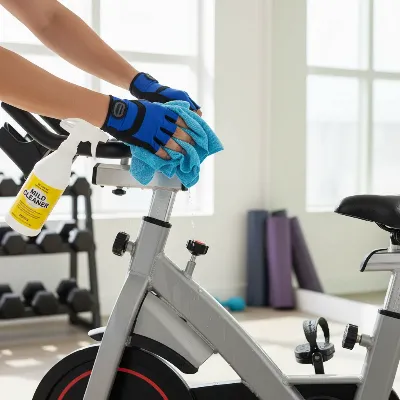 Person wiping down exercise bike after a workout with a microfiber cloth and spray cleaner, showing sweat marks disappearing from the frame.
3. Thorough Cleaning: Weekly or Monthly
Beyond the daily wipe-down, a more comprehensive cleaning session is needed periodically to address deeper grime and hard-to-reach areas. This deep clean helps maintain aesthetic appeal and functional performance.
Depending on your usage frequency, aim for a thorough cleaning of your exercise bike weekly or monthly. Begin by using a mild soap and water solution or a non-abrasive all-purpose cleaner sprayed onto a microfiber cloth (never directly onto the bike) to clean the entire frame, handlebars, and seat. For the flywheel, wipe it clean, inspecting for any accumulated dust or debris that could affect resistance. the pedals and crank arms, which can trap dirt. Use a chemical-free screen cleaner and a dedicated screen cloth for the console to avoid damage. If possible, gently tilt the bike to clean underneath the base, where sweat and dust often accumulate. For bikes with friction resistance pads, ensure the flywheel area they contact is free of residue.
A Detailed Approach to Lubricating Your Exercise Bike
Lubrication is vital for smooth operation, preventing squeaks, reducing friction, and extending the life of moving parts. Using the correct lubricant for each component is essential for optimal performance.
1. Identify Lubrication Points
Not every part of your bike needs lubrication, and applying lubricant in the wrong place can attract dust or even cause damage. Knowing where to lubricate is the first step in effective maintenance.
Focus your lubrication efforts on areas that involve metal-on-metal contact or sliding motions. Key points include the sliding adjustment posts for the seat and handlebars, where they enter the frame. The threads and bearings of the pedals also benefit from occasional grease. If your bike has a chain drive, the chain itself is a primary lubrication point. For bikes with friction-based resistance, the resistance pads may require a light silicone spray to ensure smooth operation. Finally, don’t overlook pop pin assemblies, which can become stiff over time.
2. Choose the Right Lubricant
The type of lubricant matters significantly. Using an inappropriate product can lead to adverse effects, from attracting dirt to degrading materials.
Selecting the correct lubricant is paramount for your exercise bike’s specific components. For most plastic and metal sliding parts like seat and handlebar posts, a silicone spray lubricant is ideal as it won’t damage plastic and leaves a dry finish that resists dust. For chain-driven bikes, always use a bike-specific chain lubricant, designed to withstand friction and repel grime, never a general-purpose oil. Pedal threads and bearings require a thicker bike grease for long-lasting protection. It is generally advised not to use WD-40 (the multi-use product) as a primary lubricant, especially on chains or plastic components, as it is primarily a degreaser and can break down existing lubrication or degrade certain materials. However, WD-40 does offer Specialist Bike Cleaners and Silicone Lubricants that are suitable for bikes.
3. Application Techniques
Proper application ensures the lubricant reaches the necessary parts without creating a mess or attracting more dirt. A little often goes a long way.
When applying lubricant, precision is key. For sliding posts and pop pins, spray a small amount of silicone lubricant onto a cloth and then wipe it onto the post or shaft, moving the component through its range of motion a few times to distribute it evenly. For chain-driven bikes, apply bike-specific chain lube sparingly to each link while slowly rotating the pedals. Wipe off any excess immediately to prevent grime buildup. For pedal bearings, a small amount of bike grease can be applied after removing the pedals if needed. Always wipe away any excess lubricant with a clean cloth to avoid attracting dust and dirt.
Common Maintenance Mistakes to Avoid
Even with the best intentions, it’s easy to make mistakes during maintenance that can hinder rather than help your exercise bike. Being aware of these common pitfalls can save you time and potential headaches.
Many users inadvertently make errors that impact their bike’s performance and longevity. One significant mistake is neglecting regular cleaning, allowing sweat and dust to corrode components. Another is using inappropriate cleaners or lubricants, such as petroleum-based products on plastic parts or the wrong type of oil for chains, which can cause damage or attract excessive dirt. Over-lubricating can also be an issue, as excess product can gum up mechanisms and become a magnet for dust. Ignoring strange noises or loose parts is dangerous; these are often early warning signs of a developing problem that needs immediate attention. Finally, not checking critical safety elements like tightened bolts and stable leveling feet can lead to an unstable and unsafe ride.
Your Comprehensive Exercise Bike Maintenance Schedule
Establishing a consistent maintenance schedule ensures your exercise bike remains in peak condition, providing reliable performance whenever you’re ready to ride. A balanced routine incorporates daily, weekly, and monthly tasks.
A well-structured maintenance schedule is the backbone of a long-lasting exercise bike. After every ride, perform a quick wipe-down of all sweat-exposed surfaces to prevent corrosion. Weekly, conduct a more thorough cleaning of the frame, handlebars, and flywheel, and check visible bolts for tightness. Monthly, lubricate the adjustment posts and friction pads (if applicable), inspect your chain or belt drive, and clean thoroughly underneath the bike. Annually or as needed, consider a deeper dive, lubricating pedal bearings and inspecting for any significant wear and tear that might warrant professional service. This systematic approach tackles issues before they escalate, keeping your bike smooth and safe.
Troubleshooting Common Exercise Bike Issues Related to Maintenance
Even with a consistent maintenance routine, you might encounter minor issues. Knowing how to troubleshoot common problems can help you quickly resolve them and get back to your workout.
Many exercise bike problems can be traced back to a lack of maintenance. If your bike is making squeaky noises, it’s often a sign that pedals, the flywheel, or adjustment posts need lubrication or tightening. Sticking adjustments on the seat or handlebars usually indicate a need for cleaning and a light silicone spray. Inconsistent resistance can stem from dust buildup in the resistance system or worn friction pads, requiring cleaning or replacement. If your bike feels wobbly or unstable, check that all assembly bolts are tight and that the leveling feet are properly adjusted and making firm contact with the floor. Addressing these issues promptly prevents them from escalating into more serious mechanical failures.
Conclusion
Maintaining your exercise bike doesn’t have to be a daunting task. By committing to a simple yet consistent cleaning and lubrication routine, you can significantly extend the life of your equipment, ensure optimal performance, and enjoy safer, more effective workouts for years to come. a well-cared-for exercise bike is a reliable partner in your fitness journey. Take the time to understand its needs, use the right tools, and address small issues before they become major problems.
Ready to take charge of your exercise bike’s health? Start implementing these DIY maintenance tips today, and feel the difference a well-maintained machine makes. What’s one part of your exercise bike’s maintenance you’ll focus on first?
Frequently Asked Questions
Can I use WD-40 on my exercise bike?
While WD-40 offers specific “Specialist Bike” products for cleaning and silicone lubrication, the original multi-use WD-40 is primarily a degreaser and generally not recommended as a long-term lubricant for most exercise bike components, especially chains or plastic parts, as it can break down existing lubricants or degrade materials over time.
How often should I lubricate my exercise bike?
Lubrication frequency depends on the specific part and bike type. Chain-drive bikes may need chain lubrication every 2-3 months. Sliding adjustment posts and friction pads (if applicable) typically benefit from silicone spray monthly. Pedal bearings might only need grease yearly. Always check your bike’s manual for model-specific recommendations.
What kind of cleaner should I use for my exercise bike?
For general cleaning, a mild soap and water solution or a non-abrasive, all-purpose household cleaner applied with a microfiber cloth is effective. Avoid abrasive cleaners or products containing bleach, ammonia, peroxide, or alcohol, as these can damage your bike’s finish and components. Use a chemical-free screen cleaner for the console.
My exercise bike is making a squeaking noise, what should I do?
Squeaking noises often indicate a need for lubrication or that bolts are loose. Check and tighten all accessible bolts, especially on the pedals, seat post, and handlebars. If the noise persists, identify the source (e.g., flywheel, pedals, or adjustment posts) and apply the appropriate lubricant, such as silicone spray for posts or bike grease for pedal bearings.
How often should I wipe down my exercise bike?
You should wipe down your exercise bike immediately after every single ride. This removes corrosive sweat and prevents it from drying and causing rust or damage to the frame, handlebars, and other surfaces. A quick wipe-down is the most crucial daily maintenance step.
How to Safely Clean Your Exercise Bike
Follow these steps to safely clean your exercise bike, ensuring it performs better and lasts longer by removing corrosive sweat and abrasive dust.
Prioritize safety by unplugging your exercise bike from any electrical outlets, especially if it has an electronic console. Clear the area around your bike and place an old towel or mat underneath to catch any drips or debris, ensuring a safe and tidy workspace before you begin.
Immediately after each exercise session, wipe down all surfaces that came into contact with sweat using a damp microfiber cloth. This daily habit prevents corrosion and deterioration of finishes, taking only a minute or two but significantly contributing to your bike's longevity and hygiene.
Depending on usage, aim for a thorough cleaning weekly or monthly. Use a mild soap and water solution or a non-abrasive all-purpose cleaner on a microfiber cloth to clean the frame, handlebars, seat, and flywheel. Use a chemical-free screen cleaner for the console and gently tilt the bike to clean underneath the base.

The advice about unplugging the bike before cleaning is super important, and I appreciate that reminder. However, I found the instructions for lubricating the chain a little vague. It says ‘apply bike-specific chain lubricant every 2-3 months,’ but doesn’t really explain how much or the best way to apply it without making a mess. Could use a bit more detail there.
I’ve been pretty good about wiping down my bike after every ride, but the idea of a thorough weekly or monthly cleaning with mild soap and water was a game-changer. My bike feels so much cleaner and less ‘sticky’ now. It really does make the whole experience more enjoyable and I feel like I’m taking better care of my investment.
This guide was really helpful for getting my old chain-driven bike back in shape. I hadn’t even thought about chain lubricant in ages, and it was definitely overdue. The only thing is, I wish there was a quick link to a recommended brand of bike-specific chain lube. Had to do a separate search for that.
I used to just wipe my bike down with a damp cloth, but after reading about the importance of silicone spray for the adjustment posts, I gave it a try. What a difference! My seat post used to stick a bit, and now it slides up and down so smoothly. It’s a small step that makes a huge impact on the overall feel of my rides.