Most exercise bike squeaks are common, easily identifiable, and often fixable with a few basic tools and DIY knowledge, eliminating the need for professional technicians. The irritating noise typically arises from loose bolts, lack of lubrication on moving parts, misaligned drive belts, or worn-out components. Addressing these issues can restore peace and quiet to your home gym and extend the life of your equipment.
This comprehensive guide will help you diagnose the source of the noise, gather the right tools, and apply effective DIY solutions. By understanding the common culprits and following our step-by-step fixes, you’ll save money, extend the life of your equipment, and reclaim the serene and smooth workout experience you deserve. Let’s get your exercise bike riding silently again!
Why Your Exercise Bike Squeaks: Common Culprits
Understanding why your exercise bike is making noise is the first step toward silencing it. Squeaks typically arise from increased friction, movement between parts that should be stable, or wear and tear over time. Identifying the underlying cause will direct your troubleshooting efforts effectively.
One of the most frequent culprits is loose bolts or screws. Regular use and vibrations during workouts can gradually loosen fasteners on pedals, crank arms, handlebars, the seat post, saddle, and even the main frame. Even tiny movements can generate significant noise. Another major source of squeaks is a lack of lubrication on moving parts. Components like pedals, crank arm bearings, the drive belt or chain, flywheel bearings, the resistance system, and saddle rails require lubrication to ensure smooth, friction-free operation. When these parts dry out, they can rub against each other, creating an annoying squeal.
Misaligned drive belts or chains can also cause friction and noise if they rub against housing or other internal areas. Over time, worn-out components like bearings, drive belts, or brake pads may also be the cause. Bearings are crucial for smooth spinning, and if they dry out or wear unevenly, they will produce noise. Similarly, a worn drive belt or dirty/worn brake pads in friction-based resistance systems can contribute to squeaking. Lastly, environmental factors such as shifts in temperature or humidity can cause materials to expand or contract, leading to new noises.
Becoming a Squeak Detective: How to Pinpoint the Noise
Before you grab your tools, you need to play detective and pinpoint the exact location of the squeak. A systematic approach will save you time and ensure you address the correct problem.
Start with a thorough visual inspection of your entire exercise bike. Look for any obvious signs of deterioration, damage, or loose components on the drive belt, pedals, seat, handlebars, and any areas where parts connect. Next, check for loose components by gently wiggling parts like the pedals, handlebars, and seat. If any of these move independently or feel wobbly, they are prime suspects.
For a more precise diagnosis, move the equipment slowly by hand and listen carefully. Pedal slowly, turn the handlebars, and shift your weight on the seat. Try to isolate the noise to a specific area. Some experienced technicians even use an engine stethoscope to pinpoint noise sources, allowing them to listen closely to different areas while the bike is in motion.
A systematic isolation method can be very effective. Try tightening the tension knob, then spin the pedal on its axis to check for isolated noise. You might also remove the belt cover to see if the noise continues, or rotate the crank arms without the pedals attached to determine if the squeak persists. If comfortable, removing the drive belt entirely can help you identify whether the sound originates from the flywheel axle or the belt wheel axle. For bikes with brake pads, engage the brakes lightly while cycling to see if the squeak is related to the braking mechanism.
 A person carefully listening to an exercise bike to identify a squeak source
Essential Tools for Your DIY Fix
Before you begin, gather the necessary tools. Having these on hand will make the repair process smoother and more efficient.
You’ll need a good wrench set, which should include Allen keys (hex wrenches) in various sizes and possibly an adjustable wrench for different bolt heads. A set of screwdrivers (Phillips and flathead) will also be essential for various fasteners.
When it comes to lubricants, the type you choose is crucial. A silicone spray is excellent for many moving parts like the seat post, flywheel, and drive belts. For metal-on-metal contact points or pedal threads, grease or a penetrating oil like WD-40 can be effective. If your bike has a chain drive, a bike-specific chain lube is recommended. Always to use products specifically designed for fitness equipment to avoid damage. Finally, keep a supply of clean cloths or rags to wipe away excess lubricant and clean components. For specific models, refer to your exercise bike’s manual for recommended lubricants and tools.
DIY Fixes for Common Squeaking Issues
Once you’ve identified the source of the squeak, it’s time to apply the fix. Most issues can be resolved with simple tightening, lubrication, or cleaning.
Tightening Loose Components
|
Our Picks for the Best Exercise Bike in 2026
As an Amazon Associate I earn from qualifying purchases.
|
||
| Num | Product | Action |
|---|---|---|
| 1 | Exercise Bikes for Home,Indoor Cycling Bike with Adjustable Magnetic,Brake Pad Resistance Silent Belt Drive,330lbs Weight Capacity &Upgraded Version Seat for Home Cardio&Weight Loss |

|
| 2 | Exercise Bikes for Home,Indoor Cycling Bike with Adjustable Friction,Brake Pad Resistance Silent Belt Drive,330lbs Weight Capacity &Upgraded Version Seat for Home Cardio&Weight Loss |
|
| 3 | Exercise Bike for Home – 350LB Magnetic Resistance Indoor Cycling Bike, Silent Stationary Spin Bike with App Sync, Adjustable Seat, LCD Monitor, Smooth & Quiet for Cardio Workout |
|
| 4 | Indoor Exercise Bike for Seniors, 5 IN 1 Foldable Stationary Bike with 16-Level Magnetic Resistance and Tri-Position Ride, 330LBS Capacity, 6.6 LBS Flywheel, for Home Workout 818 Gray |
|
| 5 | RELIFE REBUILD YOUR LIFE Exercise Bike Stationary for Home Indoor,Cycling Bike with Silent Belt Drive for Home Cardio,Brake Pad Resistance with djustable & Comfort Seat/PAD Holder/LCD Monitor. |
|
| 6 | Exercise Bike, Wenoker Stationary Bike for Home, App Supported Indoor Bike with Silent Belt Drive, Heavy Flywheel, Multi-grips Handlebar and Upgraded Digital Display |
|
| 7 | MERACH Exercise Bike, Brake Pad Stationary Bike with Exclusive App, Low Noise Indoor Cycling Bike with 300lbs Weight Capacity, Tablet Mount and Fitness Courses for Weight Loss |
|
| 8 | Exercise Bike, Wenoker Magnetic Stationary Bike for Home App Sync Indoor Bike with Adjustable Seat and Handlebar, Transport Wheels and Fitness Courses for Weight Loss |
|
| 9 | Exercise Bike, Magnetic Resistance Stationary Bikes for Home with App Compatible, Silent Indoor Cycling Bike with 350lbs Weight Capacity Comfortable Seat, Digital Monitor & Phone Mount |
|
| 10 | Exercise Bike, Adjustable Magnetic Resistance Stationary Bikes for Home Cardio with Exclusive App, Indoor Bike with 330lbs Weight Capacity Comfortable Seat, Tablet Mount and Fitness Courses |
|
Loose parts are a primary cause of squeaks. Addressing these is often the quickest and easiest solution.
- Pedals and Crank Arms: If you hear a creaking sound from your pedals, they might be loose or need lubrication. Use an appropriate wrench to tighten the pedals onto the crank arms. For persistent issues, remove the pedal, clean the threads, apply a small amount of grease or thread locker, and then reattach it firmly. Ensure the pedals are properly seated.
- Seat Post and Saddle: The seat assembly, including the seat post and saddle rails, is a common source of noise. Adjust the seat to a comfortable position and then tighten all clamping mechanisms and bolts that secure the seat post and saddle. Apply a light drop of wet lubricant to saddle rails where they contact the clamp, after cleaning away any grit.
- Handlebars and Frame: Just like the seat and pedals, handlebars can loosen over time. Check and tighten all bolts and screws that secure the handlebars to the stem and the main frame of the bike. This will eliminate any movement that causes squeaking.
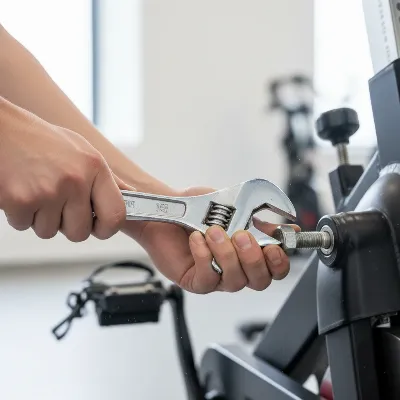 Hands using a wrench to tighten a bolt on an exercise bike frame or pedal
The Power of Lubrication
Dry moving parts are a common cause of friction and noise. Proper lubrication can work wonders.
- Pedals and Crank Threads: A drop of lubricant on the pedal threads helps prevent squeaking and ensures they remain securely fastened. Regular lubrication here reduces friction, making pedaling smoother.
- Drive Belt/Chain: For bikes with a chain drive, apply a small amount of bike-specific lubricant monthly to prevent dryness, reduce friction, and minimize noise. For belt-driven bikes, a dry silicone spray applied sparingly to the belt can help, but always refer to your manufacturer’s recommendations. Too much lubricant can attract dirt, potentially worsening the problem.
- Saddle Rails and Seat Post: As mentioned, a light lubricant on saddle rails can help. For the seat post, especially where it slides into the frame, applying a dry silicone spray once a month can prevent squeaks and stiffness.
- Flywheel and Resistance System: If your bike uses a friction-based resistance system with brake pads, these can squeak when dry. Applying a spray-on silicone lubricant directly onto the flywheel where the brake pads make contact can resolve this. For other flywheel systems, a light silicone spray can help maintain smooth motion.
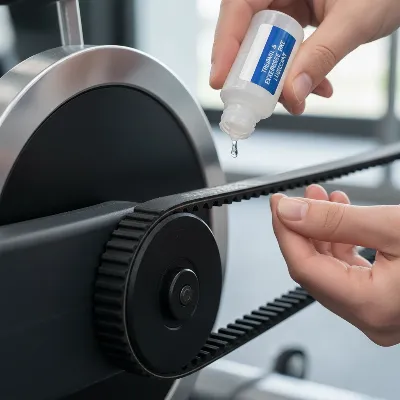 Hands applying lubricant to the drive belt or chain of an exercise bike
Addressing Drive Belt/Chain Problems
Beyond lubrication, the drive system itself might be the source of your woes.
- Alignment Checks: If your drive belt or chain is misaligned, it can rub against other components, causing a squeak. Visually inspect the belt to ensure it runs parallel with the pulleys. If it’s crooked, you may need to loosen tension bolts, carefully adjust the alignment, and then re-tighten.
- Tension Adjustment: Incorrect tension, either too loose or too tight, can also lead to noise and premature wear. Refer to your bike’s manual for instructions on how to check and adjust the drive belt or chain tension correctly.
Cleaning Away the Grime
Dust and debris are silent saboteurs, contributing to friction and noise.
- General Cleaning: Regularly wipe down your bike after each session, especially if you sweat heavily. Sweat can cause rust and damage. Use a mild detergent or spray cleaner with a soft cloth, avoiding moisture near the console.
- Targeted Cleaning: Pay extra attention to areas where parts slide or rotate, and to the path of the drive belt or chain. Cleaning away dirt from clamping surfaces before tightening can prevent a surprisingly loud squeak.
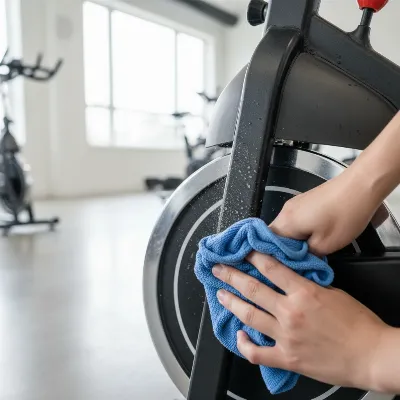 Person wiping down an exercise bike with a cloth, focusing on a moving part
When to Consider Replacement
While many issues are fixable, some components simply wear out and need replacing.
- Worn Belts: If your drive belt is visibly worn, stretched, or cracked, lubrication and adjustment won’t solve the problem, and replacement is necessary. A worn belt often makes a consistent squeaking or chirping noise.
- Damaged Bearings: If after cleaning and lubricating, a grinding noise or rough rotation persists, especially in the flywheel or crank arms, the internal bearings might be worn out. Replacing bearings can be a more involved repair, sometimes requiring professional help, but it’s crucial for smooth operation.
- Frayed Brake Pads: For friction-based resistance bikes, brake pads can wear down over time. If they are thin or damaged, they will need to be replaced to ensure quiet and effective resistance.
Preventative Maintenance: Keep Your Ride Quiet
An ounce of prevention is worth a pound of cure, especially when it comes to exercise bike maintenance. Regular care can significantly reduce the chances of annoying squeaks developing in the first place.
Establish a regular cleaning routine. Wipe down your bike after every workout to remove sweat and dust, which can accumulate and cause friction or corrosion. Pay particular attention to areas around moving parts. Implement a scheduled lubrication plan; monthly application of appropriate lubricants to pedals, crank threads, the seat post, and drive systems can keep everything moving smoothly and silently.
Make it a habit to perform routine bolt checks. Periodically inspect all visible screws, bolts, and fasteners, and tighten anything that feels loose. This simple step can prevent many potential squeaks before they start. Lastly, consider environmental factors. Keep your exercise bike indoors, avoiding extreme temperature fluctuations or high humidity, which can affect materials and lead to noise. A little consistent attention will ensure your bike remains a quiet and reliable partner in your fitness journey.
“Regular maintenance of your exercise bike, including proper lubrication and checking for loose components, is key to preventing those annoying squeaks and ensuring a consistent, enjoyable workout.” – Dr. Emily R. Williams, Sports Physiologist
Conclusion
An exercise bike that squeaks can be a significant distraction, undermining the very purpose of your workout. However, as we’ve explored, most of these irritating noises are not signs of a broken machine but rather indicators that certain parts need a bit of attention. By taking on the role of a “squeak detective,” you can systematically identify the source, whether it’s a loose bolt, a dry component, a misaligned belt, or a worn-out part.
With a few basic tools and the simple DIY fixes outlined in this guide—tightening, lubricating, cleaning, and occasionally replacing—you can restore your exercise bike to its quiet, smooth operating condition. Embracing regular preventative maintenance will ensure your rides remain focused and frustration-free, helping you stay in your zone and achieve your fitness goals. Don’t let a little noise derail your progress; take action today and enjoy the serene, efficient workout you deserve. What steps will you take this week to ensure your exercise bike runs silently?
Frequently Asked Questions
Why does my exercise bike squeak when I pedal hard?
When you pedal hard, increased force and pressure can expose weaknesses like loose bolts, dry bearings in the pedals or crank arms, or even a misaligned drive belt. The extra stress amplifies any existing friction or movement, causing the squeaking sound to become more pronounced. Checking and tightening pedals and crank arms, along with lubricating moving parts, usually resolves this.
What kind of lubricant should I use for my exercise bike?
For general moving parts like the seat post and flywheel, a silicone spray is often recommended. For metal-on-metal contact points or pedal threads, a good quality grease or a penetrating oil like WD-40 (followed by a more durable lubricant) works well. If your bike has a chain, use a bike-specific chain lubricant. Always check your bike’s manual for manufacturer-specific recommendations to avoid damaging components.
How often should I lubricate my exercise bike?
A good rule of thumb is to perform key lubrication every month, especially for frequently used parts like pedals, crank threads, and the seat post. For chain-driven bikes, monthly chain lubrication is essential. Drive belts may require less frequent attention but should be checked periodically. After any thorough cleaning or if a new squeak develops, consider immediate lubrication.
Can I use WD-40 on my exercise bike?
WD-40 is an excellent penetrating lubricant and cleaner that can effectively loosen rusted parts and disperse moisture, making it useful for initial troubleshooting of squeaks. However, it’s not a long-lasting lubricant and can evaporate quickly, potentially attracting more dust over time. For sustained quiet operation, it’s best to use WD-40 to clean and free up parts, then follow up with a more appropriate, longer-lasting lubricant like silicone spray or grease designed for fitness equipment.
Frequently Asked Questions
Why does my exercise bike squeak when I pedal hard?
When you pedal hard, increased force and pressure can expose weaknesses like loose bolts, dry bearings in the pedals or crank arms, or even a misaligned drive belt. The extra stress amplifies any existing friction or movement, causing the squeaking sound to become more pronounced. Checking and tightening pedals and crank arms, along with lubricating moving parts, usually resolves this.
What kind of lubricant should I use for my exercise bike?
For general moving parts like the seat post and flywheel, a silicone spray is often recommended. For metal-on-metal contact points or pedal threads, a good quality grease or a penetrating oil like WD-40 works well. If your bike has a chain, use a bike-specific chain lubricant. Always check your bike's manual for manufacturer-specific recommendations to avoid damaging components.
How often should I lubricate my exercise bike?
A good rule of thumb is to perform key lubrication every month, especially for frequently used parts like pedals, crank threads, and the seat post. For chain-driven bikes, monthly chain lubrication is essential. Drive belts may require less frequent attention but should be checked periodically. After any thorough cleaning or if a new squeak develops, consider immediate lubrication.
Can I use WD-40 on my exercise bike?
WD-40 is an excellent penetrating lubricant and cleaner that can effectively loosen rusted parts and disperse moisture, making it useful for initial troubleshooting of squeaks. However, it's not a long-lasting lubricant and can evaporate quickly, potentially attracting more dust over time. For sustained quiet operation, it's best to use WD-40 to clean and free up parts, then follow up with a more appropriate, longer-lasting lubricant like silicone spray or grease designed for fitness equipment.
What are the most common causes of exercise bike squeaks?
The most common causes of exercise bike squeaks include loose bolts or screws on components like pedals, crank arms, and handlebars. A lack of lubrication on moving parts such as bearings, drive belts, or saddle rails also frequently leads to friction and noise. Additionally, misaligned drive belts or worn-out components like bearings or brake pads can contribute to squeaking.
How to Fix a Squeaking Exercise Bike
Follow these steps to diagnose and fix common squeaking issues on your exercise bike, restoring quiet and smooth operation.
Perform a visual inspection for loose components or damage. Gently wiggle parts like pedals, handlebars, and the seat to identify any wobbling. Slowly move the equipment by hand, pedaling and shifting weight, to isolate the noise to a specific area.
Use appropriate wrenches and screwdrivers to tighten all bolts and screws on pedals, crank arms, the seat post, saddle, and handlebars. Loose fasteners are a primary cause of squeaks and often the easiest to fix.
Apply a silicone spray to the seat post, flywheel, and drive belt (if recommended by the manufacturer). Use grease or penetrating oil on metal-on-metal contact points and pedal threads. For chain-driven bikes, apply a bike-specific chain lubricant monthly to reduce friction.
Visually inspect the drive belt or chain for misalignment and adjust tension according to your bike's manual. Incorrect alignment or tension can cause rubbing and noise. Ensure the belt runs parallel with pulleys.
Regularly wipe down your bike after each workout to remove sweat and dust. Pay special attention to areas where parts slide or rotate, and the path of the drive belt or chain. Cleaning prevents dirt accumulation that can lead to friction and noise.

This guide was exactly what I needed! My bike started making this awful grinding noise, and I was worried it was something major. Turns out, it was just a few loose bolts on the stabilizers. A quick tighten with an Allen wrench and my bike is silent again. Saved me a service call for sure!
I tried all the suggestions for my stationary bike, especially looking at the drive belt alignment. While it helped a little, the squeak is still there, just not as loud. I think my issue might be more with a worn-out component, which is a bit more involved than I was hoping for. Still, good tips to start with.
I was about to give up on my old spin bike because the squeaking was driving me nuts during early morning workouts. The tip about checking for loose bolts was a lifesaver! I tightened everything up, especially around the pedals and the seat post, and it’s like a brand new bike. So glad I didn’t have to buy a new one.
My bike had this annoying squeak that I thought was coming from the flywheel, but it turned out to be the lack of lubrication on the crank arms, just like mentioned. A little bit of silicone spray on those moving parts made a huge difference. It’s much quieter now, though I still hear a tiny creak sometimes when I really push it.