Achieving a comfortable exercise bike experience is possible through simple adjustments, the right gear, or smart accessories. Many indoor cyclists experience soreness, numbness, or chafing due to improper bike setup, an ill-suited saddle, or incorrect cycling attire. This guide provides expert-backed strategies to improve your ride, helping you focus on fitness goals rather than discomfort.
Understanding Exercise Bike Seat Discomfort
Before diving into solutions, it’s essential to understand why your exercise bike seat might be causing pain. The primary culprits often boil down to an improper bike setup, a saddle ill-suited for your anatomy or riding style, or even the wrong cycling attire.
When you sit on an exercise bike, your “sit bones” (ischial tuberosities) are designed to bear the majority of your weight. However, if your saddle is too narrow, too soft, or poorly positioned, pressure can be concentrated on sensitive soft tissues, leading to numbness, tenderness, or chafing. Unlike outdoor cycling where natural body shifts and varied terrain allow for some pressure relief, indoor cycling often involves prolonged seated positions, exacerbating these issues. Recognizing these root causes is the first step toward a pain-free ride.
The Foundation of Comfort: Proper Bike Adjustments
Many riders overlook the significant impact of correct bike setup on seat comfort. Even the best saddle can feel awful if your bike isn’t adjusted to your body.
Fine-Tuning Your Saddle Height
One of the most effective adjustments for preventing bike seat pain is setting the saddle height correctly. Begin by standing next to your bike and adjusting the saddle to be roughly in line with your hip bone. Once seated, place your heel on the pedal at its lowest point (the six o’clock position). Your leg should be almost fully extended with just a slight bend in the knee. When you switch to normal pedaling with the ball of your foot, your knee should still have this subtle bend.
- Too High: If your saddle is too high, your hips will rock from side to side during pedaling, leading to friction, chafing, and potential saddle sores. It can also strain your lower back.
- Too Low: A saddle set too low can cause excessive knee bending, putting undue stress on your knees and compressing your hips. This improper load distribution often shifts more weight onto your sit bones, increasing discomfort.
Correct saddle height ensures efficient pedaling, proper weight distribution, and reduced strain on your joints.
Optimizing Saddle Fore-Aft Position (Reach)
The fore-aft position of your saddle determines how much pressure lands on your sit bones versus your soft tissue and influences your overall posture.
- Too Far Forward: A saddle positioned too far forward can make your posture cramped, placing excessive strain on your wrists and lower back, and often leading to numbness or pressure in the perineal area.
- Too Far Back: Conversely, if your saddle is too far back, you might find yourself overreaching for the handlebars, which can increase perineal pressure and contribute to groin pain.
The ideal fore-aft position allows your arms to rest comfortably with a slight bend in the elbows, maintains a neutral spine, and evenly distributes your weight between the saddle, handlebars, and pedals. This often overlooked adjustment can dramatically improve overall comfort.
Setting the Saddle Angle Correctly
|
Our Picks for the Best Exercise Bike in 2026
As an Amazon Associate I earn from qualifying purchases.
|
||
| Num | Product | Action |
|---|---|---|
| 1 | RELIFE REBUILD YOUR LIFE Exercise Bike Stationary for Home Indoor,Cycling Bike with Silent Belt Drive for Home Cardio,Brake Pad Resistance with djustable & Comfort Seat/PAD Holder/LCD Monitor. |

|
| 2 | Exercise Bike for Home – 350LB Magnetic Resistance Indoor Cycling Bike, Silent Stationary Spin Bike with App Sync, Adjustable Seat, LCD Monitor, Smooth & Quiet for Cardio Workout |
|
| 3 | Indoor Exercise Bike for Seniors, 5 IN 1 Foldable Stationary Bike with 16-Level Magnetic Resistance and Tri-Position Ride, 330LBS Capacity, 6.6 LBS Flywheel, for Home Workout 818 Gray |
|
| 4 | Exercise Bikes for Home,Indoor Cycling Bike with Adjustable Friction,Brake Pad Resistance Silent Belt Drive,330lbs Weight Capacity &Upgraded Version Seat for Home Cardio&Weight Loss |
|
| 5 | Exercise Bike, Adjustable Magnetic Resistance Stationary Bikes for Home Cardio with Exclusive App, Indoor Bike with 330lbs Weight Capacity Comfortable Seat, Tablet Mount and Fitness Courses |
|
| 6 | Exercise Bikes for Home,Indoor Cycling Bike with Adjustable Magnetic,Brake Pad Resistance Silent Belt Drive,330lbs Weight Capacity &Upgraded Version Seat for Home Cardio&Weight Loss |
|
| 7 | Exercise Bike, Wenoker Magnetic Stationary Bike for Home App Sync Indoor Bike with Adjustable Seat and Handlebar, Transport Wheels and Fitness Courses for Weight Loss |
|
| 8 | Exercise Bike, Magnetic Resistance Stationary Bikes for Home with App Compatible, Silent Indoor Cycling Bike with 350lbs Weight Capacity Comfortable Seat, Digital Monitor & Phone Mount |
|
| 9 | Exercise Bike, Wenoker Stationary Bike for Home, App Supported Indoor Bike with Silent Belt Drive, Heavy Flywheel, Multi-grips Handlebar and Upgraded Digital Display |
|
| 10 | MERACH Exercise Bike, Brake Pad Stationary Bike with Exclusive App, Low Noise Indoor Cycling Bike with 300lbs Weight Capacity, Tablet Mount and Fitness Courses for Weight Loss |
|
Even a slight tilt in your saddle can significantly impact comfort. Start by setting your saddle perfectly level, parallel to the floor. This is the optimal position for most riders and helps prevent sliding forward or backward, which can create unwanted pressure points.
For riders who naturally lean forward, common in more aggressive cycling postures or spin classes, a very slight downward tilt of the saddle nose (no more than a few degrees) can relieve perineal pressure and improve blood flow. However, be cautious with this adjustment, as too much downward tilt can cause you to slide forward, placing extra strain on your wrists and arms. Upright riders might find a tiny upward tilt more supportive, but large angle changes should generally be avoided as they can worsen pain or create new issues. Small, incremental adjustments are key to finding your sweet spot.
Adjusting Handlebar Position for Better Posture
Your handlebars play a crucial role in balancing your weight and influencing your posture. They should be set at a height and distance that allows you to comfortably reach them without overstretching or feeling too bunched up.
For beginners or those with lower back issues, setting the handlebars level with or slightly above your saddle is often recommended. This more upright posture helps reduce pressure on your sit bones and minimizes strain on your back, neck, and wrists. If your handlebars are too low, you might be forced into a more aggressive, forward-leaning position, which shifts more weight to your saddle and can cause discomfort. Too high, and you might feel too upright, again concentrating weight on your sit bones. Aim for a position where your elbows have a slight bend, and your shoulders are relaxed, not hunched.
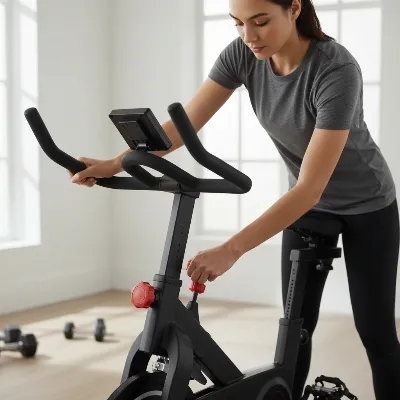 A person adjusting the seat height and handlebar position on an exercise bike to demonstrate proper ergonomic setup for comfort.
Choosing the Right Exercise Bike Saddle
Sometimes, no amount of adjustment can fix an inherently unsuitable saddle. Replacing or upgrading your exercise bike seat can be a major upgrade for long-term comfort.
The Importance of Saddle Width
The width of your saddle is paramount for comfort, as it needs to properly support your sit bones. A saddle that is too narrow will concentrate your weight on soft tissues between your sit bones, leading to numbness and discomfort in the perineal area. Conversely, a saddle that is too wide can cause friction and chafing on your inner thighs, interfering with your pedaling motion.
Women typically have wider sit bones than men, making gender-specific saddles a common consideration. You can often measure your sit bone width at a bike shop or with simple DIY methods (like sitting on corrugated cardboard to leave impressions) to guide your saddle choice. Matching the saddle width to your unique anatomy is fundamental to distributing weight correctly and preventing pain.
Saddle Design and Padding for Indoor Use
Beyond width, the design and level of padding are critical. Many stock exercise bike seats are designed for stability and can be quite firm, especially for extended seated periods characteristic of indoor cycling.
- Cut-out Saddles: Saddles with a central cut-out or pressure-relief channel are excellent for reducing pressure on sensitive perineal areas, which can be particularly beneficial for riders who experience numbness.
- Padding: While outdoor cyclists often prefer firmer saddles for stability and power transfer, indoor riders can benefit from slightly more padding due to less natural movement and continuous pressure. However, excessively soft or overly cushioned saddles can sometimes compress and create new pressure points over time, or hinder efficient pedaling. The goal is a balance of support and cushioning that matches your riding style and duration.
- Type of Exercise Bike: Wider, more heavily padded seats are generally preferred for upright and recumbent exercise bikes where the rider sits in a more relaxed, upright position. Narrower, more performance-oriented saddles are common on spin bikes, which mimic road cycling posture.
When to Replace Your Exercise Bike Saddle
Consider replacing your saddle if:
- You experience persistent pain, soreness, or numbness even after making all possible adjustments.
- The existing saddle’s padding is worn out or compressed, or its rails are broken.
- The saddle simply doesn’t match your body shape or riding style, and you can’t achieve comfort.
A professional bike fit can offer personalized recommendations based on your sit bone measurements, flexibility, and riding posture. Upgrading to an ergonomic saddle designed for indoor cycling can make a significant difference in your long-term comfort and ability to sustain workouts.
Enhancing Comfort with Accessories
Beyond bike adjustments and saddle choices, several accessories can provide immediate and significant relief from exercise bike seat discomfort.
Padded Seat Covers: Your Quick Fix
Padded seat covers, typically made of gel or foam, are a popular and often immediate solution for a hard or uncomfortable saddle. These covers add an extra layer of cushioning, helping to reduce pressure on your sit bones and other sensitive areas.
- Fit is Key: For optimal results, choose a cover that precisely matches the shape and size of your exercise bike saddle. A loose or ill-fitting cover can slide around, creating friction and potentially worsening discomfort.
- Material: Gel covers are known for their plush cushioning, conforming to your body shape. Foam covers, particularly memory foam, offer supportive padding that distributes pressure evenly.
- Specific Recommendations:
- Zacro Gel Seat Cover: Often praised as an excellent all-rounder, providing significant comfort for both narrow spin bike seats (like Peloton) and wider upright/air bike saddles, especially when properly secured with its straps and drawstring. It offers a substantial padding thickness (around 35mm) but may run warm during longer sessions.
- Fitivate Indoor Cycling Seat Cover: Designed for a snug fit on Peloton-style narrow saddles, offering targeted padding without excessive bulk. It’s lauded for staying in place and enhancing comfort for riders who prefer a sleek look.
- Domain Cycling Gel Seat Cushion: A low-profile option ideal for narrow spin bikes, providing moderate comfort without significantly altering the bike’s sporty feel. It’s a good choice for shorter, intense sessions.
- Schwinn Sport Memory Foam Seat Cover: Offers a comfortable memory foam layer for mid-size spin saddles, providing even cushioning and good stability. A wider “Cruiser” version is available for upright bikes.
- Bikeroo Large/Wide Gel Seat Cushion: Specifically designed for wider upright, air, and cruiser-style exercise bikes, offering extensive coverage and thick gel padding for maximum relief, particularly for heavier riders or those needing more surface area. It requires proper securing with all straps to prevent sliding.
A well-chosen seat cover is often the fastest and most affordable way to alleviate immediate saddle discomfort, allowing you to ride longer and more comfortably.
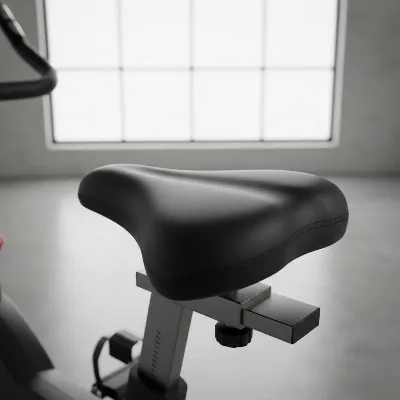 A close-up shot of a padded gel exercise bike seat cover properly installed on a black exercise bike saddle, highlighting its cushioning effect.
Padded Cycling Shorts and Chamois Cream
While seat covers provide an external layer of comfort, proper cycling apparel offers direct protection for your body.
- Padded Cycling Shorts: These shorts feature a “chamois” pad—a soft, multi-density insert strategically placed in the crotch area. The chamois provides targeted cushioning, reduces friction between your skin and the saddle, and wicks away moisture, all of which are crucial for preventing chafing and saddle sores, especially during longer rides. Even if you use a seat cover, padded shorts offer an invaluable layer of protection.
- Anti-Chafing Cream: Also known as chamois cream, this product is applied to your skin or directly onto the chamois pad of your shorts before a ride. It creates a protective barrier that minimizes skin-on-skin and skin-on-fabric friction, significantly reducing the risk of irritation, redness, and painful chafing, particularly in sensitive areas.
Many seasoned cyclists consider both padded shorts and chamois cream essential for maintaining comfort and hygiene, particularly for extended indoor cycling sessions where continuous pressure and sweat can be a major issue.
Optimizing Your Riding Technique and Habits
Even with the perfect bike setup and accessories, your riding technique and daily habits can make a substantial difference in preventing discomfort.
Mastering Proper Posture and Weight Distribution
How you sit on the bike greatly influences pressure points.
- Engage Sit Bones: Ensure you are sitting on the widest part of your saddle, allowing your sit bones to support your weight, rather than your delicate soft tissues. Sitting too far forward on the narrow nose of the saddle can lead to increased pressure and numbness.
- Neutral Spine and Core Engagement: Maintain a neutral spine (not overly arched or rounded) and engage your core muscles. This helps support your upper body, preventing you from collapsing onto your wrists or sliding forward on the saddle. A balanced posture distributes your weight more effectively across the saddle, handlebars, and pedals.
- Balanced Weight: Aim to distribute your body weight thoughtfully. While your sit bones bear a significant portion, your hands on the handlebars and your feet on the pedals should also share some of the load, preventing any single point from bearing excessive pressure.
Incorporating Standing Breaks
During longer indoor cycling sessions, continuous pressure on your sit bones can lead to discomfort and reduced circulation. Periodically standing up on the pedals for 30 seconds to a minute every 5-10 minutes can provide immense relief. These short breaks allow blood flow to return to compressed areas, alleviate pressure, and give your glutes and hamstrings a brief stretch. Integrating these standing intervals into your workout routine is a simple yet effective way to improve long-term comfort.
Maintaining Appropriate Resistance
Riding with too little resistance can cause your body to bounce around in the saddle, especially during faster cadences. This bouncing increases friction and impacts, leading to chafing and additional pressure on sensitive areas. Ensure you maintain sufficient resistance to keep your pedaling smooth and controlled, allowing your legs to support your body weight effectively and reducing unnecessary movement on the saddle.
Essential Post-Workout Care and Hygiene
Neglecting post-workout hygiene can contribute to saddle sores and skin irritation.
- Immediate Shower: Showering immediately after your workout is crucial to wash away sweat and bacteria that can accumulate in cycling shorts and on your skin.
- Clean, Loose Clothing: Change into clean, loose-fitting underwear and bottoms as soon as possible. This allows your skin to breathe and prevents further friction or bacterial growth in moist areas, significantly reducing the risk of developing painful saddle sores or folliculitis.
Expert Insight on Cycling Comfort
> “Many cyclists mistakenly believe discomfort is an unavoidable part of exercise. However, with precise bike fit adjustments, the right saddle, and proper accessories, a comfortable and pain-free ride is entirely achievable, allowing you to unlock your full fitness potential.” – Dr. Eleanor Vance, Sports Physiologist & Cycling Coach
Conclusion
Overcoming exercise bike seat discomfort is a crucial step toward a more enjoyable and sustainable fitness journey. By meticulously adjusting your saddle height, fore-aft position, and angle, optimizing handlebar placement, and considering a saddle that truly fits your unique anatomy, you lay the groundwork for comfort. Further enhancing your experience with quality padded seat covers, specialized cycling shorts, and anti-chafing cream can provide significant relief. Coupled with mindful riding techniques like proper posture, incorporating standing breaks, and maintaining excellent post-workout hygiene, you can improve your exercise bike into a source of invigorating workouts, free from distraction and pain. Don’t let discomfort deter you from your health goals; embrace these strategies and ride comfortably towards a fitter, healthier you.
What single change are you ready to make to improve your exercise bike comfort this week?
Frequently Asked Questions
How do I make my bike seat not hurt?
To reduce bike seat pain, start by adjusting your saddle height so your knee has a slight bend at the bottom of the pedal stroke. Ensure your saddle is level and its width supports your sit bones. Consider using a gel seat cover, wearing padded cycling shorts, and maintaining a neutral spine while riding to distribute pressure evenly.
How to make a bike seat more comfortable for a woman?
Women often have wider sit bones, so selecting a slightly wider saddle designed for female anatomy, potentially with a pressure-relief channel, can significantly improve comfort. Proper saddle height and angle, combined with padded cycling shorts and anti-chafing cream, are also highly recommended to prevent discomfort and numbness.
Why does my bum bone hurt after cycling?
Pain in your “bum bone” (sit bones) after cycling typically indicates that your saddle is either too narrow, too hard, or improperly positioned. Your sit bones should bear the weight, not soft tissue. Adjusting saddle height and fore-aft position, or using a wider, more appropriately padded saddle, can help alleviate this specific pain.
Why does my bike seat hurt my butt?
A sore butt from a bike seat is commonly caused by an ill-fitting saddle, incorrect bike adjustments, or a lack of proper padding. Issues like a saddle that’s too narrow or wide, an improper saddle angle, or even a handlebar position that shifts too much weight onto your rear can contribute. Addressing these factors through adjustment, accessories, or a new saddle can resolve the pain.
Achieve a Pain-Free Exercise Bike Ride
Follow these steps to adjust your exercise bike and use accessories for maximum comfort during your workouts, preventing common issues like soreness and chafing.
Set your saddle height so that when your heel is on the pedal at its lowest point, your leg is almost fully extended with a slight knee bend. This prevents hip rocking and knee strain, ensuring efficient pedaling and proper weight distribution.
Adjust the saddle's fore-aft position so your arms have a slight bend at the elbows and your spine is neutral. This balances weight between the saddle, handlebars, and pedals, reducing pressure on soft tissues and preventing cramped or overreaching posture.
Start with your saddle perfectly level, parallel to the floor. A slight downward tilt (a few degrees) can relieve perineal pressure for aggressive postures, while upright riders might prefer a tiny upward tilt. Avoid large angle changes to prevent sliding or new pressure points.
Position handlebars at a height and distance that allows comfortable reach without overstretching. For beginners, setting them level with or slightly above the saddle reduces pressure on sit bones and minimizes back, neck, and wrist strain. Ensure elbows have a slight bend and shoulders are relaxed.
Use a well-fitting padded gel or foam seat cover to add cushioning, such as the Zacro Gel Seat Cover. Wear padded cycling shorts with a chamois pad to reduce friction and wick moisture. Apply anti-chafing cream to prevent irritation during longer rides.

The advice on different saddle types was really helpful. I’ve been using the stock seat that came with my bike for ages, and it’s just too narrow for me. I’m going to try out one of the wider, gel-filled options. My only minor complaint is that it didn’t recommend specific brands for those saddles, but still, good info.
This was a lifesaver! I was about to give up on my home exercise bike because of the chafing and soreness. Focusing on my posture and making sure my handlebars weren’t too far away really helped distribute my weight better. It’s amazing how small adjustments can make such a big impact on overall comfort. Highly recommend trying these tips.
I tried adjusting my bike and even got a new seat cover, but I still get some numbness after about 30 minutes. The guide talked about proper cycling attire, and I guess I need to look into getting some proper padded shorts. It’s frustrating when you’re trying to hit your fitness goals but discomfort gets in the way. Maybe I just need more time to adapt.
I used to dread my spin classes because of how much my sit bones hurt afterwards. Adjusting my bike setup like it mentioned here, especially the saddle height and tilt, made a huge difference. I also invested in some padded cycling shorts, and now I can actually enjoy my workouts without constantly shifting around. Wish I’d known these tips sooner!