Replacing exercise bike pedals is a straightforward DIY project that can be completed in about 30 minutes with the right tools and understanding of pedal threading. Most exercise bikes use two different thread directions: the right pedal loosens counter-clockwise, and the left pedal (reverse thread) loosens clockwise. This guide provides a step-by-step process for removal and installation, ensuring a smooth and confident return to your workouts.
Understanding Your Exercise Bike Pedals
Before you grab your tools, it’s helpful to understand the basic anatomy and types of pedals you might encounter. Exercise bike pedals are designed for durability and security, often featuring straps or clips to keep your feet firmly in place during intense sessions. They connect to the crank arms via a threaded spindle, and crucially, not all threads are the same. This distinction is vital for a successful replacement.
The Importance of Pedal Threading
One of the most critical aspects of pedal replacement is understanding the threading. Most exercise bikes, like regular bicycles, use two different thread directions for the left and right pedals. The right pedal (when sitting on the bike) typically has a standard right-hand thread, meaning you turn it counter-clockwise to loosen and clockwise to tighten. However, the left pedal often features a left-hand thread (also known as a reverse thread), which means you turn it clockwise to loosen and counter-clockwise to tighten. Failing to recognize this can lead to frustration and potentially damaged components.
Common Pedal Types
Exercise bikes use various pedal types, each with its own advantages:
- Standard Flat Pedals with Straps: These are common on many entry-level and upright bikes, offering a secure fit with adjustable straps. They are versatile and accommodate different shoe types.
- SPD (Shimano Pedaling Dynamics) or Clip-in Pedals: Often found on spin bikes or more advanced models, these require special cycling shoes with cleats that lock into the pedal mechanism, providing superior power transfer and efficiency.
- Toe Cage Pedals: Similar to flat pedals but with a cage around the front of the foot for added security without requiring specialized shoes.
Understanding your current pedal type and the threading orientation will simplify the replacement process and help you choose suitable new pedals.
Tools You Will Need for Pedal Replacement
Having the correct tools on hand before you begin will make the job much smoother and prevent unnecessary delays. While the specific tools might vary slightly depending on your bike model, a standard set of equipment will cover most situations.
Essential Toolkit:
- Pedal Wrench (15mm): This is the most important tool. A dedicated pedal wrench is thinner and longer than a standard open-end wrench, providing better leverage and access to the narrow space between the pedal and crank arm.
- Adjustable Wrench or Hex Keys (Allen Wrenches): Some modern pedals use an 8mm or 6mm hex key that inserts into the end of the pedal spindle from the crank arm side. Check your existing pedals to see which type of tool they require.
- Grease: High-quality bicycle grease or anti-seize compound is crucial for lubricating the new pedal threads. This prevents corrosion, makes installation easier, and ensures future removal is hassle-free.
- Clean Rags or Shop Towels: For wiping away old grease and keeping your hands and components clean.
- Work Gloves (Optional): To protect your hands from grease and potential scrapes.
 Essential tools for exercise bike pedal replacement including a pedal wrench and grease.
Step-by-Step Guide to Removing Old Pedals
Removing your old pedals requires attention to detail, especially regarding the thread direction. Rushing this step or forcing a pedal can damage the crank arms, leading to a much more expensive repair.
1. Position Your Bike for Access
|
Our Picks for the Best Exercise Bike in 2026
As an Amazon Associate I earn from qualifying purchases.
|
||
| Num | Product | Action |
|---|---|---|
| 1 | RELIFE REBUILD YOUR LIFE Exercise Bike Stationary for Home Indoor,Cycling Bike with Silent Belt Drive for Home Cardio,Brake Pad Resistance with djustable & Comfort Seat/PAD Holder/LCD Monitor. |

|
| 2 | Exercise Bikes for Home,Indoor Cycling Bike with Adjustable Friction,Brake Pad Resistance Silent Belt Drive,330lbs Weight Capacity &Upgraded Version Seat for Home Cardio&Weight Loss |
|
| 3 | Exercise Bike, Adjustable Magnetic Resistance Stationary Bikes for Home Cardio with Exclusive App, Indoor Bike with 330lbs Weight Capacity Comfortable Seat, Tablet Mount and Fitness Courses |
|
| 4 | Exercise Bike, Wenoker Stationary Bike for Home, App Supported Indoor Bike with Silent Belt Drive, Heavy Flywheel, Multi-grips Handlebar and Upgraded Digital Display |
|
| 5 | Exercise Bike for Home – 350LB Magnetic Resistance Indoor Cycling Bike, Silent Stationary Spin Bike with App Sync, Adjustable Seat, LCD Monitor, Smooth & Quiet for Cardio Workout |
|
| 6 | Exercise Bike, Wenoker Magnetic Stationary Bike for Home App Sync Indoor Bike with Adjustable Seat and Handlebar, Transport Wheels and Fitness Courses for Weight Loss |
|
| 7 | MERACH Exercise Bike, Brake Pad Stationary Bike with Exclusive App, Low Noise Indoor Cycling Bike with 300lbs Weight Capacity, Tablet Mount and Fitness Courses for Weight Loss |
|
| 8 | Indoor Exercise Bike for Seniors, 5 IN 1 Foldable Stationary Bike with 16-Level Magnetic Resistance and Tri-Position Ride, 330LBS Capacity, 6.6 LBS Flywheel, for Home Workout 818 Gray |
|
| 9 | Exercise Bikes for Home,Indoor Cycling Bike with Adjustable Magnetic,Brake Pad Resistance Silent Belt Drive,330lbs Weight Capacity &Upgraded Version Seat for Home Cardio&Weight Loss |
|
| 10 | Exercise Bike, Magnetic Resistance Stationary Bikes for Home with App Compatible, Silent Indoor Cycling Bike with 350lbs Weight Capacity Comfortable Seat, Digital Monitor & Phone Mount |
|
For easier access and leverage, rotate the crank arms so that the pedal you are working on is at the front and slightly upward position. For example, if you’re removing the right pedal, position it at about 3 o’clock. This allows you to apply force downward or backward for loosening.
2. Identify Thread Direction
This is the most critical step.
- Right Pedal (drive side): Loosens by turning counter-clockwise. Think “righty-tighty, lefty-loosey” in reverse.
- Left Pedal (non-drive side): Loosens by turning clockwise. This is a reverse thread.
A helpful mnemonic is “forward to loosen.” If the crank arm is pointed forward, pushing the wrench handle towards the back of the bike will loosen both pedals.
3. Apply the Wrench
Fit your pedal wrench (or hex key) securely onto the pedal spindle nut. Ensure the wrench is fully engaged to prevent slipping and rounding off the nut.
4. Loosen the Pedal
- For the right pedal: Turn the wrench handle towards the back of the bike (counter-clockwise).
- For the left pedal: Turn the wrench handle towards the back of the bike (clockwise).
You might need to apply significant force, especially if the pedals have been on for a long time or were overtightened. If it’s very stubborn, a quick, sharp tap on the wrench with the palm of your hand can sometimes help break it loose. Be careful not to hit your knuckles on the frame or other components. Once it breaks free, you can usually unscrew it by hand.
5. Remove the Pedal
Continue to unscrew the pedal until it’s completely detached from the crank arm. Be mindful of the threads as you pull it away. Inspect the crank arm threads for any damage or debris. Clean the crank arm threads thoroughly with a rag.
How to Install New Pedals on Your Exercise Bike
Installing new pedals is essentially the reverse of removal, but with an added crucial step: lubrication. Properly greasing the threads will ensure smooth installation, prevent seizing, and make future removal effortless.
1. Prepare the New Pedals
Before installation, apply a generous amount of bicycle grease or anti-seize compound to the threads of the new pedal spindles. This is critical for preventing corrosion and making subsequent removals easier.
2. Identify Left and Right Pedals
New pedals are usually marked “L” for left and “R” for right. Double-check these markings to ensure you’re installing them on the correct crank arm. the left pedal has the reverse thread.
3. Start by Hand-Threading
Carefully align the new pedal with the crank arm threads.
- For the right pedal: Turn the pedal spindle clockwise by hand to start threading it into the crank arm.
- For the left pedal: Turn the pedal spindle counter-clockwise by hand to start threading it into the crank arm.
It’s vital to start by hand-threading to avoid cross-threading. If you feel any resistance or the pedal doesn’t turn smoothly, stop immediately. Unscrew it, realign, and try again. Cross-threading can permanently damage your crank arm.
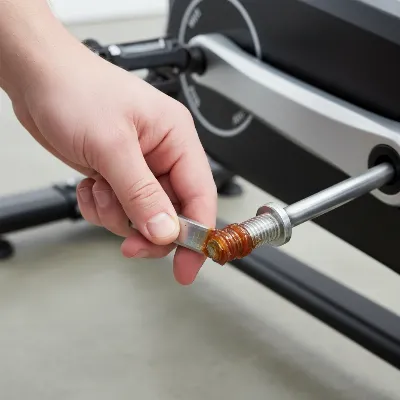 A close-up view of installing a new pedal onto an exercise bike crank arm, showing correct alignment and hand-threading.
4. Tighten with a Wrench
Once the pedal is hand-tight and turning smoothly, use your pedal wrench (or hex key) to fully tighten it.
- For the right pedal: Turn the wrench handle towards the front of the bike (clockwise).
- For the left pedal: Turn the wrench handle towards the front of the bike (counter-clockwise).
Tighten the pedals firmly, but avoid over-tightening. You want them secure enough not to loosen during use, but not so tight that they’re impossible to remove later. A good snug feel is usually sufficient. Over-tightening can strip threads or make future removal extremely difficult.
5. Test Your Work
After installation, gently spin the pedals to ensure they rotate freely and smoothly. Take a moment to sit on the bike and try a few rotations to confirm everything feels secure and comfortable.
Troubleshooting Common Pedal Replacement Issues
Even with careful preparation, you might encounter a few hiccups. Here’s how to address some common problems:
Stripped Threads
- Problem: If you forced a pedal and the threads on the crank arm or pedal spindle are damaged, the pedal won’t tighten securely or will feel very loose.
- Solution: If the pedal threads are stripped, you’ll need a new pedal. If the crank arm threads are stripped, it’s a more serious issue. Sometimes a bike shop can “tap” and re-thread the crank arm, but often, the entire crank arm will need to be replaced. This is why hand-threading is so important.
Stuck Pedals
- Problem: The old pedal simply won’t budge, even with significant force.
- Solution: Ensure you’re turning it in the correct direction (clockwise for left, counter-clockwise for right). Apply a penetrating oil (like WD-40 or a dedicated rust penetrant) to the threads and let it sit for 15-30 minutes. Use a cheater bar (a pipe over your wrench handle) for extra leverage, but be cautious not to slip or damage yourself or the bike. Sometimes, a sharp, quick rap with a rubber mallet on the end of the wrench can help break the corrosion bond.
Squeaking Pedals
- Problem: After installation, your new pedals make a squeaking sound.
- Solution: This usually indicates insufficient lubrication or loose pedals. Remove the pedals, apply more grease to the threads, and reinstall, ensuring they are tightened firmly. If the squeak persists, the issue might be internal to the pedal bearings, in which case the pedal itself may be faulty or need servicing.
Wobbly Pedals
- Problem: The pedal feels loose or wobbles on the spindle.
- Solution: First, ensure it’s tightened correctly. If it’s still wobbly, the issue could be with the pedal’s internal bearings or a manufacturing defect. In this case, the pedal may need to be replaced.
“Regular maintenance, including proper lubrication during pedal installation, significantly extends the life of your exercise bike components and prevents common issues like seizing and squeaking.” – Dr. Eleanor Vance, Cycling Ergonomics Specialist
Maintaining Your Exercise Bike Pedals
Once you’ve successfully replaced your pedals, a little ongoing maintenance can ensure they last longer and perform optimally.
Cleaning
Regularly wipe down your pedals to remove dust, sweat, and debris. This prevents grime from building up and potentially affecting the pedal mechanism.
Lubrication
While the threads are greased during installation, the internal bearings of the pedals are generally sealed and do not require external lubrication. If you notice a squeak or rough feeling, it’s more likely an issue with the pedal itself or the initial installation rather than a lack of external lubrication.
Checking for Tightness
Periodically check the tightness of your pedals, especially after the first few rides. Pedals can sometimes slightly loosen with use. A quick check with your pedal wrench can prevent them from becoming loose and potentially damaging the crank arm threads.
Conclusion
Replacing the pedals on your exercise bike is a manageable DIY task that can significantly improve your riding experience and extend the life of your equipment. By understanding the different thread directions, gathering the right tools, and carefully following the step-by-step instructions for removal and installation, you can confidently tackle this repair. the importance of grease, hand-threading to prevent cross-threading, and proper tightening. With a fresh set of pedals, you’ll be able to enjoy smoother, more comfortable, and more effective workouts for years to come. What other aspects of exercise bike maintenance are you curious about?
Frequently Asked Questions
What is the difference between a right-hand and left-hand pedal thread?
A right-hand pedal thread tightens clockwise and loosens counter-clockwise. A left-hand (or reverse) pedal thread, typically found on the left pedal of an exercise bike, tightens counter-clockwise and loosens clockwise. This design prevents pedals from unscrewing themselves due to the forces applied during pedaling.
Can I use regular bicycle pedals on my exercise bike?
In many cases, yes. Most exercise bikes use standard 9/16″ x 20 TPI (threads per inch) pedal spindles, which are the same as most road and mountain bikes. However, always check your exercise bike’s specifications or consult the manual to ensure compatibility before purchasing regular bicycle pedals.
How often should I replace my exercise bike pedals?
The lifespan of exercise bike pedals varies greatly depending on usage, intensity, and quality. For typical home use, pedals might last several years. However, if you notice excessive wear, wobbling, squeaking that can’t be fixed by re-tightening or greasing, or physical damage, it’s time for a replacement.
What should I do if my pedal is stuck and won’t come off?
First, ensure you are turning the wrench in the correct direction (clockwise for left pedal, counter-clockwise for right pedal). If it’s still stuck, apply a penetrating oil to the threads and let it soak for at least 15-30 minutes. You can also try using a longer wrench or a cheater bar for added leverage, or a sharp tap on the wrench with a rubber mallet.
How to Replace Exercise Bike Pedals
This guide provides a step-by-step process for safely removing old exercise bike pedals and installing new ones, ensuring proper threading and lubrication for a smooth ride.
Position the crank arm with the pedal at the front and slightly upward. Identify the thread direction: right pedal loosens counter-clockwise, left pedal loosens clockwise. Apply a 15mm pedal wrench or hex key and turn towards the back of the bike to loosen. Unscrew completely and clean the crank arm threads.
Apply a generous amount of bicycle grease or anti-seize compound to the threads of the new pedal spindles. This prevents corrosion and makes future removal easier. Ensure you identify the 'L' (left) and 'R' (right) markings on the new pedals.
Carefully align the new pedal with the crank arm threads. For the right pedal, turn clockwise by hand to start threading. For the left pedal, turn counter-clockwise by hand. This crucial step prevents cross-threading, which can permanently damage your crank arm.
Once the pedal is hand-tight and turning smoothly, use your pedal wrench or hex key to fully tighten it. For the right pedal, turn clockwise (towards the front of the bike). For the left pedal, turn counter-clockwise (towards the front of the bike). Tighten firmly but avoid over-tightening.
After installation, gently spin the pedals to ensure they rotate freely and smoothly. Sit on the bike and perform a few rotations to confirm everything feels secure and comfortable. Periodically check the tightness of your pedals after the first few rides.
