Finding the right exercise bike when you’re a big adult can feel like a significant challenge. Many standard models simply aren’t designed to support higher weight capacities, or they lack the comfort and stability crucial for effective and safe workouts. But the good news is, a growing market of heavy-duty exercise bikes is engineered specifically with robust frames, enhanced stability, and superior comfort features to meet these unique needs. Choosing the correct bike is paramount to ensuring not only your safety but also your consistency and enjoyment on your fitness journey. This comprehensive guide will walk you through the undeniable benefits of exercise bikes for larger individuals, explore the different types available, highlight essential features to look for, recommend top models, and provide practical advice to help you make the best decision for your health and fitness goals.
The Power of Cycling: Benefits for Big Adults
Exercise bikes offer an exceptional pathway to improved health and wellness for big adults, providing a low-impact yet highly effective workout. Unlike high-impact activities that can stress joints, cycling allows for fluid motion that’s gentle on knees, hips, and ankles, making it ideal for individuals carrying more weight. This accessibility is a major upgrade, fostering consistent engagement in physical activity without the fear of injury.
Regular rides on an exercise bike significantly bolster cardiovascular health, strengthen the heart and lungs, and contribute positively to blood pressure management. For those focused on weight management, cycling is a powerful calorie burner, helping to create the necessary deficit for weight loss. It builds strength in the lower body, targeting major muscle groups like quadriceps, hamstrings, and glutes. The convenience of an at-home exercise bike means workouts can fit seamlessly into any schedule, regardless of weather or gym anxiety, making it easier than ever to prioritize personal health. “Regular exercise on a heavy-duty bike significantly improves cardiovascular health and can support effective weight management for larger individuals, all while being gentle on joints,” states Dr. Emily Carter, a Sports Medicine Specialist.
Types of Heavy Duty Exercise Bikes
The world of exercise bikes offers diverse options, each catering to different preferences and workout styles. For big adults, understanding these distinctions is key to selecting a bike that maximizes comfort, safety, and effectiveness.
Recumbent Bikes: These bikes are characterized by a reclined seating position with a large, often cushioned seat and a supportive backrest, and pedals located in front of the rider. This design distributes weight evenly across the back and buttocks, reducing pressure on the lower back, hips, and glutes.
- Pros: Superior comfort, excellent lumbar support, significantly lower impact on joints, high stability due to a low center of gravity, and easy mounting and dismounting with step-through frames. They are ideal for longer, steady-state cardio sessions.
- Cons: Generally have a larger footprint, less core and upper body engagement compared to upright bikes, and are not designed for standing out-of-saddle sprints.
- Best for: Beginners, individuals with back pain, joint issues, mobility challenges, or those prioritizing maximum comfort and long, consistent rides. Models like the Vanswe RB405 and Sunny Health & Fitness SF-RB4616S are popular choices.
Upright and Spin Bikes: Mimicking the feel of traditional outdoor bicycles, upright bikes feature a smaller saddle and pedals positioned directly beneath the rider. Spin bikes are a subcategory of upright bikes, designed for more intense, studio-style cycling classes.
- Pros: Engage more muscle groups, including the core and some upper body (when standing), offer a more intense workout experience, and often have a smaller footprint than recumbents. They are versatile for various workout intensities, from steady cardio to interval training.
- Cons: Can be less comfortable for extended sessions due to the smaller saddle (though padded seats or gel covers can help), and they require more core stability and balance.
- Best for: Experienced cyclists, fitness enthusiasts seeking higher-intensity workouts, or those with limited space. The NordicTrack S22i and Schwinn IC4 are well-regarded options in this category.
Air Bikes (Fan Bikes): These unique bikes use a large fan for resistance, which scales with the intensity of your effort. Many models also incorporate moving handlebars, providing a full-body workout.
- Pros: Offer a comprehensive full-body workout, excellent for high-intensity interval training (HIIT) as resistance is infinite and adapts to your output. They build both strength and endurance simultaneously.
- Cons: Can be quite noisy due to the fan mechanism, and their seats are often more utilitarian, prioritizing performance over plush comfort. Console features may also be more basic.
- Best for: Individuals seeking a challenging full-body workout, particularly those interested in HIIT or cross-training. The AssaultBike Elite and Schwinn AD6i Airdyne are prominent examples.
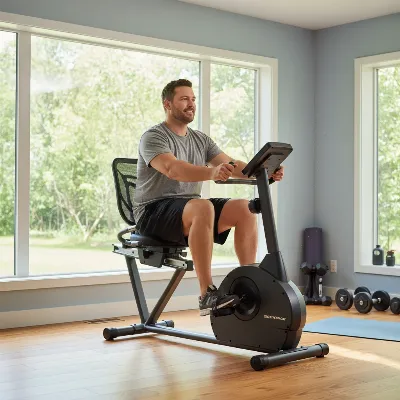 A large adult enjoying a comfortable workout on a heavy-duty recumbent exercise bike in a modern home gym setting, emphasizing stability and comfort.
Essential Features for Heavy Duty Exercise Bikes
|
Our Picks for the Best Exercise Bike in 2026
As an Amazon Associate I earn from qualifying purchases.
|
||
| Num | Product | Action |
|---|---|---|
| 1 | Exercise Bikes for Home,Indoor Cycling Bike with Adjustable Magnetic,Brake Pad Resistance Silent Belt Drive,330lbs Weight Capacity &Upgraded Version Seat for Home Cardio&Weight Loss |

|
| 2 | Exercise Bikes for Home,Indoor Cycling Bike with Adjustable Friction,Brake Pad Resistance Silent Belt Drive,330lbs Weight Capacity &Upgraded Version Seat for Home Cardio&Weight Loss |
|
| 3 | Exercise Bike, Magnetic Resistance Stationary Bikes for Home with App Compatible, Silent Indoor Cycling Bike with 350lbs Weight Capacity Comfortable Seat, Digital Monitor & Phone Mount |
|
| 4 | Exercise Bike, Wenoker Stationary Bike for Home, App Supported Indoor Bike with Silent Belt Drive, Heavy Flywheel, Multi-grips Handlebar and Upgraded Digital Display |
|
| 5 | RELIFE REBUILD YOUR LIFE Exercise Bike Stationary for Home Indoor,Cycling Bike with Silent Belt Drive for Home Cardio,Brake Pad Resistance with djustable & Comfort Seat/PAD Holder/LCD Monitor. |
|
| 6 | Exercise Bike, Adjustable Magnetic Resistance Stationary Bikes for Home Cardio with Exclusive App, Indoor Bike with 330lbs Weight Capacity Comfortable Seat, Tablet Mount and Fitness Courses |
|
| 7 | Exercise Bike, Wenoker Magnetic Stationary Bike for Home App Sync Indoor Bike with Adjustable Seat and Handlebar, Transport Wheels and Fitness Courses for Weight Loss |
|
| 8 | MERACH Exercise Bike, Brake Pad Stationary Bike with Exclusive App, Low Noise Indoor Cycling Bike with 300lbs Weight Capacity, Tablet Mount and Fitness Courses for Weight Loss |
|
| 9 | Indoor Exercise Bike for Seniors, 5 IN 1 Foldable Stationary Bike with 16-Level Magnetic Resistance and Tri-Position Ride, 330LBS Capacity, 6.6 LBS Flywheel, for Home Workout 818 Gray |
|
| 10 | Exercise Bike for Home – 350LB Magnetic Resistance Indoor Cycling Bike, Silent Stationary Spin Bike with App Sync, Adjustable Seat, LCD Monitor, Smooth & Quiet for Cardio Workout |
|
When investing in a heavy-duty exercise bike, certain features become non-negotiable for big adults, directly impacting safety, comfort, and the overall effectiveness of your workouts.
Weight Capacity and Frame Stability: This is arguably the most critical factor. Look for bikes with a minimum weight capacity significantly above your current weight to ensure ample headroom and stability during intense sessions. Heavy-duty bikes typically boast capacities ranging from 300 lbs to 400 lbs or more. A robust frame, often constructed from heavy-gauge steel, provides the necessary durability and prevents wobbling, ensuring a secure feel even during vigorous workouts. A wide base also contributes significantly to overall stability.
Comfort and Adjustability: Comfort is paramount for consistent use, especially for longer rides.
- Seat: For recumbent bikes, an oversized, well-cushioned seat with excellent lumbar support is vital. For upright bikes, a wider, padded saddle or the option to add a gel cover can vastly improve comfort.
- Handlebars: Seek multi-grip handlebars that adjust vertically and horizontally, allowing for various hand positions and promoting good upper body posture.
- Pedals: Wide pedals with secure, adjustable straps are crucial for foot stability and preventing slipping, which is especially important for heavier users.
- Adjustability: Ensure the seat (height, fore/aft, and angle) and handlebars offer a wide range of adjustments to accommodate different body types and allow you to find an ergonomic position that aligns hips, knees, and ankles correctly.
Resistance System: The type of resistance affects ride feel, noise, and maintenance.
- Magnetic Resistance: This is the most common and often preferred system. It provides smooth, quiet, and consistent resistance with minimal maintenance, as there are no direct contact parts to wear out. Most high-capacity bikes utilize magnetic resistance.
- Friction Resistance: Found mostly on traditional spin bikes, it uses a brake pad that applies pressure to the flywheel. While it offers a direct, road-bike feel, it can be noisier and requires more maintenance (pad replacement, adjustments) over time.
- Air Resistance: Seen in air bikes, this system uses a fan, where resistance increases with how fast you pedal. It offers an infinite range of resistance but is typically the loudest option.
Console and Connectivity: A clear, easy-to-read LCD display is essential for tracking key metrics like time, speed, distance, calories burned, and heart rate. Many modern heavy-duty bikes also offer Bluetooth connectivity, allowing you to sync with popular fitness apps like iFIT, Zwift, Peloton, JRNY, or Kinomap for interactive workouts, guided classes, and progress tracking.
Footprint and Portability: Consider the physical space you have available. Recumbent bikes generally have a larger footprint than upright bikes. If space is a concern, look for compact upright models, or even foldable heavy-duty options like some BARWING stationary bikes. Transport wheels are a useful feature for easily moving the bike around your home.
Noise Level: For those living in shared spaces or needing to exercise at specific times, a quiet operation is highly valued. Magnetic resistance bikes are typically the quietest, making them ideal for apartment living or early morning/late night workouts. Air bikes, by contrast, are known for being quite noisy.
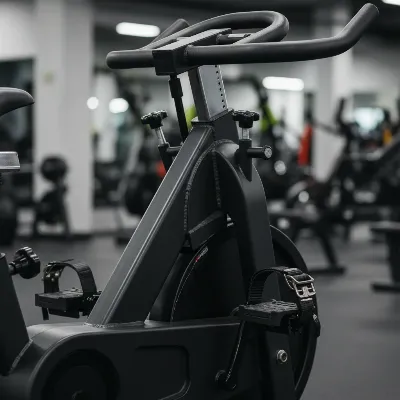 Close-up on the reinforced frame and adjustable features of a heavy-duty upright spin exercise bike, highlighting durability and customization for big adults.
Top Picks: A Comparison of Heavy Duty Exercise Bikes
Selecting the best heavy-duty exercise bike involves weighing capacity, comfort, features, and price. Here’s a comparison of some highly-rated models that cater specifically to big adults across different bike types:
| Model | Type | Max Weight Capacity | Key Features | Target User |
|---|---|---|---|---|
| Vanswe RB405 | Recumbent | 400 lbs | Extra-wide cushioned seat, low-noise magnetic resistance, Bluetooth connectivity | Users prioritizing comfort, superior back support, and joint-friendly workouts |
| NordicTrack S22i | Upright | 350 lbs | 22″ HD touchscreen, iFIT integration, auto-adjusting incline/decline/resistance | Tech-savvy users seeking immersive, studio-like experiences and dynamic training |
| AssaultBike Elite | Air Bike | 350 lbs | Full-body workout, infinite air resistance, heavy-duty frame | Athletes, HIIT enthusiasts, those seeking intense full-body conditioning |
| Schwinn IC4 | Spin Bike | 330 lbs | 100 levels magnetic resistance, dual-sided pedals, app connectivity (Peloton, Zwift, JRNY) | Spin class enthusiasts looking for a versatile smart bike at a competitive price |
The Vanswe RB405 stands out for its exceptional 400-pound weight capacity and emphasis on comfort, making it an ideal choice for heavier individuals who require ample support and a low-impact workout. Its magnetic resistance ensures a quiet and smooth ride, perfect for home use. The NordicTrack S22i offers a premium, interactive experience with its large touchscreen and iFIT integration, automatically adjusting resistance and incline to mimic real-world terrain or trainer-led classes. This makes it a great fit for big adults who thrive on guided, engaging workouts and value advanced technology. For those craving intense, full-body conditioning, the AssaultBike Elite provides robust construction and an air-resistance system that scales with your effort, though it’s important to note its higher noise output. Lastly, the Schwinn IC4 serves as an excellent spin bike alternative, providing a high weight capacity and broad app compatibility without the higher price tag of some dedicated studio bikes, making it a solid choice for big adults who enjoy energetic spin classes. “For big adults, the stability and ergonomic design of a heavy-duty recumbent bike are paramount. A wider seat with back support can make the difference between a consistent workout routine and one that causes discomfort,” advises Sarah Jenkins, a Certified Personal Trainer specializing in adaptive fitness.
Your Buying Guide: Choosing the Right Heavy Duty Exercise Bike
Navigating the options for a heavy-duty exercise bike can be straightforward if you prioritize your needs and do a little research. Follow these steps to ensure you make an informed decision.
1. Assess Your Needs and Goals: Start by defining what you want from your exercise bike. Are you aiming for low-impact cardio, intense interval training, or a full-body workout? Do you have any joint issues or require significant back support? Your answers will help determine whether a recumbent, upright, or air bike is best suited for you. Consider also if interactive workouts with apps are important, or if a simpler display suffices.
2. Set a Realistic Budget: Heavy-duty exercise bikes, especially those with advanced features and higher weight capacities, can range significantly in price. Establish a budget range, but that investing in a more durable and comfortable bike upfront can save you money and discomfort in the long run. Quality often correlates with price, particularly when it comes to the robustness of the frame and the quality of components.
3. Prioritize Weight Capacity & Stability: Always select a bike with a maximum user weight capacity that exceeds your current weight, ideally by at least 25-50 pounds. This buffer ensures the bike remains stable, safe, and durable over time, even with vigorous use. Look for bikes with heavy-gauge steel frames and wide bases, as these provide superior stability.
4. Consider Comfort and Ergonomics: For big adults, comfort is not a luxury; it’s a necessity for consistent use. If possible, “test drive” different models in person to assess seat comfort, handlebar reach, and overall adjustability. Pay close attention to seat size, cushioning, back support (for recumbents), and the range of adjustments for both seat and handlebars to ensure proper ergonomic alignment for your body.
5. Research Brands and Read Reviews: Look for reputable brands known for quality and customer service in the heavy-duty fitness equipment market. Critically read reviews, paying special attention to feedback from other big adults regarding stability, comfort, durability, and customer support experiences. Websites like Vanswe Fitness, BarBend, and Outdoor Gear Lab offer detailed reviews and comparisons.
6. Check Warranty and Customer Support: A comprehensive warranty on the frame, parts, and labor is a strong indicator of a manufacturer’s confidence in their product. Good customer support is also invaluable should you encounter any issues with assembly, operation, or repairs.
Maximizing Your Ride: Usage and Maintenance Tips
Once you’ve chosen your heavy-duty exercise bike, proper usage and maintenance will ensure its longevity and your continued enjoyment.
Proper Setup for Ergonomics: Before your first ride, take the time to adjust your bike correctly.
- Seat Height: For upright bikes, your knee should have a slight bend at the bottom of the pedal stroke. For recumbent bikes, your knee should also have a slight bend when your foot is extended furthest forward.
- Seat Position: Adjust the seat forward or backward so your knee is directly over the pedal axle (or close to it) when the pedal is at the 3 o’clock position.
- Handlebars: Set handlebars to a height and distance that allows you to maintain a comfortable posture without excessive leaning or strain on your back or wrists.
Effective Workout Strategies:
- Warm-up: Always start with 5-10 minutes of light pedaling at a low resistance to prepare your muscles and cardiovascular system.
- Vary Your Workouts: Incorporate different resistance levels, speeds, and durations. Interval training (alternating high and low intensity) can be highly effective for calorie burning and improving endurance.
- Cool-down: Finish with 5-10 minutes of slow, low-resistance pedaling, followed by some light stretching to aid recovery.
Regular Cleaning and Maintenance:
- Wipe Down: After each workout, wipe down the frame, handlebars, and seat with a damp cloth to remove sweat and prevent corrosion.
- Check Connections: Periodically inspect all bolts and screws to ensure they are tight. Loose components can lead to wobbling and premature wear.
- Resistance System: For friction resistance bikes, check the brake pad for wear and replace it as needed. For magnetic and air bikes, maintenance is typically minimal beyond keeping them clean.
- Lubrication: If your bike has moving parts that squeak, consult your owner’s manual for recommended lubrication points and types of lubricant.
Troubleshooting Common Issues:
- Squeaks/Noises: Often caused by loose parts, dry joints, or dirty components. Tighten bolts, clean the flywheel area, or lubricate as directed by the manual.
- Inconsistent Resistance: For friction bikes, this might mean a worn brake pad. For magnetic bikes, it could indicate a minor calibration issue or a loose component.
- Display Errors: Check battery levels if applicable, or ensure all cable connections to the console are secure.
By following these guidelines, you can ensure your heavy-duty exercise bike remains a reliable and comfortable tool in your fitness regimen for years to come.
Conclusion
For big adults, selecting the ideal heavy-duty exercise bike is a crucial step towards achieving lasting health and fitness. It goes beyond just finding a machine; it’s about investing in a stable, comfortable, and safe tool that empowers you to pursue your goals without compromise. Whether you lean towards the supportive embrace of a recumbent bike, the invigorating challenge of an upright or spin bike, or the full-body intensity of an air bike, the right choice hinges on prioritizing robust construction, ample weight capacity, and ergonomic comfort tailored to your body.
consistency is key to unlocking the full spectrum of benefits an exercise bike can offer, from enhanced cardiovascular health and effective weight management to improved muscular strength and joint flexibility. By diligently considering the features that matter most and committing to a regular routine, you’ll improve your fitness journey. Are you ready to pedal your way to a stronger, healthier you?
Frequently Asked Questions
What is the minimum weight capacity I should look for?
It is recommended that big adults look for an exercise bike with a maximum user weight capacity that is at least 25-50 pounds higher than their current weight. This provides a safety margin and ensures long-term durability and stability. Many heavy-duty bikes offer capacities ranging from 300 lbs to 400 lbs or more.
Are recumbent bikes better for heavy adults with back pain?
Yes, recumbent bikes are generally considered superior for individuals with back pain or joint issues. Their reclined position, large cushioned seat, and full back support distribute weight more evenly, significantly reducing strain on the lower back, hips, and knees compared to upright bikes.
How often should I use my heavy-duty exercise bike?
For general health benefits and weight management, aiming for at least 150 minutes of moderate-intensity cardio per week (e.g., 30 minutes, five times a week) is recommended. Consistency is more important than duration for initial progress, so even shorter, regular sessions can be highly beneficial.
Can I lose weight effectively with a heavy-duty exercise bike?
Absolutely. Exercise bikes are excellent tools for weight loss as they provide an efficient way to burn calories and create a caloric deficit. Combined with a balanced diet, consistent use of a heavy-duty exercise bike can lead to significant and sustainable weight loss while being gentle on your joints.
What is the difference between magnetic and friction resistance?
Magnetic resistance uses magnets to create resistance against the flywheel without physical contact, resulting in a very quiet, smooth ride with minimal maintenance. Friction resistance, typically found on spin bikes, uses a felt pad that physically presses against the flywheel, offering a direct feel but often being noisier and requiring more maintenance (like pad replacement).
