Are you looking to improve your fitness routine from the comfort of your own home? An exercise bike is an exceptional investment, offering a convenient and effective way to boost your health, shed pounds, and build strength without ever stepping outside. With so many options available in 2026, finding the perfect stationary companion can be overwhelming. This comprehensive guide will walk you through the incredible benefits of indoor cycling, explore the different types of bikes, highlight essential features to consider, reveal our top 10 picks, provide a savvy buying guide, and share crucial maintenance tips to ensure your chosen Exercise Bike serves you well for years to come.
The Remarkable Benefits of Exercise Bikes
Integrating an exercise bike into your daily routine offers a wealth of advantages, transforming both your physical and mental well-being. These machines provide an accessible and efficient workout suitable for almost everyone, regardless of fitness level or age. Regular cycling can significantly enhance your cardiovascular health, strengthening your heart and lungs, and improving overall blood circulation throughout your body.
For those aiming for weight management, an exercise bike is a powerful tool. Depending on the intensity, you can burn hundreds of calories per hour, contributing to a calorie deficit essential for fat loss. Beyond cardio, stationary biking effectively strengthens major lower body muscle groups, including your hamstrings, quadriceps, glutes, and calves. Specific bike types, like air bikes, even engage your upper body and core, offering a comprehensive full-body workout. One of the most compelling benefits is its low-impact nature, making it gentle on your joints, unlike high-impact activities such as running. This makes exercise bikes ideal for individuals recovering from injuries, those with joint pain, or seniors seeking a safe yet effective workout. Physical activity on an exercise bike can significantly improve mental health, reducing stress and anxiety, boosting mood through endorphin release, and even contributing to better sleep quality.
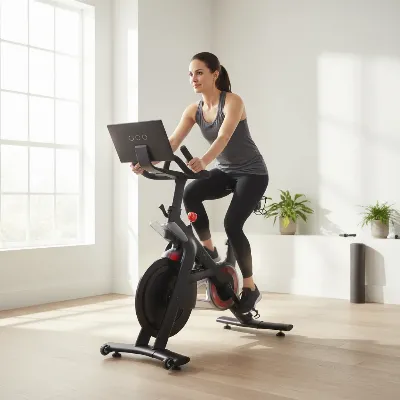 Woman cycling on a stationary bike at home, emphasizing health benefits like strong legs and a calm mind
Understanding the Different Types of Exercise Bikes
The world of home exercise bikes is diverse, with each type offering distinct advantages tailored to different preferences and fitness goals. Understanding these variations is key to selecting the right machine for your personal needs.
Upright Exercise Bikes
These are the most traditional style, mimicking a standard outdoor bicycle with a vertical seating position.
- Pros: Upright bikes are often compact and more affordable, making them excellent for smaller spaces or those on a budget. They provide a familiar cycling feel and are well-suited for general cardio and moderate intensity workouts.
- Cons: They offer less back support, which can be uncomfortable during longer sessions. They also typically don’t provide the intense, immersive experience of spin bikes.
Recumbent Exercise Bikes
Featuring a larger, chair-like seat with a backrest and pedals positioned out in front, recumbent bikes allow for a reclined riding posture.
- Pros: The reclined position provides exceptional lumbar support, reducing strain on the lower back and joints. They are incredibly comfortable, making them ideal for beginners, seniors, individuals with back issues, or those undergoing rehabilitation.
- Cons: Recumbent bikes tend to have a larger footprint, requiring more space. The reclined position also engages the core and upper body less, potentially leading to a lower overall calorie burn compared to other types.
Spin Bikes (Indoor Cycling Bikes)
Designed to replicate the experience of road cycling, spin bikes feature a forward-leaning position and often a heavy flywheel for a realistic, smooth ride.
- Pros: These bikes are perfect for high-intensity interval training (HIIT) and building significant leg strength. They offer quick resistance changes and are excellent for calorie-burning workouts that mimic outdoor cycling.
- Cons: Spin bikes can be less comfortable for beginners due to the saddle-style seat and forward lean, offering minimal back support. Advanced models, particularly those with interactive features, can also involve a higher upfront cost.
Air Bikes (Dual-Action Bikes)
Air bikes use a fan for resistance, which increases as you pedal harder, and typically include moving handlebars for an upper-body workout.
- Pros: They deliver a comprehensive full-body workout, engaging both the upper and lower body simultaneously. The automatically adjusting resistance makes them exceptionally effective for HIIT and cross-training.
- Cons: Air bikes can be quite noisy due to the fan mechanism. The intense nature of the workout might also be challenging for absolute beginners or those with certain injuries.
Key Features to Consider When Buying an Exercise Bike
|
Our Picks for the Best Exercise Bike in 2026
As an Amazon Associate I earn from qualifying purchases.
|
||
| Num | Product | Action |
|---|---|---|
| 1 | Exercise Bike, Magnetic Resistance Stationary Bikes for Home with App Compatible, Silent Indoor Cycling Bike with 350lbs Weight Capacity Comfortable Seat, Digital Monitor & Phone Mount |

|
| 2 | MERACH Exercise Bike, Brake Pad Stationary Bike with Exclusive App, Low Noise Indoor Cycling Bike with 300lbs Weight Capacity, Tablet Mount and Fitness Courses for Weight Loss |
|
| 3 | Indoor Exercise Bike for Seniors, 5 IN 1 Foldable Stationary Bike with 16-Level Magnetic Resistance and Tri-Position Ride, 330LBS Capacity, 6.6 LBS Flywheel, for Home Workout 818 Gray |
|
| 4 | Exercise Bike, Adjustable Magnetic Resistance Stationary Bikes for Home Cardio with Exclusive App, Indoor Bike with 330lbs Weight Capacity Comfortable Seat, Tablet Mount and Fitness Courses |
|
| 5 | Exercise Bikes for Home,Indoor Cycling Bike with Adjustable Magnetic,Brake Pad Resistance Silent Belt Drive,330lbs Weight Capacity &Upgraded Version Seat for Home Cardio&Weight Loss |
|
| 6 | Exercise Bike for Home – 350LB Magnetic Resistance Indoor Cycling Bike, Silent Stationary Spin Bike with App Sync, Adjustable Seat, LCD Monitor, Smooth & Quiet for Cardio Workout |
|
| 7 | Exercise Bike, Wenoker Magnetic Stationary Bike for Home App Sync Indoor Bike with Adjustable Seat and Handlebar, Transport Wheels and Fitness Courses for Weight Loss |
|
| 8 | Exercise Bike, Wenoker Stationary Bike for Home, App Supported Indoor Bike with Silent Belt Drive, Heavy Flywheel, Multi-grips Handlebar and Upgraded Digital Display |
|
| 9 | Exercise Bikes for Home,Indoor Cycling Bike with Adjustable Friction,Brake Pad Resistance Silent Belt Drive,330lbs Weight Capacity &Upgraded Version Seat for Home Cardio&Weight Loss |
|
| 10 | RELIFE REBUILD YOUR LIFE Exercise Bike Stationary for Home Indoor,Cycling Bike with Silent Belt Drive for Home Cardio,Brake Pad Resistance with djustable & Comfort Seat/PAD Holder/LCD Monitor. |
|
When investing in an exercise bike for your home, several crucial features will impact your comfort, workout effectiveness, and overall satisfaction. Carefully evaluating these aspects ensures you choose a machine that aligns perfectly with your fitness journey.
1. Resistance Mechanism and Levels
Resistance is what makes your workout challenging.
- Magnetic Resistance: This type uses magnets to create tension, offering quiet operation, smooth transitions between resistance levels, and often a broad range of settings (e.g., 100 levels). Many modern bikes, including smart ones, utilize magnetic resistance.
- Friction Resistance: Common in traditional spin bikes, friction resistance uses a brake pad that presses against the flywheel. It provides a more “road-like” feel but can be noisier and requires occasional pad replacement.
Some advanced smart bikes feature auto-resistance, where the bike automatically adjusts the resistance according to guided workouts. Look for at least 12 levels of resistance to allow for workout variability, with more levels offering finer adjustments.
2. Display and Connectivity
A clear and user-friendly console is vital for tracking progress and staying motivated.
- Essential Metrics: Ensure the display shows key data like speed, time, distance, calories burned, and heart rate.
- Connectivity: Many modern bikes offer Bluetooth or Wi-Fi connectivity, allowing you to sync with popular fitness apps like Peloton, Zwift, or JRNY. This opens up a world of interactive classes, virtual rides, and performance tracking directly from your tablet or smartphone.
3. Adjustability (Seat and Handlebars)
Proper fit is paramount for comfort and preventing injuries, especially during longer sessions.
- Seat: Look for seats that adjust both vertically (up/down) and horizontally (forward/back) to accommodate different body types and allow you to find an ergonomic position. Some bikes offer wider, more cushioned seats, while others have narrower, performance-oriented saddles.
- Handlebars: Adjustable handlebars ensure you can maintain a comfortable posture, whether upright or in a forward lean, to prevent strain on your back and wrists.
4. Pedal Quality and Foot Straps
The pedals are your direct connection to the bike’s power.
- Security: Good pedals should be slip-resistant and ideally come with adjustable foot straps or cages to keep your feet secure during intense sessions.
- Compatibility: Some advanced spin bikes offer dual-sided pedals compatible with SPD clipless cycling shoes for maximum power transfer, alongside toe cages for regular athletic shoes.
5. Flywheel Weight
The flywheel is a weighted disc that helps create a smooth and consistent pedaling motion.
- Smoothness: A heavier flywheel, typically 30 pounds (or around 8 kg) or more, generally results in a smoother, more stable, and more consistent ride, better mimicking the feel of an outdoor bike.
6. Noise Level
For home use, especially in shared living spaces, noise can be a significant factor.
- Quiet Operation: Magnetic resistance bikes are known for their whisper-quiet operation. Air bikes, by contrast, can be quite noisy due to the fan mechanism.
7. Durability and Build Quality
An exercise bike is an investment, so durability is crucial for longevity.
- Frame: Look for a sturdy frame, often made of steel, that can withstand regular use.
- Weight Capacity: Check the maximum user weight capacity to ensure the bike safely supports all potential users in your household.
8. Size and Portability
Consider your available space and if you need to move or store the bike when not in use.
- Footprint: Upright bikes are generally more compact, while recumbent bikes require more floor space. Some foldable models offer excellent space-saving solutions.
Top 10 Best Exercise Bikes for Home Use in 2026
Choosing the right exercise bike can improve your home fitness experience. Here’s a curated list of the top 10 models for 2026, offering a range of features, price points, and designs to suit various needs.
| Model | Type | Resistance Type | Key Features | Price Range | Best For |
|---|---|---|---|---|---|
| 1. Bowflex C6 | Indoor Cycling | Magnetic | 100 resistance levels, 4-way adjustability, Bluetooth, app compatibility (Peloton, Zwift), media rack. | $800 – $1,000 | Versatile app-connected cycling on a budget. |
| 2. Peloton Cross Training Bike+ | Indoor Cycling | Magnetic (Auto) | 23.8″ HD touchscreen, Auto-Resistance, AI camera, premium classes, immersive experience. | $2,000 – $2,500 | Ultimate interactive, studio-quality workouts with AI features. |
| 3. Echelon Connect EX5S Bike | Indoor Cycling | Magnetic | 32 resistance levels, 10″ HD touchscreen (or media holder), live/on-demand classes via Echelon Fit. | $1,000 – $1,500 | Cost-effective Peloton alternative with interactive classes. |
| 4. Schwinn IC4 | Indoor Cycling | Magnetic | 100 resistance levels, LCD console, Bluetooth, app compatibility (Peloton, Zwift, JRNY), dual-sided pedals. | $800 – $1,000 | Solid, comfortable spin experience with broad app support. |
| 5. NordicTrack Commercial S22i Studio Cycle | Indoor Cycling | Magnetic (Incline/Decline) | 22″ HD touchscreen, iFIT interactive workouts with auto-adjusting incline/decline and resistance. | $1,500 – $2,000 | Immersive, varied virtual rides with terrain simulation. |
| 6. Keiser M3i | Indoor Cycling | Magnetic | Commercial-grade, smooth/quiet, V-shaped frame, 24 resistance levels, self-powered, highly durable. | $2,500 – $3,000 | Serious cyclists seeking commercial quality and longevity. |
| 7. Yosuda Indoor Cycling Bike (YB001R) | Indoor Cycling | Magnetic | Budget-friendly, solid steel frame, basic LCD display, adjustable seat/handlebars, quiet operation. | $200 – $400 | Entry-level, reliable, quiet spin bike for basic workouts. |
| 8. CHAOKE Exercise Bike | Indoor Cycling | Magnetic | Quiet, adjustable comfort, app support, reinforced steel frame, 300lb weight capacity. | $300 – $500 | Budget-friendly with good stability and basic app connectivity. |
| 9. Sunny Health & Fitness Smart Heavy-Duty Recumbent Bike | Recumbent | Magnetic | Comfortable back support, quiet, simple console, suitable for low-impact cardio, app support. | $400 – $600 | Seniors, those with back/joint issues, or rehabilitation. |
| 10. Bowflex VeloCore | Indoor Cycling | Magnetic | “Leaning Mode” for full-body engagement, 16″ or 22″ HD screen, JRNY membership. | $1,500 – $2,200 | Unique full-body, dynamic workout with leaning functionality. |
Your Comprehensive Exercise Bike Buying Guide
Navigating the market for an exercise bike can feel daunting, but a structured approach can help you make an informed decision. Consider these steps to find the perfect fit for your home gym.
1. Define Your Needs and Goals:
Start by clarifying what you want to achieve. Are you looking for low-impact cardio, intense spin classes, weight loss, rehabilitation, or a full-body workout? Your primary goal will guide your choice between upright, recumbent, spin, or air bikes. Also, consider who will be using the bike; if multiple users are involved, adjustability becomes even more critical.
2. Set a Realistic Budget:
Exercise bikes range widely in price, from budget-friendly options under $500 to premium smart bikes exceeding $2,000. Determine how much you are willing and able to spend. to factor in potential additional costs like monthly app subscriptions if you opt for a smart bike. Many reputable brands offer excellent value across different price points.
3. Research Brands and Models:
Once you have your goals and budget in mind, examine specific brands and models. Look for manufacturers known for their quality, customer service, and warranty offerings. Read expert reviews and watch video demonstrations to understand the features and performance of different bikes.
4. Read User Reviews and Comparisons:
Pay close attention to feedback from actual users. User reviews can provide invaluable insights into a bike’s real-world performance, comfort, durability, and any potential quirks not highlighted in product descriptions. Comparisons between similar models can also help you weigh pros and cons effectively.
5. Consider a Test Ride (If Possible):
If you have the opportunity, visit a local fitness equipment store to physically try out different types of exercise bikes. Sitting on the seat, adjusting the handlebars, and feeling the pedal stroke can give you a much better sense of comfort and fit than online research alone.
6. Check Warranty and After-Sales Service:
A good warranty indicates the manufacturer’s confidence in their product. Understand what components are covered and for how long. Reliable customer support and readily available spare parts are also important considerations for long-term peace of mind.
“Investing in an exercise bike is a commitment to your health. Choosing one that perfectly aligns with your lifestyle and fitness aspirations is paramount for sustained motivation and optimal results.” – Dr. Emily R. Williams, Certified Exercise Physiologist.
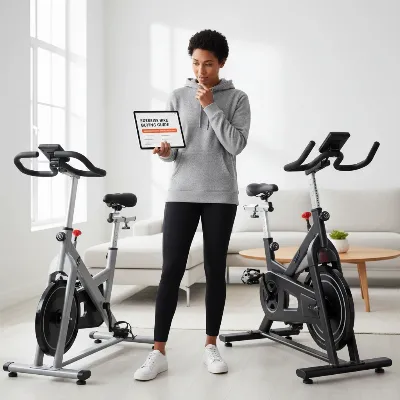 Person comparing features on various exercise bikes in a clean, modern home environment, guided by a tablet displaying a buying guide.
Essential Tips for Using and Maintaining Your Exercise Bike
To maximize the lifespan of your exercise bike and ensure every workout is effective and comfortable, proper usage and regular maintenance are crucial. These simple steps can make a significant difference.
1. Adjust Your Bike Correctly:
Before every ride, take a moment to adjust the seat height, seat position (forward/back), and handlebar height to fit your body. Your knees should have a slight bend at the bottom of the pedal stroke, and your back should be comfortable, not overly strained. Proper adjustment prevents discomfort and reduces the risk of injury.
2. Vary Your Workouts:
Don’t get stuck in a rut. Explore different types of workouts:
- Steady-State Cardio: Maintain a moderate intensity for 30-60 minutes to boost endurance and burn calories.
- High-Intensity Interval Training (HIIT): Alternate short bursts of intense effort with brief recovery periods for maximum calorie burn and cardiovascular benefits.
- Structured Programs: Utilize built-in programs or app-based classes to add variety and challenge your fitness.
3. Clean Your Bike After Every Ride:
Sweat contains salt, which can corrode metal parts over time. After each session, wipe down the handlebars, seat, frame, and console with a soft, slightly damp cloth. For electronic parts, use a dry cloth. This simple habit prevents rust and keeps your bike hygienic.
4. Monthly Bolt Check and Tightening:
Vibrations during workouts can gradually loosen bolts and screws. Once a month, take five minutes to check and gently tighten all visible bolts, especially those on the seat post, handlebars, pedals, and stabilizer bars. Loose parts can lead to wobbling and strange noises.
5. Lubricate Moving Parts (If Applicable):
If your bike has a chain drive, apply a small amount of bike-specific lubricant monthly to prevent dryness, reduce friction, and minimize noise. For pedal bearings or seat posts that might squeak, a dry silicone spray can work wonders. Always refer to your bike’s manual for specific lubrication guidelines.
6. Inspect Pedals and Straps:
Pedals endure significant force. Regularly check that they are securely attached. For bikes with foot straps or cages, ensure they are clean and not showing signs of wear; replace them if they become damaged to maintain safety.
7. Protect the Flywheel:
Keep the flywheel clean and free from dust or debris, wiping it down monthly. For friction resistance bikes, check the brake pads for wear and replace them as needed to ensure consistent resistance.
8. Proper Placement and Storage:
Always keep your exercise bike indoors, away from direct sunlight, extreme temperatures, or moisture, which can damage electronic components and cause rust. If your bike plugs into a power outlet, consider using a surge protector to safeguard its electronics.
9. Consider Annual Professional Service:
For long-term care, especially with higher-end models, an annual professional service can ensure all components are functioning optimally and catch potential issues before they become major problems.
Conclusion
Choosing the right exercise bike for your home in 2026 is an empowering step towards a healthier, more active lifestyle. Whether you prioritize intense, immersive spin classes, the comfortable support of a recumbent bike, the space-saving design of an upright model, or the full-body challenge of an air bike, there’s a perfect match waiting for you. By understanding the unique benefits of each type, carefully considering crucial features like resistance, adjustability, and connectivity, and committing to regular maintenance, you can ensure your investment delivers endless hours of effective and enjoyable workouts. An exercise bike is more than just a piece of equipment; it’s your personal fitness hub, ready whenever you are.
Which exercise bike will power your fitness journey in 2026?
Frequently Asked Questions
What is the ideal flywheel weight for an exercise bike?
For a smooth and stable ride, especially for indoor cycling bikes, look for a flywheel weight of at least 30 pounds (or approximately 8 kilograms). A heavier flywheel helps maintain momentum, providing a more consistent and comfortable pedaling experience that closely mimics outdoor cycling.
Can exercise bikes effectively help with weight loss?
Absolutely. Exercise bikes are excellent for weight loss as they allow you to burn a significant number of calories, especially during high-intensity interval training (HIIT) sessions. Consistent use, combined with a balanced diet, helps create the calorie deficit necessary for reducing body weight and body fat.
Are exercise bikes a good option for people with joint pain?
Yes, exercise bikes are highly recommended for individuals with joint pain. They offer a low-impact workout that minimizes stress on the knees, hips, and ankles compared to high-impact activities. Recumbent bikes, in particular, provide superior back support and a gentle exercise experience for those with musculoskeletal sensitivities.
How often should I perform maintenance on my exercise bike?
Regular maintenance is key to longevity. After every ride, wipe down your bike to remove sweat and prevent corrosion. Monthly, check and tighten all bolts and screws, and lubricate any moving parts as recommended by the manufacturer. Consider an annual professional service for a thorough inspection.
What is the main difference between magnetic and friction resistance on exercise bikes?
Magnetic resistance uses magnets to create tension, offering a virtually silent operation, smooth transitions between resistance levels, and minimal wear and tear. Friction resistance, on the other hand, uses a brake pad pressing against the flywheel, which can be noisier, may require pad replacement, but provides a traditional, direct-drive feel.
How important is the adjustability of the seat and handlebars on an exercise bike?
Adjustability is crucial for both comfort and injury prevention. Being able to adjust the seat (vertically and horizontally) and handlebars ensures you can find an ergonomic riding position that fits your body perfectly, regardless of your height or limb length. This is especially important if multiple people will be using the bike.
