Choosing the right exercise bike can improve your home workouts, offering a convenient and effective way to boost your fitness. But with various models available, deciding between an upright and a recumbent exercise bike can feel overwhelming. Each design offers distinct advantages, catering to different fitness goals, physical needs, and preferences. This comprehensive guide will explore the nuances of upright and recumbent bikes, helping you make an informed decision to find the ideal companion for your health journey.
The Undeniable Benefits of Exercise Bikes
Exercise bikes have earned their place as a staple in home gyms and fitness centers alike, primarily due to their low-impact nature and versatility. Unlike high-impact activities such as running, cycling on a stationary bike places minimal stress on your joints, making it an excellent option for individuals of all ages and fitness levels, including those recovering from injuries or managing chronic pain.
Regular workouts on an exercise bike offer a wealth of health benefits. They significantly improve cardiovascular health by strengthening the heart and lungs, leading to better endurance and reduced risk of heart disease. For weight management, exercise bikes are highly effective, allowing for consistent calorie expenditure in a controlled environment. They engage and strengthen major muscle groups in your lower body, including quadriceps, hamstrings, glutes, and calves, contributing to increased muscle tone and overall leg strength. From intense calorie-burning sessions to gentle rehabilitation exercises, an exercise bike can be adapted to suit a wide spectrum of workout needs. For compare top home exercise on this site.
Understanding the Types: Upright vs. Recumbent Exercise Bikes
The fundamental difference between upright and recumbent exercise bikes lies in their design and rider’s position, which in turn influences comfort, muscle engagement, and workout intensity.
Upright Exercise Bikes
Upright exercise bikes closely mimic the experience of riding a traditional outdoor bicycle. On an upright bike, you sit in a vertical position on a smaller, saddle-style seat, with the pedals located directly beneath your hips. The handlebars are typically positioned in front, requiring you to lean forward slightly, engaging your core and upper body to maintain balance and posture.
Pros:
- Higher Intensity & Calorie Burn: The upright position allows for more dynamic movements, including standing up on the pedals, facilitating high-intensity interval training (HIIT) and generally burning more calories per minute.
- Greater Muscle Engagement: Beyond the lower body, upright bikes activate your core, back, and arm muscles to stabilize your body, offering a more comprehensive workout.
- Space-Saving Design: Upright models tend to have a smaller footprint, making them ideal for individuals with limited home gym space.
- Mimics Outdoor Cycling: If you’re looking to cross-train for outdoor road cycling, the upright bike provides a more similar riding posture and feel.
Cons:
- Less Back Support: The lack of a backrest can be challenging for individuals with back pain or those who require additional spinal support.
- Saddle Discomfort: The smaller, traditional bike seat can become uncomfortable during longer sessions, especially for beginners.
- Requires Core Stability: Maintaining an upright posture demands more core engagement, which might be a drawback for those with balance issues.
Best for: Fitness enthusiasts seeking intense workouts, individuals aiming for higher calorie burn and full-body engagement, and those who enjoy mimicking outdoor cycling.
Recumbent Exercise Bikes
Recumbent exercise bikes feature a reclined seating position with a larger, chair-like seat and a supportive backrest. The pedals are positioned in front of your body, allowing your legs to extend horizontally. Many models also include secondary handlebars on either side of the seat, providing extra support and stability.
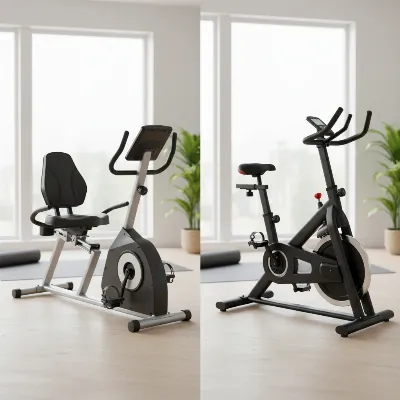 A side-by-side view comparing a recumbent exercise bike and an upright exercise bike in a modern home gym setting. The recumbent bike shows a comfortable, reclined seat with back support, pedals out front. The upright bike shows a traditional saddle and vertical posture with pedals underneath. Natural daylighting, realistic style.
Pros:
- Superior Comfort and Back Support: The reclined position and full back support significantly reduce strain on the back, neck, and glutes, making it ideal for extended workouts and users with back issues.
- Gentle on Joints: The horizontal pedaling motion and supported posture minimize stress on the knees and other joints, providing a truly low-impact workout.
- High Stability and Safety: The low-to-the-ground design and wide base offer excellent stability, reducing the risk of falls, which is particularly beneficial for seniors, individuals with balance concerns, or those undergoing rehabilitation.
- Suitable for Longer Sessions: The enhanced comfort allows users to exercise for longer durations without discomfort.
Cons:
- Larger Footprint: Recumbent bikes generally take up more floor space due to their elongated design.
- Lower Intensity Workouts: While still effective for cardio, the reclined position makes it harder to achieve very high-intensity bursts or engage the upper body as much as an upright bike.
- Less Muscle Engagement: Primarily targets the lower body, with less activation of core and upper body muscles.
Best for: Seniors, beginners, individuals with back pain, joint issues, balance problems, those recovering from injuries, or anyone prioritizing comfort and steady-state cardiovascular exercise.
Head-to-Head Comparison: Upright vs. Recumbent
|
Our Picks for the Best Exercise Bike in 2026
As an Amazon Associate I earn from qualifying purchases.
|
||
| Num | Product | Action |
|---|---|---|
| 1 | Exercise Bikes for Home,Indoor Cycling Bike with Adjustable Magnetic,Brake Pad Resistance Silent Belt Drive,330lbs Weight Capacity &Upgraded Version Seat for Home Cardio&Weight Loss |

|
| 2 | Exercise Bike for Home – 350LB Magnetic Resistance Indoor Cycling Bike, Silent Stationary Spin Bike with App Sync, Adjustable Seat, LCD Monitor, Smooth & Quiet for Cardio Workout |
|
| 3 | Exercise Bikes for Home,Indoor Cycling Bike with Adjustable Friction,Brake Pad Resistance Silent Belt Drive,330lbs Weight Capacity &Upgraded Version Seat for Home Cardio&Weight Loss |
|
| 4 | MERACH Exercise Bike, Brake Pad Stationary Bike with Exclusive App, Low Noise Indoor Cycling Bike with 300lbs Weight Capacity, Tablet Mount and Fitness Courses for Weight Loss |
|
| 5 | Indoor Exercise Bike for Seniors, 5 IN 1 Foldable Stationary Bike with 16-Level Magnetic Resistance and Tri-Position Ride, 330LBS Capacity, 6.6 LBS Flywheel, for Home Workout 818 Gray |
|
| 6 | Exercise Bike, Magnetic Resistance Stationary Bikes for Home with App Compatible, Silent Indoor Cycling Bike with 350lbs Weight Capacity Comfortable Seat, Digital Monitor & Phone Mount |
|
| 7 | RELIFE REBUILD YOUR LIFE Exercise Bike Stationary for Home Indoor,Cycling Bike with Silent Belt Drive for Home Cardio,Brake Pad Resistance with djustable & Comfort Seat/PAD Holder/LCD Monitor. |
|
| 8 | Exercise Bike, Adjustable Magnetic Resistance Stationary Bikes for Home Cardio with Exclusive App, Indoor Bike with 330lbs Weight Capacity Comfortable Seat, Tablet Mount and Fitness Courses |
|
| 9 | Exercise Bike, Wenoker Stationary Bike for Home, App Supported Indoor Bike with Silent Belt Drive, Heavy Flywheel, Multi-grips Handlebar and Upgraded Digital Display |
|
| 10 | Exercise Bike, Wenoker Magnetic Stationary Bike for Home App Sync Indoor Bike with Adjustable Seat and Handlebar, Transport Wheels and Fitness Courses for Weight Loss |
|
To further clarify the distinctions, here’s a direct comparison of key features:
| Feature | Upright Exercise Bike | Recumbent Exercise Bike |
|---|---|---|
| Seating Position | Vertical, mimicking a traditional bike | Reclined, chair-like |
| Back Support | Minimal (relies on core) | Full backrest |
| Pedal Placement | Directly under hips | In front of the body |
| Muscle Engagement | Quads, hamstrings, glutes, calves, core, arms, back | Primarily quads, hamstrings, glutes, calves |
| Workout Intensity | Higher potential, suitable for HIIT | Generally lower, ideal for steady-state cardio |
| Calorie Burn | Potentially higher (more muscle, higher intensity) | Generally lower per minute (fewer muscles engaged) |
| Comfort | Saddle can be uncomfortable, requires core strength | Superior, comfortable for long sessions, good for back issues |
| Stability | Higher center of gravity, requires more balance | Very stable, low to the ground, excellent for balance issues |
| Footprint | More compact, space-saving | Larger, requires more floor space |
| User Suitability | Fitness enthusiasts, outdoor cyclists, limited space | Seniors, beginners, rehabilitation, back/joint pain |
Key Features to Consider When Buying an Exercise Bike
Regardless of whether you choose an upright or recumbent model, several important features should be considered to ensure you select a bike that meets your needs and provides a satisfying workout experience.
- Resistance System: Most modern exercise bikes use magnetic resistance, which is quiet, smooth, and low-maintenance. Some might use air or friction resistance. Magnetic resistance is generally preferred for home use due to its quiet operation. Look for a wide range of resistance levels to accommodate different workout intensities and progression.
- Display and Console: A clear, easy-to-read console is crucial for tracking your progress. Essential metrics include time, distance, speed, calories burned, and heart rate. Many bikes now offer advanced consoles with pre-set programs, virtual scenic rides, and connectivity options for fitness apps.
- Seat and Handlebar Adjustability: Proper fit is paramount for comfort and injury prevention. Ensure the seat can be easily adjusted vertically and horizontally (especially for recumbent bikes) to accommodate different user heights. Handlebar adjustability can also enhance comfort and allow for varied riding positions.
- Pedals: Look for pedals with adjustable straps to keep your feet secure. Some advanced bikes may offer SPD compatibility for clipless cycling shoes, which can improve pedaling efficiency.
- Stability and Durability: A sturdy frame is essential for a safe and stable ride, especially during intense workouts. Check the maximum user weight capacity to ensure it aligns with your needs.
- Noise Level: If you plan to use your bike in a shared living space or while watching TV, a quiet operation (often found in magnetic resistance bikes) is a significant benefit.
- Technology and Connectivity: Many bikes now integrate with fitness apps (like Zwift, Peloton, iFIT) via Bluetooth, allowing you to track workouts, access trainer-led classes, or engage in virtual cycling worlds. Built-in speakers, media racks, and USB charging ports are also convenient additions.
- Footprint and Portability: Measure your available space. While upright bikes are generally more compact, even recumbent bikes can come with transport wheels for easier relocation.
- Budget: Exercise bikes range widely in price. Determine a realistic budget, but that investing in a higher-quality bike often translates to better durability, more features, and a smoother ride.
- Warranty and After-Sales Service: A good warranty indicates the manufacturer’s confidence in their product. Research customer service reviews to ensure reliable support if issues arise.
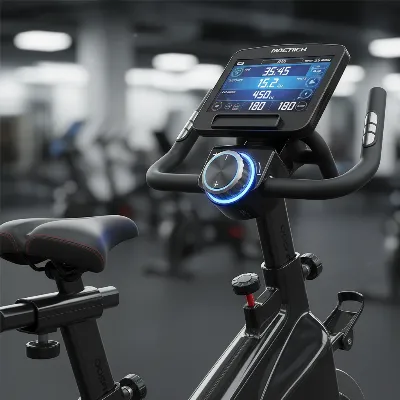 Close-up view of essential features on a modern exercise bike, showcasing a digital console, resistance knob, and adjustable seat, with elements from both upright and recumbent designs implied. The focus is on functionality and user interface. Studio lighting, clean and precise.
Buying Guide: Choosing the Right Bike for You
Selecting the “best” exercise bike isn’t about finding a universally superior model; it’s about finding the best fit for your individual circumstances. Consider these steps:
- Define Your Fitness Goals and Preferences: Are you aiming for high-intensity cardio, gentle rehabilitation, or comfortable, long-duration rides? Do you prioritize calorie burn, muscle toning, or joint protection? Your goals will heavily influence whether an upright or recumbent bike is more suitable.
- Assess Your Physical Condition: If you have chronic back pain, knee issues, or balance problems, a recumbent bike with its superior support and stability will likely be a safer and more comfortable choice. For those without such concerns, an upright bike offers more versatility.
- Evaluate Your Available Space: Measure the area where you plan to place the bike. Upright bikes are generally more compact, while recumbent bikes require a longer footprint. Ensure there’s enough room for safe mounting, dismounting, and full range of motion.
- Set a Realistic Budget: Exercise bikes can range from a few hundred to several thousand dollars. Determine how much you’re willing to spend, keeping in mind that higher price points often correlate with more features, better build quality, and advanced technology.
- Research and Read Reviews: Once you’ve narrowed down your options, examine product reviews from reputable sources and other users. Pay attention to feedback regarding comfort, durability, noise, and customer service.
- Try Before You Buy (If Possible): Visiting a local fitness equipment store to physically sit on and pedal different models can provide invaluable insight into comfort and ergonomics. This hands-on experience can confirm which type feels best for your body.
- Consider Warranty and After-Sales Support: A robust warranty and accessible customer service are crucial for protecting your investment and ensuring long-term satisfaction.
> “The most effective exercise bike is the one you will use consistently. Prioritize comfort and suitability for your body and fitness level to ensure long-term adherence to your workout routine.” – Dr. Elena Petrova, Sports Physiotherapist
Tips for Using and Maintaining Your Exercise Bike
To maximize the benefits and extend the lifespan of your exercise bike, proper usage and regular maintenance are key.
- Proper Setup and Adjustment: Before each workout, ensure the seat height (and horizontal position for recumbents) and handlebar position are adjusted correctly for your body. Your knees should have a slight bend at the bottom of the pedal stroke, and your back should be comfortably supported.
- Vary Your Workouts: Don’t get stuck in a rut. Incorporate different routines, such as steady-state cardio, interval training, and hill climbs (if your bike has varying resistance levels), to challenge your body and prevent boredom. Many smart bikes offer guided programs or virtual rides for variety.
- Warm-up and Cool-down: Always begin with a 5-10 minute warm-up at a low intensity to prepare your muscles and cardiovascular system. End your session with a 5-10 minute cool-down and some light stretching.
- Regular Cleaning: Wipe down your bike after each use to remove sweat, which can cause corrosion over time. Use a damp cloth and mild cleaner.
- Routine Maintenance Checks: Periodically check all nuts, bolts, and moving parts to ensure they are secure. Lubricate any squeaky joints according to the manufacturer’s instructions. Keep the area around the flywheel clean and free of debris.
- Listen to Your Body: Pay attention to any discomfort or pain. Adjust your posture, seat, or resistance as needed. If pain persists, consult a healthcare professional.
Conclusion
Choosing between an upright and recumbent exercise bike ultimately comes down to understanding your personal fitness goals, physical needs, and comfort preferences. Upright bikes offer a dynamic, engaging workout that closely mimics outdoor cycling, providing greater muscle activation and calorie burn potential for those who prioritize intensity and a compact design. Recumbent bikes, with their superior comfort, back support, and joint-friendly design, are an excellent choice for individuals seeking a stable, low-impact workout, particularly seniors, beginners, or those managing physical limitations.
By carefully considering factors such as comfort, muscle engagement, space, and your budget, you can confidently select the exercise bike that best supports your wellness journey. Which type of exercise bike will you choose to power your path to better health?
Frequently Asked Questions
Which exercise bike is better for weight loss, upright or recumbent?
Upright exercise bikes generally offer a higher calorie burn per minute because they engage more muscle groups and allow for higher intensity workouts like HIIT. However, recumbent bikes, while burning fewer calories per minute, often facilitate longer, more comfortable sessions, which can lead to significant calorie expenditure over time. The “better” bike depends on your ability to sustain workouts.
Can I get a full-body workout on an exercise bike?
Upright exercise bikes can provide a more comprehensive workout by engaging core, back, and arm muscles in addition to the lower body, especially if you actively involve your upper body. Recumbent bikes primarily focus on the lower body, offering less upper body and core engagement due to the reclined, supported position.
Are exercise bikes good for bad knees or back?
Yes, both upright and recumbent exercise bikes offer low-impact cardio, which is gentler on joints than activities like running. However, recumbent bikes are often recommended for individuals with bad knees or back pain due to their reclined seat and full back support, which significantly reduces spinal strain and joint stress.
How much space do I need for an upright versus a recumbent exercise bike?
Upright exercise bikes are generally more compact, typically requiring a footprint of about 3′ x 2′. Recumbent bikes have a longer design due to the reclined seating and pedals in front, usually needing a footprint of around 4′-5′ x 2′. Always measure your available space before purchasing to ensure a proper fit.
