When your exercise bike’s resistance isn’t working quickly or consistently, it’s often due to mechanical wear, electronic malfunctions, or environmental factors like dust buildup. Common culprits include worn brake pads on friction bikes, degraded magnetic coils or a failing servo motor in magnetic systems, and issues with the console or power supply. Addressing these problems promptly ensures consistent and effective workouts.
Understanding Exercise Bike Resistance Systems
Before diving into troubleshooting, it’s essential to understand how different exercise bikes generate resistance. The mechanism dictates the typical problems you might encounter.
Magnetic Resistance: This is the most common and often quietest system. Magnets are positioned near a metal flywheel, and moving them closer or further away increases or decreases resistance without physical contact. This system relies on a resistance motor (servo) to adjust magnet proximity, or a cable connected to a manual knob.
Friction Resistance: Often found in spin bikes, this system uses brake pads (felt, leather, or synthetic) that press directly against the flywheel. Turning a knob tightens or loosens the pads, creating more or less friction. This direct contact can lead to wear over time.
Air and Fluid Resistance: Air bikes use a large fan that spins as you pedal, creating resistance based on air displacement – the faster you pedal, the harder it gets. Fluid resistance systems, less common in standard exercise bikes, use an impeller spinning in a viscous fluid to generate resistance. These systems are generally simpler but can still experience issues.
Key Reasons Your Exercise Bike Resistance Is Lagging or Failing
When your bike’s resistance isn’t adjusting as quickly as it should, or seems to be stuck, several factors could be at play. Identifying the specific cause is crucial for an effective fix.
Mechanical Wear and Tear
Many resistance issues stem from the physical components inside your bike degrading over time.
- Worn Brake Pads (Friction Bikes): If your friction bike’s resistance feels weak or inconsistent, especially after prolonged use, the brake pads might be worn down. These pads are designed to create friction against the flywheel, and as they thin, their ability to generate strong resistance diminishes.
- Degraded Magnetic Coils or Flywheel: While magnetic systems don’t have direct contact, the magnetic coils or the flywheel itself can degrade or become misaligned over many years. This can reduce the effectiveness of the magnetic field, leading to weaker resistance or an inability to achieve higher settings. Loose bolts or screws can also cause magnet shifts, leading to inconsistent resistance.
- Stretched or Loose Belts/Cables: The drive belt connecting the pedals to the flywheel can stretch or become loose, causing slippage. This results in jumpy or delayed resistance changes. For bikes with manual resistance knobs, a slack tension cable can prevent the resistance mechanism from moving fully or quickly, making adjustments feel sluggish.
Electronic and Control System Malfunctions
|
Our Picks for the Best Exercise Bike in 2026
As an Amazon Associate I earn from qualifying purchases.
|
||
| Num | Product | Action |
|---|---|---|
| 1 | Exercise Bike, Magnetic Resistance Stationary Bikes for Home with App Compatible, Silent Indoor Cycling Bike with 350lbs Weight Capacity Comfortable Seat, Digital Monitor & Phone Mount |

|
| 2 | Exercise Bike, Wenoker Magnetic Stationary Bike for Home App Sync Indoor Bike with Adjustable Seat and Handlebar, Transport Wheels and Fitness Courses for Weight Loss |
|
| 3 | Exercise Bike, Wenoker Stationary Bike for Home, App Supported Indoor Bike with Silent Belt Drive, Heavy Flywheel, Multi-grips Handlebar and Upgraded Digital Display |
|
| 4 | Exercise Bikes for Home,Indoor Cycling Bike with Adjustable Magnetic,Brake Pad Resistance Silent Belt Drive,330lbs Weight Capacity &Upgraded Version Seat for Home Cardio&Weight Loss |
|
| 5 | Exercise Bike for Home – 350LB Magnetic Resistance Indoor Cycling Bike, Silent Stationary Spin Bike with App Sync, Adjustable Seat, LCD Monitor, Smooth & Quiet for Cardio Workout |
|
| 6 | Exercise Bikes for Home,Indoor Cycling Bike with Adjustable Friction,Brake Pad Resistance Silent Belt Drive,330lbs Weight Capacity &Upgraded Version Seat for Home Cardio&Weight Loss |
|
| 7 | Exercise Bike, Adjustable Magnetic Resistance Stationary Bikes for Home Cardio with Exclusive App, Indoor Bike with 330lbs Weight Capacity Comfortable Seat, Tablet Mount and Fitness Courses |
|
| 8 | Indoor Exercise Bike for Seniors, 5 IN 1 Foldable Stationary Bike with 16-Level Magnetic Resistance and Tri-Position Ride, 330LBS Capacity, 6.6 LBS Flywheel, for Home Workout 818 Gray |
|
| 9 | MERACH Exercise Bike, Brake Pad Stationary Bike with Exclusive App, Low Noise Indoor Cycling Bike with 300lbs Weight Capacity, Tablet Mount and Fitness Courses for Weight Loss |
|
| 10 | RELIFE REBUILD YOUR LIFE Exercise Bike Stationary for Home Indoor,Cycling Bike with Silent Belt Drive for Home Cardio,Brake Pad Resistance with djustable & Comfort Seat/PAD Holder/LCD Monitor. |
|
Modern exercise bikes often rely on sophisticated electronics to control resistance. Failures in these systems can directly impact responsiveness.
- Console and Sensor Issues: The console is your bike’s brain. If it’s malfunctioning, it might not be sending the correct signals to the resistance mechanism. This could be due to loose internal wiring, a faulty control board, or even outdated software. Sensors that detect the position of magnets or brake pads can also fail, leading to incorrect resistance readings or adjustments.
- Resistance Motor (Servo) Failure (Magnetic Bikes): In most magnetic resistance bikes, a small motor (servo motor) physically moves the magnets closer to or further from the flywheel. If this motor fails, its wiring becomes disconnected, or it simply wears out, the resistance will be stuck at one level or unresponsive to console commands.
- Power Supply and Battery Problems: For bikes with electronic resistance, an insufficient power supply can cause glitches. Check that the power adapter is the correct voltage and securely plugged in. For battery-operated consoles, low or dead batteries can prevent the system from registering resistance changes or displaying them accurately.
- Software/Calibration Issues: Sometimes, the bike’s internal software might require a reset or recalibration. Incorrect calibration can lead to resistance levels feeling off, or the bike responding inaccurately to your inputs. Preset programs on smart bikes can also automatically change resistance, which might be mistaken for a malfunction if you’re not aware of the program’s settings.
Environmental and Buildup Factors
Over time, your bike can accumulate dirt and debris, impacting its moving parts.
- Dust and Grime Accumulation: Dust and grime can build up within adjustment dials and around resistance mechanisms, particularly in the gaps where magnets move or brake pads engage. This physical obstruction can prevent components from moving freely and quickly, leading to stiff or unresponsive resistance changes.
- Humidity and Heat Effects: While less common for “fast” resistance changes, environmental factors like high humidity or extreme heat can cause internal moving parts to dry out or electrical systems to overheat, contributing to overall wear and potential glitches over time.
> “Consistent maintenance is often overlooked, but it’s paramount for the longevity and performance of your exercise bike, especially regarding resistance mechanisms. Dust buildup and worn components are silent saboteurs of smooth operation.” – Dr. Eleanor Vance, Sports Biomechanics Specialist
Step-by-Step Troubleshooting for Resistance Problems
Before calling a professional, many resistance issues can be resolved with a few simple troubleshooting steps. Always refer to your bike’s user manual for model-specific instructions.
-
Initial Checks:
- Power Supply: For electronic bikes, ensure the power cord is securely plugged into a working outlet and the adapter is correct. If the console is battery-operated, replace the batteries.
- Visual Inspection: Look for any obvious signs of damage, loose cables, frayed wires, or visible debris around the resistance mechanism, flywheel, belts, and adjustment knobs.
- Console Check: If your bike has a digital console, check for any error messages. Try cycling through resistance levels to see if the display changes, even if the actual resistance doesn’t. Sometimes, the bike takes a few seconds to adjust to a new setting, so continue pedaling briefly after making an adjustment.
-
Testing Resistance Adjustment:
- Manual Knob: If your bike has a manual resistance knob, turn it slowly from minimum to maximum. Pay attention to how it feels – is it stiff, loose, or does it offer no feedback? Check for any debris around the knob or underlying cable.
- Digital Controls: Press the increase/decrease resistance buttons. Listen for any sounds from the resistance motor (if magnetic) and observe if the display reflects the change.
-
Addressing Specific Resistance Types:
- Magnetic Resistance:
- Cable Inspection: For bikes with a manual resistance cable, inspect it for slack, fraying, or disconnections. Tighten any loose connections.
- Motor (Servo) Check: If your bike uses a servo motor, listen for it to engage when you adjust resistance. If there’s no sound, check wiring connections to the motor. Some advanced troubleshooting might involve testing the motor with a 9-volt battery or checking voltage supply from the console (usually around 6 VDC), but this often requires professional assistance.
- Magnet Alignment: Loose bolts or screws can cause magnets to shift. Secure them properly in their stipulated position.
- Friction Resistance:
- Brake Pad Inspection: Examine the brake pads (often felt or leather) for wear. If they look thin, brittle, or glazed, they likely need replacement.
- Tension Knob: Ensure the tension knob is securely connected and moving freely. Clean any dust or debris that might be impeding its movement.
- Air/Fluid Resistance:
- Fan Blades: Inspect the fan blades for damage or obstructions that might prevent them from spinning freely. Clean any dust buildup.
- Belt Tension: Check the tension belt connected to the fan or impeller. If it’s loose or worn, it can affect resistance. Tighten or replace it as needed.
- Cleaning: Ensure all moving parts, especially around the fan or impeller, are free from dirt and debris.
- Magnetic Resistance:
-
Resetting and Recalibrating:
- Console Reset: Many bikes allow for a console reset. Consult your user manual for specific instructions, as this can sometimes clear electronic glitches affecting resistance.
- Calibration: Some exercise bikes offer a resistance calibration procedure. This can ensure accurate resistance levels. Follow your manual’s guidelines precisely.
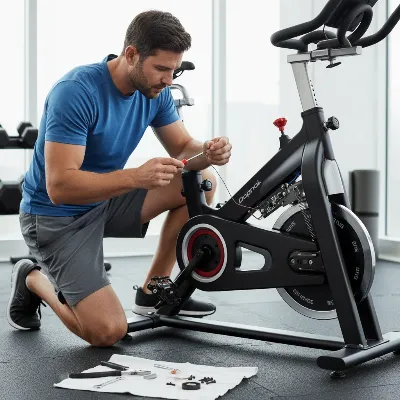 Man troubleshooting exercise bike resistance issues with tools
Maintaining Your Exercise Bike for Optimal Resistance
Preventative maintenance is key to avoiding resistance problems and extending the life of your exercise bike.
- Regular Cleaning: Regularly wipe down your bike, paying special attention to the resistance knob, adjustment dials, and the areas around the flywheel and magnets/pads. Dust and grime are common culprits for sluggish resistance.
- Lubrication (Where Applicable): For friction bikes with leather brake pads, periodic lubrication (usually annually, as per manufacturer guidelines) is essential to keep the pads supple and effective. Check your manual for any other moving parts that require lubrication.
- Scheduled Inspections: Make it a habit to perform monthly checks. Ensure all visible belts are tight, screws are secure, and any digital feedback systems respond as they should. Look for early signs of wear on brake pads or unusual noises during operation.
When to Call a Professional
While many issues can be fixed at home, there are times when professional help is the best course of action.
- Complex Internal Issues: If troubleshooting involves opening up complex internal components, dealing with delicate wiring, or replacing specialized parts like servo motors or control boards, it’s safer to consult a certified technician. Attempting these repairs yourself might cause further damage or void your warranty.
- Persistent Problems: If you’ve tried all the troubleshooting steps and the resistance problem persists, or if you’re unsure about the cause, a professional can offer a proper diagnosis and repair.
- Warranty Concerns: Always check your warranty before attempting significant repairs. Some warranties become void if unauthorized repairs are performed.
Conclusion
A smoothly functioning resistance system is fundamental to an effective exercise bike workout. When your bike’s resistance isn’t working fast or consistently, it can be a source of significant frustration. By understanding the different resistance mechanisms, identifying common culprits like mechanical wear, electronic glitches, or simple dust buildup, and following systematic troubleshooting steps, you can often diagnose and resolve these issues yourself. Regular cleaning, lubrication, and inspection will also go a long way in preventing future problems. Don’t let a faulty resistance mechanism stand between you and your fitness goals—take the time to maintain your bike, or seek expert help when needed, to ensure every ride is productive and enjoyable. What’s the most challenging resistance problem you’ve faced with your exercise bike?
Frequently Asked Questions
Why does my exercise bike resistance feel inconsistent?
Inconsistent resistance often points to a loose drive belt or cable, shifting magnets in magnetic bikes, or worn and uneven brake pads in friction bikes. Electronic glitches or sensor misalignment can also cause erratic changes, so check connections and consider a console reset or calibration if available for your model.
How often should I perform maintenance on my exercise bike’s resistance system?
For optimal performance, a quick visual inspection and wipe-down should be done after every few uses. A more thorough check, including tightening visible screws and cleaning around resistance mechanisms, is recommended monthly. Lubrication (for friction bikes) and belt tension checks should follow your manufacturer’s annual guidelines.
Can I fix magnetic resistance issues myself, or do I need a technician?
Many basic magnetic resistance issues, like loose console cables, low console batteries, or external dust buildup, can often be fixed at home. However, issues involving the servo motor, internal wiring, or control board failures typically require a certified technician to diagnose and repair to avoid further damage or voiding your warranty.
Frequently Asked Questions
Why does my exercise bike resistance feel inconsistent?
Inconsistent resistance often points to a loose drive belt or cable, shifting magnets in magnetic bikes, or worn and uneven brake pads in friction bikes. Electronic glitches or sensor misalignment can also cause erratic changes, so check connections and consider a console reset or calibration if available for your model.
How often should I perform maintenance on my exercise bike's resistance system?
For optimal performance, a quick visual inspection and wipe-down should be done after every few uses. A more thorough check, including tightening visible screws and cleaning around resistance mechanisms, is recommended monthly. Lubrication (for friction bikes) and belt tension checks should follow your manufacturer's annual guidelines.
Can I fix magnetic resistance issues myself, or do I need a technician?
Many basic magnetic resistance issues, like loose console cables, low console batteries, or external dust buildup, can often be fixed at home. However, issues involving the servo motor, internal wiring, or control board failures typically require a certified technician to diagnose and repair to avoid further damage or voiding your warranty.
What are the main types of exercise bike resistance systems?
Exercise bikes primarily use three resistance systems: magnetic, friction, and air/fluid. Magnetic systems use magnets near a flywheel, friction systems use brake pads pressing against a flywheel, and air bikes use a fan for resistance. Each system has unique components that can cause issues.
How do I know if my exercise bike's console is causing resistance problems?
If your console is malfunctioning, it might not send correct signals to the resistance mechanism. Look for error messages, check if the display changes when you adjust resistance (even if the physical resistance doesn't), or try replacing console batteries. Loose internal wiring or outdated software can also be factors.
Troubleshoot Exercise Bike Resistance Problems
Follow these steps to diagnose and resolve common resistance issues on your exercise bike, ensuring a smooth and effective workout.
Ensure the power cord is securely plugged in for electronic bikes, or replace console batteries. Visually inspect for loose cables, frayed wires, or debris around the resistance mechanism. Check the console for error messages and cycle through resistance levels to see if the display responds.
For manual knobs, turn slowly from minimum to maximum, noting any stiffness or looseness. For digital controls, press increase/decrease buttons and listen for the resistance motor to engage. Observe if the display reflects the change, allowing a few seconds for adjustment.
For magnetic bikes, inspect cables for slack and check servo motor wiring. For friction bikes, examine brake pads for wear and ensure the tension knob moves freely. For air/fluid bikes, inspect fan blades for damage and check belt tension. Clean any dust or debris from all mechanisms.
Consult your user manual for instructions on how to perform a console reset, which can clear electronic glitches. If available, follow the resistance calibration procedure to ensure accurate resistance levels. This can help the bike respond accurately to your inputs.

I was so frustrated when my magnetic resistance bike started feeling too easy, even on the highest setting. I thought I’d have to buy a whole new one! Following the tips here about checking the servo motor and the console connections really helped. Turns out, a loose wire was the culprit. It’s working much better now, though it took a bit of fiddling to get it right.
Excellent advice! My bike’s resistance was totally gone, and I was worried it was a major electronic malfunction. After reading about dust buildup being a factor, I decided to give my bike a thorough cleaning, especially around the resistance mechanism. Lo and behold, it started working perfectly again! Such a simple fix that I never would have thought of.
This guide saved my workout routine! My old friction bike’s resistance was totally shot, and I was about to give up on it. The advice on inspecting and replacing worn brake pads was spot on. I ordered new ones, followed the instructions, and now my bike feels like new again. So glad I didn’t just toss it.
My bike’s resistance has been inconsistent for weeks. I tried cleaning around the flywheel and checking the power supply as suggested, but it didn’t completely fix the issue. It’s better, but still not as smooth as it used to be. I guess I might need to look into the magnetic coils next, which sounds a bit more complicated than I hoped.